
Formula 1 betting in New Zealand: who can take your bet, and what the odds actually cost
 Available in US
Formula 1 in New Zealand is a market with one lawful front door. Since the Racing Industry Amendment Act 2025 came into force on 28 June 2025, TAB NZ, operating its two online brands TAB and Betcha, is the only provider that may lawfully offer racing and sports betting to people in New Zealand. No offshore bookmaker holds a New Zealand licence, because none exists to hold. The practical consequence for a punter is that the menu, the odds, the limits and the harm-minimisation tools all come from one operator group, and that what an F1 bet costs is determined almost entirely by the margin baked into the prices TAB NZ quotes.

This page is built around that cost. The 2026 Formula One World Championship — 23 Grands Prix, 11 teams, six sprint weekends, a season that opened at Albert Park on 8 March 2026 and closes at Yas Marina on 6 December 2026 — is the event on the calendar. The question is what each bet on it really extracts from the punter, and where the friction sits: in the margin, in the minimum stake, in the bookmaker’s right to limit accounts, in the absence of an exchange, in the gap between offshore brands a search engine surfaces and the single brand a New Zealand punter may lawfully use.
Data current as of 31 October 2026; TAB NZ’s status was verified against the Department of Internal Affairs register framework and the Racing Industry Act 2020, section 74AAA.
The 2026 Formula One calendar and what the season looks like
The 2026 FIA Formula One World Championship is the 77th running of the championship. Twenty-three Grands Prix were originally scheduled, with the Saudi Arabian Grand Prix later cancelled, leaving the season at 23 races across 11 teams. Lando Norris carries the reigning Drivers’ Champion tag into the season. The calendar opens at Albert Park in Melbourne on 8 March 2026 and runs through to Yas Marina in Abu Dhabi on 6 December 2026, with six sprint weekends at China, Miami, Canada, Britain, Netherlands and Singapore.

The season’s technical reset is large enough to reshape outright markets. The MGU-H has been removed, MGU-K output has risen from 160 bhp to 470 bhp (350 kW), and DRS has been replaced by active aerodynamics. The team cost cap has moved from $135 million to $215 million. Each of these shifts changes which outfits look credible at the front of the field, and as a result which names a bookmaker’s ante-postseason list leans toward when the championship race resumes at the front of the grid.
The sprint calendar matters for a specific kind of punter. A sprint weekend offers a short three-day price menu: qualifying for the sprint, the sprint itself, the main race, and any same-race multi legs a bookmaker constructs from them. Six sprint weekends across the season means six weekends where the in-running margin between a sprint qualifying bet and a main-race bet is at its tightest, because the same driver lines up twice across a weekend and the form from one session feeds the next.
How the calendar feeds the betting menu
The F1 market at TAB NZ tracks the season rather than the year. Outrights — Drivers’ Championship and Constructors’ Championship — open weeks before the first race and stay live until the chequered flag at Abu Dhabi. Race winner markets go up shortly before each Grand Prix and resolve the moment the race finishes. Qualifying, fastest lap, podium finish, head-to-head driver matchups, and retirement markets layer on top as the weekend draws near.
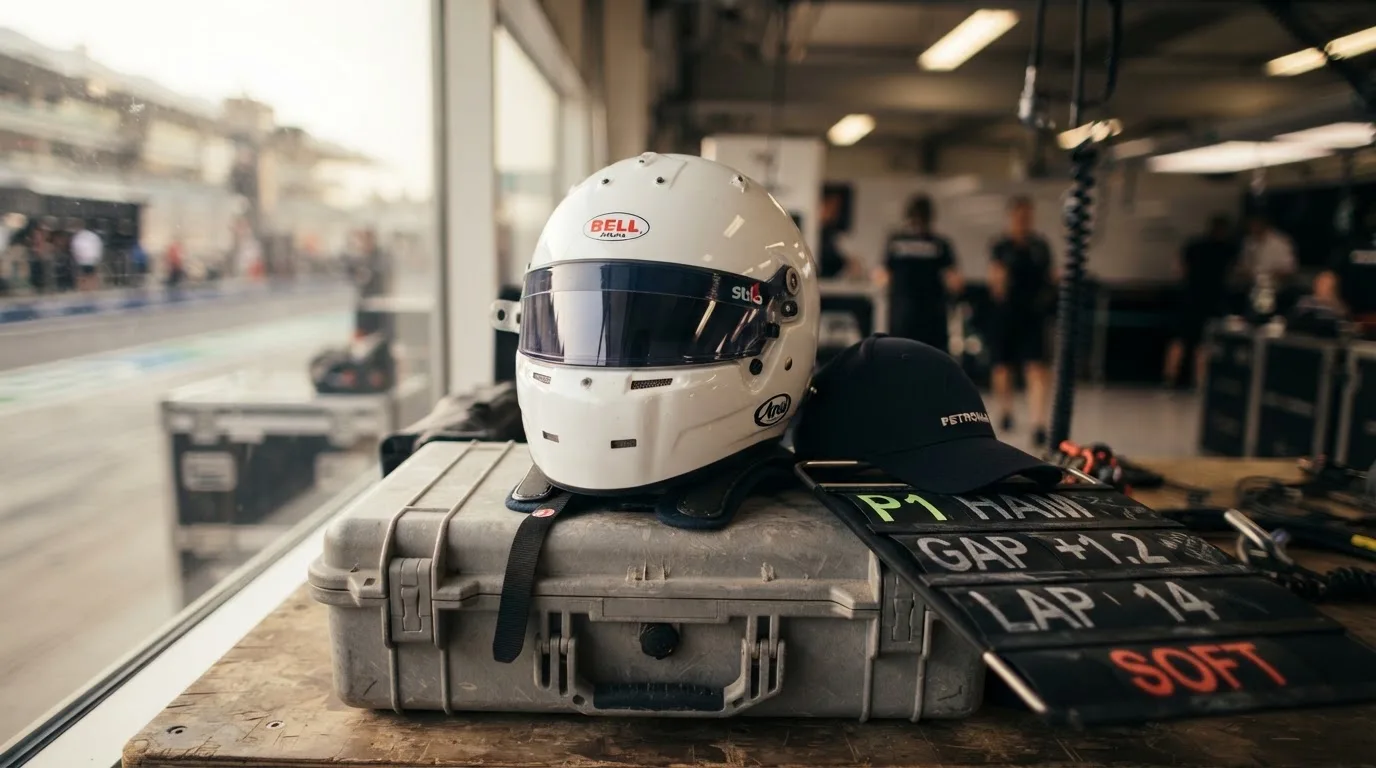
A punter who treats the season as a single long market sees three distinct pricing windows: ante-post (high margin, high payout ratio on longshots), pre-qualifying (margin tightens as practice and free-practice data come in), and post-qualifying (margin tightens further, especially for sprint weekends). Each window rewards a different discipline — patience for the ante-post shopper, timing for the pre-qualifying reader, and discipline for the in-running punter.
How betting on F1 actually works
The mechanics of an F1 bet are simple in shape and exacting in detail. A punter picks a market, picks a selection, sets a stake, and watches the price that is locked in at the time of placement. If the selection wins, the payout is the stake multiplied by the decimal odds. If it loses, the stake is gone. There are no partial refunds in fixed-odds racing betting unless the race is abandoned or the market is voided, in which case TAB NZ’s published rules determine the settlement.
The most common markets a TAB NZ punter encounters are race winner, podium finish, fastest lap, qualifying, head-to-head driver matchups, and outright Drivers’ and Constructors’ Championship. Each market is priced to a margin that is invisible in the headline price but visible in the gap between the true probability and the implied probability. The implied probability of a $2.10 decimal odds line is roughly 47.6%; the implied probability of a $4.00 line is 25%. Two prices do not sum to 100% on a two-way market, and the gap between them and 100% is the margin the bookmaker keeps.
From stake to return
A $10 stake at $2.10 returns $21.00 — the stake plus a $11.00 profit. A $50 stake at $4.00 returns $200.00. The arithmetic is the same for every market; what changes is the price, and as a result the implied probability, and as a result the margin a bookmaker has built into the price the punter accepts.
On a multi bet, the prices multiply. A two-leg multi with legs at $1.80 and $2.50 settles at a combined price of $4.50. The combined price is higher than either leg alone, but the implied probability falls faster than the price rises, because both legs need to win. A three-leg multi at $1.80, $2.00 and $2.50 settles at $9.00 — but the chance of all three winning is the product of the individual chances, not the sum.
A same-game multi is the same mechanic with a constraint: every leg comes from the same event. TAB NZ offers same-game multis on selected F1 races, and the same combination principles apply, with the additional twist that correlated legs (for example, race winner and fastest lap on the same driver) produce a lower combined price than uncorrelated legs because the bookmaker knows the outcomes are linked.
TAB NZ and Betcha: the only two lawful brands
The 2025 amendment to the Racing Industry Act 2020 inserted section 74AAA: no person other than TAB NZ may offer racing betting, sports betting, or other racing or sports betting to a person in New Zealand, regardless of where that person is resident or incorporated. The change took effect on 28 June 2025, and the Department of Internal Affairs told unlicensed providers serving New Zealand to withdraw with immediate effect. There is no licensing route for another bookmaker and no licence register for betting, because there is only one lawful operator.
TAB and Betcha are the two online brands of TAB NZ. They are not rivals; they are one operator group, run by Entain under a 25-year partnership signed in 2023 that gives Entain a 50/50 share of gross profits, with at least $150 million a year flowing to TAB NZ for the first five years and a one-off $100 million payment pledged to the racing sector. The two brands share a wallet, share a harm-minimisation framework, and share a self-exclusion register.
The distinction between the two brands is in the product mix and the customer experience, not the legal status. TAB is the established racing and sports brand, with the longer history, the full fixed-odds and tote product, and the broader retail network. Betcha, first released on the New Zealand App Store on 6 August 2024, is the newer, app-first brand, with a sportsbook-led menu and the same racing core.
What the two brands cover
TAB covers horse and harness racing, rugby union and rugby league, and a wider sports menu across pre-match and live markets. The TAB NZ app carries a 17+ App Store age rating while stating that customers must be 18 or over to bet, and includes Trackside live race streaming with in-app betting, racing form, Blackbook and Jockey Challenge tools, and a simplified wallet for deposits and withdrawals. The app’s safer-gambling tools are deposit limits, time-outs and self-exclusion.
Betcha covers horse, greyhound and harness racing plus rugby, NRL, MMA/UFC, NBA, NFL, tennis, cricket, football, motorsports and esports. The motorsport menu is where F1 sits, and the same race-by-race and outright markets as TAB are available. Greyhound racing closes in stages from 1 August 2026, so the greyhound product is in retreat; F1, by contrast, sits inside the sports menu that is the long-term core of both brands.
The bookmaker’s margin and how it sits inside the odds
The margin is the single most important price a punter does not see. It is the difference between the true probability of all outcomes and the implied probability the prices sum to. On a two-way market priced at $1.90 / $1.90, the implied probabilities are 52.63% on each side, summing to 105.26%. The gap — 5.26% — is the margin. For every $100 wagered across both sides in equal proportion, the bookmaker keeps roughly $5.26.
Take a calculation as an illustration, not as a quoted price. An illustrative two-way market at decimal odds of 1.90 / 1.90 gives a payout share of 1 ÷ (1/1.90 + 1/1.90), which equals 1 ÷ 1.0526, or roughly 0.9500. The margin is 1 − 0.9500, or 5.00% — a band of around 5% to 5.5% depending on how the rounding sits. The arithmetic is exact; the band reflects the gap between the unrounded price and the rounded headline.
The margin compounds across a multi. On a two-leg multi at $1.80 and $2.00, each leg has its own margin, and the combined price carries the margin of both multiplied together. A $1.80 leg has an implied probability of 55.56%; a $2.00 leg has an implied probability of 50%. The combined implied probability on a fair multi is 27.78%; the bookmaker’s combined price is lower because both margins are stacked.
Why the margin widens on outrights
The further from the event, the wider the margin. Outright Drivers’ Championship markets open months before the first race, and the prices on the back of the field (the third-driver-at-each-team, the midfield runners) carry a margin that is materially higher than the margin on the front-of-grid favourites. The reason is volatility: a bookmaker cannot quote a tight margin on a market whose true probability is uncertain, and uncertainty is highest in the part of the field where any single race can reshuffle the order.
A punter who backs a $51.00 outsider for the Drivers’ Championship is paying a large margin for a small true probability. A punter who backs the $2.50 favourite is paying a smaller margin for a larger true probability. The expected value of both bets, after margin, depends on the punter’s read of the true probability; the price itself tells the punter only what the bookmaker is willing to pay.
What it costs to clear a bonus bet
TAB NZ runs “bonus bets” promotions — operator-led offers that give the punter a stake the bookmaker funds, with the stake usually not returned on a win. The mechanics are not new: a bonus bet is a token, not a payout, and the value of the token depends on the price the punter takes and the margin of the market on which it is placed.
The value of a free bet whose stake is not returned is the free-bet amount multiplied by (odds − 1) divided by odds, then multiplied by the payout share of the market. A $10 free bet at $3.00 odds, on a market with a 95% payout share, returns $10 × (3.00 − 1) ÷ 3.00 × 0.95, or roughly $6.33. The free bet does not pay out $20; it pays out the expected value of the edge it gives the punter over the margin.
Bonus bets are subject to TAB NZ’s terms at all times: minimum odds, qualifying markets, expiry windows, and the conditions under which winnings become withdrawable. None of these conditions is standard across promotions; each promotion carries its own rules, and a punter who takes the headline without reading the small print is paying for the omission.
Responsible gambling under New Zealand’s single-operator framework
The age for TAB NZ betting is 18. Betting under 18 is an offence under section 89 of the Racing Industry Act 2020. TAB NZ accounts need a verified New Zealand address and identification, which means the verification step is built into account opening rather than imposed at withdrawal.
TAB NZ lists deposit limits, time-outs and self-exclusion in its apps, and an exclusion applies across both TAB and Betcha. The free Gambling Helpline (0800 654 655, text 8006) and Safer Gambling Aotearoa are signposted in the apps. There is no single national online-betting exclusion register; the register the Online Casino Gambling Act 2026 will require is for online casinos only, not sports or racing.
TAB NZ pays a Problem Gambling Levy of 0.74%, in force from 1 July 2025 to 30 June 2028. The levy funds harm-minimisation services and is the operator’s contribution to the framework. For a punter, the practical consequence is that harm-minimisation is part of the operating cost, not a separate line on the bet slip.
Where a punter gets help
The Gambling Helpline is free, confidential, and staffed by counsellors who understand the New Zealand context. Safer Gambling Aotearoa provides online resources and self-assessment tools. The TAB NZ apps link to both, and a punter who has self-excluded through one brand will be excluded across both — a single exclusion covers TAB and Betcha. The offshore brands a search engine surfaces carry none of these tools, none of these links, and no complaints route back to a New Zealand body. The framework that exists is built around TAB NZ; outside it, the punter is on their own.
Offshore bookmakers and what a New Zealand punter meets at them
Search results for F1 betting sites turn up several offshore brands a New Zealand punter is likely to encounter: Roobet, Spinbara, Sportaza, Thunderpick, Rooster.bet, Glorion, RoyalistPlay and BetAlright. Each is rated below against the same criteria as TAB NZ, and each is marked “not licensed in New Zealand”. The marking is not editorial; it is the legal status, because the only lawful option for racing and sports betting in New Zealand is TAB NZ.
None of these brands is a credible alternative for a New Zealand resident, because none of them may lawfully take a bet from a person in New Zealand. Section 74AAA of the Racing Industry Act 2020 puts the liability on the offshore operator; New Zealand does not block bookmaker sites, but the law targets the operator, and DIA has warned New Zealand players that overseas operators may be in jurisdictions with minimal consumer safeguards, may not return unspent credits, and may not pay out large wins.
The offshore brands a punter meets carry Curaçao, Anjouan, or Tobique Gaming Commission licences — none of which gives any right to take bets from people in New Zealand. The Curaçao and Anjouan frameworks sit outside the New Zealand harm-minimisation framework entirely; the Tobique framework is a small e-gaming regime that does not reach New Zealand. None of them offers deposit limits enforceable under New Zealand law, none of them links to the Gambling Helpline, and none of them is subject to DIA oversight.
How the offshore set is described on this page
Each operator is rated against the same criteria as TAB NZ: motorsport menu, market depth, margin, live betting, payout speed, payment methods, and a pros-and-cons close. The “not licensed in New Zealand” mark is the headline finding for each, and the close reflects what the brand is — a reference point a punter will meet — rather than a recommendation.
A punter looking for a New Zealand-licensed F1 bookmaker finds one option, in two brands. A punter who chooses to bet offshore does so outside the New Zealand framework, with no complaints route back to a New Zealand body, and with the operator carrying the legal liability. Both are real choices; neither is “the safe choice” by default, and the page is honest about that.
How F1 betting tips and predictions fit the picture
A prediction is a read of true probability; a tip is a read packaged as a stake recommendation. Neither is a forecast that the outcome will follow the prediction, because no one can know the outcome of a race before it is run. The value of a tip is in the discipline of reading form, qualifying pace, and race-day conditions, not in any claim to certainty.
For an F1 race, the inputs are the same as for any form read: practice and free-practice pace, qualifying position, race-pace data from longer runs, the circuit’s overtaking record, weather, and the team’s strategic record at the track. A punter who treats the tipster’s read as one input among many — and weights it against the bookmaker’s margin and the punter’s own read — is using the tip correctly. A punter who treats the tip as a forecast is paying for the tipster’s confidence with the punter’s own stake.
The bookmaker’s margin eats into every tip. A tip that is +EV (positive expected value) on a market with a 2% margin can become -EV (negative expected value) on the same market with a 7% margin. The tip does not change; the market does. The discipline is to read the price before staking, and to walk away from a tip whose implied probability is not better than the punter’s own read.
Reading the form before the tip
Lando Norris is the reigning champion, and his price into the season opener will reflect that. The 2026 technical reset — MGU-H removed, MGU-K output tripled, DRS replaced by active aerodynamics — means the form from 2025 is a weaker guide than usual, and the early races are the most data-poor part of the season. A punter who backs a pre-season outright is buying volatility, not certainty, and the margin on a pre-season outright is correspondingly wider than the margin on a race-weekend market.
The sprint weekends complicate the form read. A driver who struggles in qualifying may have a strong sprint race, and vice versa; a team that conserves the car for the main race may sacrifice the sprint. The same-race multi legs are correlated in ways that depend on team strategy, and a punter who reads the sprint as a standalone event misses the strategy overlay.
What kinds of F1 bets a punter can place
The F1 menu at TAB NZ runs from race winner down to retirement markets, with same-race multis on selected events. The full list a punter encounters: race winner, podium finish, top six, fastest lap, qualifying winner, head-to-head driver matchups, retirement (whether a driver finishes), and outright Drivers’ and Constructors’ Championship markets.
Race winner is the headline market. It is priced to the tightest margin because the volume is highest, and the market depth (the size of the bookmaker’s liability at each price) is largest at the front of the field. Podium finish and top six are layered on top, with wider margins because the volume is lower and the bookmaker’s liability is smaller.
Qualifying and the practice sessions
Qualifying markets go up shortly before the session and resolve the moment qualifying finishes. They are priced tighter than race markets because the result is more predictable — qualifying is one lap at a time, and the top three or four cars are usually established before the final run. A punter who reads qualifying pace from free practice can price the qualifying market themselves and find the price that looks too generous.
Head-to-head driver matchups are a market where the margin is often thinner than the headline race winner margin, because the bookmaker’s volume is concentrated on a smaller number of outcomes. A matchup between the two McLaren drivers, for example, carries more volume than a matchup between two midfield drivers, and the margin reflects the volume.
The bookmaker’s margin — an illustrative calculation
Take an illustrative two-way market at decimal odds of 1.90 / 1.90. This is an example, not a quoted TAB NZ price. The implied probability of each side is 1 ÷ 1.90, or 52.63%. The sum of the implied probabilities is 105.26%, and the gap — 5.26% — is the margin.
The payout share is 1 ÷ (1/1.90 + 1/1.90), or roughly 0.9500. The margin is 1 − 0.9500, or 5.00%. Stated as a band, the margin on a market priced at 1.90 / 1.90 is around 5% to 5.5%, with the band reflecting the rounding between the unrounded price and the displayed price.
The band reflects the cost of the bet. A punter who sees a market priced at 1.90 / 1.90 knows the margin is in that band; a punter who sees a market priced at 1.85 / 1.95 knows the implied probabilities sum to slightly more, and the margin is correspondingly wider. The arithmetic is exact; the band’s edge comes from the difference between the price the bookmaker builds and the price the bookmaker displays.
Why the band matters more than the number
A 5% margin and a 5.5% margin look similar in headline terms, but the difference compounds across a season. A punter who places one $100 bet per race weekend for 23 race weekends and one Sunday weekend for a sprint, at a 5% margin, gives back roughly $115 to the bookmaker in expected cost. At 5.5%, the expected cost is roughly $127. The difference is real money over a season, and the difference is invisible in any single bet.
The band also captures the gap between markets. Race winner at the front of the field sits in the tight end of the band; outright Drivers’ Championship on a back-of-the-grid driver sits at the wide end. The punter’s discipline is to read the band by market, not by headline, and to know what each bet costs before staking.
The legal frame around F1 betting in New Zealand
The Department of Internal Affairs is the gambling regulator under the Gambling Act 2003 and monitors compliance with the betting prohibition in section 74AAA. The Racing Industry Act 2020 establishes TAB NZ as the sole betting provider for racing and sports in New Zealand, and the Racing Industry Amendment Act 2025 inserted section 74AAA, in force on 28 June 2025.
TAB and Betcha are the two lawful online brands of TAB NZ, run by Entain under the 25-year partnership described earlier. The Online Casino Gambling Act 2026 licenses online casino gambling only and does not license sports betting; TAB New Zealand winning the right to apply for a casino licence does not extend the betting monopoly. Greyhound racing closes in stages from 1 August 2026, and from that date offshore operators may not take bets on greyhound races either.
Tax, payments, and the limits on TAB NZ’s discretion
For the player, Inland Revenue guidance says recreational gambling winnings are generally not taxable, and prize money from TAB horse, dog and trotting races is not taxable. A punter who bets as a business is a different case — general information, not tax advice. Operator side: TAB NZ pays the Problem Gambling Levy (0.74%); overseas operators supplying New Zealand residents pay online gambling duty (12% of profits since 1 July 2024, 16% from 1 January 2027), but a duty being payable does not make an offer lawful.
No statutory payment rule for betting accounts was found; TAB NZ’s deposit methods and limits are operator-level and come only from its terms. Nothing states a rule on crypto or VPN use; account opening at TAB NZ requires a verified New Zealand address. The Advertising Standards Authority’s Gambling Advertising Code applies to betting advertisements: ads must not target children or young people, must not encourage harm, and must be truthful with terms available.
How to bet on an F1 race at TAB NZ
The mechanics of placing an F1 bet at TAB NZ are the same as placing any other fixed-odds bet. The punter opens an account (verified New Zealand address and ID), deposits funds, selects the F1 market, selects a selection, sets a stake, and confirms the bet. The price is locked in at the moment of confirmation, and the bet settles when the market resolves.
The walkthrough has six steps: open the TAB or Betcha app; complete identity verification; deposit funds; navigate to the F1 menu; pick a market and a selection; set a stake and confirm. Each step has its own friction: identity verification can take 24 hours or more, deposits clear on the operator’s schedule, and the menu navigation is built around the operator’s own taxonomy, not a punter’s expected mental model.
What the punter sees after confirmation
The bet slip is the punter’s record of the bet. It carries the market, the selection, the price, the stake, the potential payout, and the bet reference. The TAB NZ apps store the bet slip in the punter’s account history, and the settlement (win, loss, or void) appears once the market resolves. A punter who loses the bet slip can still find the bet through the account history; the slip is a convenience, not a legal record.
The potential payout is the punter’s expected return, calculated once. A $10 stake at $2.10 returns $21.00; a $50 stake at $2.10 returns $105.00; a $10 stake at $11.00 returns $110.00. The arithmetic is the same for every market; the price is the variable, and the punter’s discipline is to read the price before staking, not after.
The reviewed operators
The ranking below is built on the same criteria for every brand, and the headline mark for each offshore brand is “not licensed in New Zealand”. TAB and Betcha are the two online brands of TAB NZ, rated as one operator group with two product surfaces. The other eight brands are rated for reference, because a New Zealand punter will meet them in search results, and each carries a pros-and-cons close that reflects what the brand is rather than what the punter can expect.
1. TAB — the established racing and sports brand
TAB is the older of the two TAB NZ online brands, with the broader retail network, the full fixed-odds and tote product, and the longer history. The brand covers horse and harness racing, rugby union and rugby league, and a wider sports menu across pre-match and live markets. The TAB NZ app carries Trackside live race streaming with in-app betting, racing form, Blackbook and Jockey Challenge tools, and a simplified wallet.
The brand’s F1 menu runs from race winner and podium finish down to head-to-head driver matchups and outright championship markets. The margin on the front of the field sits in the tight end of the band discussed earlier, and the margin widens for back-of-grid outrights as expected.
For a New Zealand punter who wants the lawful option with the longer track record, TAB is the default. The brand is the market.
2. Betcha — the app-first sports brand
Betcha is the newer of the two TAB NZ online brands, released on the New Zealand App Store on 6 August 2024, with a sportsbook-led menu and the same racing core. The brand covers horse, greyhound and harness racing plus rugby, NRL, MMA/UFC, NBA, NFL, tennis, cricket, football, motorsports and esports.
The motorsport menu is where F1 sits, and the same race-by-race and outright markets as TAB are available. The app-first product surface means the bet slip and the live menu are built around the punter’s phone, not a desktop layout; for a punter who lives in the app, the experience is tighter than TAB’s.
For a New Zealand punter who wants the lawful option with a sportsbook-first feel, Betcha is the alternative. The brand shares a wallet with TAB and a self-exclusion framework; the choice between them is product surface, not legal status.
3. Roobet — not licensed in New Zealand
Roobet is a Curaçao-licensed brand (Raw Entertainment B.V., OGL/2024/687/0427) whose sportsbook covers soccer, basketball, tennis, Counter-Strike, FIFA, baseball, ice hockey, MMA and table tennis, with players required to be 18 or older. The brand does not hold a New Zealand licence, and the Curaçao framework does not reach New Zealand.
The F1 menu is not the brand’s centre of gravity, and the motorsport depth is thinner than TAB NZ’s. A New Zealand punter at Roobet is outside the New Zealand harm-minimisation framework, outside the New Zealand complaints route, and on the operator side of section 74AAA’s liability.
New Zealand law excludes this brand from the market. We review it here because it appears in search results, not because it provides a lawful service.
4. Spinbara — not licensed in New Zealand
Spinbara names no licence that applies in New Zealand; the brand’s English-language site advertises a first-deposit bonus, a sport crypto welcome bonus, and a casino welcome package. The bonus structures are typical of offshore brands, and the marketing leans on the offer rather than the product.
The F1 menu sits inside a wider sports menu that is not F1-led. A New Zealand punter at Spinbara is outside the New Zealand framework, and the brand names no route back to a New Zealand complaints body.
For a New Zealand punter, the brand is not a lawful option. This rating is for reference, as the brand is not built for the New Zealand punter.
5. Sportaza — not licensed in New Zealand
Sportaza holds an Anjouan licence (ALSI-202606064-FI2) and offers cash out before an event or market is finalised, Bet Builder (where one void selection voids the whole betslip), multiples, Asian lines, and interval markets in 1, 5, 10 or 15-minute ranges. The product surface is broad, and the live betting menu is layered.
The F1 menu is part of a wider sports menu, and the brand’s edge is in the in-running product, not the F1 outrights. A New Zealand punter at Sportaza is outside the New Zealand framework, and the Anjouan licence does not reach New Zealand.
For a New Zealand punter, the brand is not a lawful option. This rating is for reference, as the brand is not a lawful option for New Zealand residents.
6. Thunderpick — not licensed in New Zealand
Thunderpick is an esports-first brand covering CS2, League of Legends, Dota 2 and Valorant, with a sportsbook that includes a cash-out feature and markets from the Champions League to the NFL. The brand holds a Curaçao licence (Paloma Media B.V., OGL/2024/677/0722).
The F1 menu sits inside the wider sports menu, and the esports core means the motorsport depth is not the brand’s edge. A New Zealand punter at Thunderpick is outside the New Zealand framework, and the Curaçao licence does not reach New Zealand.
The brand is not a lawful option for a New Zealand resident.
7. Rooster.bet — not licensed in New Zealand
Rooster.bet holds a Tobique Gaming Commission e-gaming licence (No. 0000002, Novatrix SRL), a small e-gaming regime that does not reach New Zealand. The sportsbook has Live, Sports Promotions, Results, Schedule, E-sports and Predictions sections, and shows odds in six formats.
The F1 menu sits inside a wider sports menu. A New Zealand punter at Rooster.bet is outside the New Zealand framework, and the Tobique framework does not reach New Zealand.
The brand remains unavailable under New Zealand law.
8. Glorion — not licensed in New Zealand
Glorion names no licence that applies in New Zealand. The brand offers pre-match and live betting, virtual sports, horse racing and esports, with markets grouped into popular, niche, indoor and outdoor sports plus entertainment events such as award shows and elections.
The F1 menu sits inside a wider sports menu. A New Zealand punter at Glorion is outside the New Zealand framework, and the brand names no route back to a New Zealand complaints body.
New Zealand law excludes this brand from the market.
9. RoyalistPlay — not licensed in New Zealand
RoyalistPlay holds a Tobique Gaming Commission e-gaming licence (No. 0000002, Novatrix SRL), the same regime as Rooster.bet. The sportsbook offers live betting, sports promotions, results and a schedule, with football, basketball, tennis, handball, ice hockey, volleyball and table tennis among the top sports, plus separate e-sports and Predictions sections.
The F1 menu is not the brand’s centre of gravity. A New Zealand punter at RoyalistPlay is outside the New Zealand framework, and the Tobique framework does not reach New Zealand.
This operator does not hold a licence to serve New Zealand residents.
10. BetAlright — not licensed in New Zealand
BetAlright names no licence that applies in New Zealand. The sportsbook covers football, tennis, table tennis, basketball, ice hockey, American football and baseball, with Live Betting and Virtual Sports sections.
The F1 menu is not listed among the top sports. A New Zealand punter at BetAlright is outside the New Zealand framework, and the brand names no route back to a New Zealand complaints body.
For a New Zealand punter, the brand is not a lawful option.
Comparing the field
The table below puts the reviewed brands side by side on the matters that decide whether a brand fits a New Zealand F1 punter. The “not licensed in New Zealand” mark is the headline finding for every brand outside the TAB NZ group.
| Brand | New Zealand status | What the operator’s own terms state |
|---|---|---|
| TAB | TAB NZ brand | Horse, harness racing, wider sports; pre-match and live; Trackside streaming; racing form and Blackbook; deposit limits, time-outs, self-exclusion; 18+ |
| Betcha | TAB NZ brand | Horse, greyhound, harness racing; rugby, NRL, MMA/UFC, NBA, NFL, tennis, cricket, football, motorsports, esports; 18+ |
| Roobet | Not licensed in New Zealand | Soccer, basketball, tennis, esports (CS, FIFA), baseball, ice hockey, MMA, table tennis; 18+; Curaçao licence |
| Spinbara | Not licensed in New Zealand | Casino, live casino, sportsbook; bonus structures published on site; no licence applicable to New Zealand |
| Sportaza | Not licensed in New Zealand | Pre-match and live betting; cash out; Bet Builder; multiples; Asian lines; interval markets; Anjouan licence |
| Thunderpick | Not licensed in New Zealand | Esports-first (CS2, LoL, Dota 2, Valorant); sportsbook with cash-out; Curaçao licence |
| Rooster.bet | Not licensed in New Zealand | Live, Sports Promotions, Results, Schedule, E-sports, Predictions; six odds formats; Tobique licence |
| Glorion | Not licensed in New Zealand | Pre-match and live; virtual sports; horse racing; esports; entertainment markets; no applicable licence |
| RoyalistPlay | Not licensed in New Zealand | Live betting, sports promotions, results, schedule; e-sports and Predictions sections; Tobique licence |
| BetAlright | Not licensed in New Zealand | Football, tennis, table tennis, basketball, ice hockey, American football, baseball; Live and Virtual Sports; no applicable licence |
The column structure puts the legal status first, then the product surface. For TAB NZ’s two brands the product surface maps to the New Zealand F1 menu; for the offshore brands the product surface is what the brand advertises, not what a New Zealand punter can lawfully access.
How the season’s shape changes the betting menu
The 2026 season’s technical reset — MGU-H removed, MGU-K tripled, DRS replaced by active aerodynamics — is the kind of change that reshapes outright markets more than race-weekend markets. The reason is data: a reset season is the most data-poor part of the championship, and the bookmaker’s margin on the back-of-grid outrights is correspondingly wider. The favourites’ prices are tighter because the teams at the front are the teams most likely to adapt fastest; the midfield and back-of-grid prices are wider because the form from 2025 is a weaker guide.
The sprint calendar adds a second-order effect. Six sprint weekends — China, Miami, Canada, Britain, Netherlands and Singapore — give the punter six weekends where same-race multi legs come from one event. The margin on a same-race multi is wider than the margin on the individual legs, because the bookmaker’s correlation modelling takes the edge that a punter can capture by combining the legs themselves.
Where the season’s cost sits
The cost of the season sits in the cumulative margin across every bet the punter places. A punter who places one bet per race weekend for 23 race weekends and one sprint-leg bet on each of the six sprint weekends, at an average margin of 5%, gives back roughly $145 in expected cost over the season. The arithmetic is exact; the punter’s discipline is to know the margin per market before staking, not after.
The cost also sits in the absence of an exchange. New Zealand has no lawful betting exchange, and spread betting is outside TAB NZ’s sports-betting definition. The punter cannot back and lay the same selection, cannot trade out of a position mid-race, and cannot capture the margin an exchange might return to the market. The cost is the bookmaker’s full margin, every bet, every weekend.
The punter’s discipline
Three disciplines sit at the centre of F1 betting at TAB NZ. The first is reading the margin before staking. The second is reading the form against the price, not against the tipster. The third is walking away from a bet whose implied probability is not better than the punter’s own read.
A punter who carries all three disciplines through a season finishes roughly where the math says they will — slightly down on a market with a 5% margin, slightly up on a market where the punter’s read beats the bookmaker’s. The arithmetic is statistical, not guaranteed: the discipline improves the expectation, not the outcome.
Where the discipline meets the framework
TAB NZ’s harm-minimisation tools are part of the discipline. Deposit limits cap the punter’s weekly or monthly stake, time-outs pause the account, and self-exclusion closes it. The Gambling Helpline and Safer Gambling Aotearoa are the New Zealand routes for help. A punter who treats these tools as part of the betting routine — not as a fallback after a loss — is using the framework as the operators and the regulator designed it. A punter who treats them as an admission of failure is paying the cost of that framing in the long run.
The framework is built around TAB NZ; outside it, none of these tools exist. The offshore brands a search engine surfaces carry none of the New Zealand routes, none of the New Zealand protection, and none of the New Zealand oversight. A New Zealand punter who bets offshore is paying the bookmaker’s full margin on every bet, with no New Zealand body to complain to when the payout stalls. That is the cost.
Closing on the cost
The 2026 F1 season is the event on the calendar. The 23 Grands Prix, the six sprint weekends, the new technical regulations — each is a market with a price, and each price carries a margin that the punter pays in expected return. The arithmetic is exact: a market priced at 1.90 / 1.90 carries a margin in the 5% to 5.5% band, and the band is wider on outrights, narrower on the front of the field.
The framework around the market is the second cost. TAB NZ is the only lawful option, and the framework that comes with TAB NZ — deposit limits, time-outs, self-exclusion, the Gambling Helpline, Safer Gambling Aotearoa, DIA oversight — is the framework the punter gets. The offshore brands a search engine surfaces are not lawful options, and the framework that comes with them is the framework that exists in their own jurisdiction.
A punter who reads the margin, reads the form, reads the framework, and walks away from a bet whose implied probability is not better than the punter’s own read is the punter who finishes the season closest to where the math says they will. The cost is paid by every punter, in margin and in friction; the discipline is the punter’s only defence against it.
Frequently asked questions
Can you bet on F1?
Yes, at TAB NZ through its two online brands TAB and Betcha. The 2026 F1 season runs from the Australian Grand Prix at Albert Park on 8 March 2026 to the Abu Dhabi Grand Prix at Yas Marina on 6 December 2026, with 23 Grands Prix and six sprint weekends. The full menu — race winner, podium finish, fastest lap, qualifying, head-to-head matchups, and outright Drivers’ and Constructors’ Championship — is available through both brands.
Can you bet on F1 races?
Yes, every Grand Prix on the 2026 calendar carries race winner, podium finish, top six, fastest lap, qualifying, and head-to-head markets at TAB NZ. Sprint weekends add same-race multi legs and sprint-specific markets. Each market is priced to its own margin, with the front-of-grid race winner market carrying the tightest margin and the outright championship markets carrying wider margins further down the field.
Can you bet on Formula 1?
Yes, under the same framework as F1 — TAB and Betcha are the only two online brands of TAB NZ, the only provider lawfully offering racing and sports betting to people in New Zealand since 28 June 2025 under section 74AAA of the Racing Industry Act 2020. No other bookmaker is licensed in New Zealand, and offshore brands cannot lawfully take bets from people in New Zealand.
Which bookmaker may lawfully take sports and racing bets in New Zealand?
TAB NZ is the only provider, operating through its two online brands TAB and Betcha. The Department of Internal Affairs told unlicensed providers serving the market to withdraw with immediate effect when section 74AAA came into force on 28 June 2025. The Entain partnership runs the TAB business under a 25-year agreement signed in 2023 with a 50/50 gross-profit share.
How is the return on a bet worked out from the stake and the odds?
Return equals stake multiplied by decimal odds; net profit equals stake multiplied by (odds minus 1). A $10 stake at $2.10 returns $21.00 — the $10 stake plus $11.00 profit. On a multi bet the odds of the legs multiply into one combined price. The payout is calculated at the moment the bet is confirmed and does not change if the price moves afterwards.
What is the bookmaker’s margin and how can it be seen in the odds?
The margin is the difference between the true probability of all outcomes and the implied probability the prices sum to. On an illustrative two-way market at 1.90 / 1.90 the implied probabilities sum to 105.26%, giving a margin in the 5% to 5.5% band. For every $100 wagered across both sides in equal proportion, the bookmaker keeps roughly $5. The wider the gap above 100%, the wider the margin.
Tennis, golf & more – dogracingnz.com
Content created by the «dogracingnz.com» team
