
Boxing Betting in New Zealand: How the Odds Are Built, Where Bets May Be Placed, and What the Punter Pays
 Available in US
A boxing bout settles in front of a judge, a referee or a towel thrown in from the corner. The bet settles the same way — or it doesn’t, when the price on the favourite was shorter than the fair odds and the margin inside the odds ate the difference between the punter’s stake and the return. In New Zealand the lawful market for a boxing bet is narrower than the list of bookmakers a punter finds online, and the gap between the two is where the real cost of a punt lives.
Current as of 31 October 2026, checked against the Department of Internal Affairs’ statements on the Racing Industry Act 2020 and TAB New Zealand’s published terms.
How boxing odds are priced and what a winning fight bet pays back
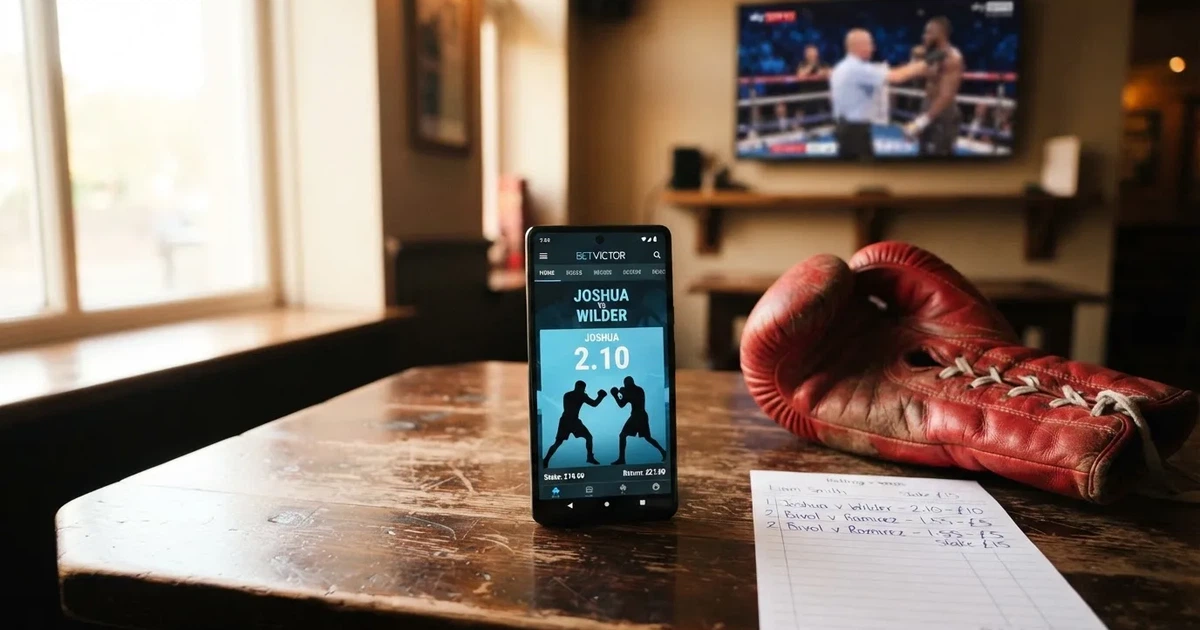
A decimal price of 2.10 means a $10 stake returns $21 — the $10 stake plus $11 of profit. A price of 1.45 means the same $10 returns $14.50, with $4.50 of profit. Decimal odds in New Zealand are written the way the TAB app shows them on a bet slip: a number, a stake, a potential return. The lower the price, the shorter the odds and the more the bookmaker expects that fighter to win; the higher the price, the longer the shot and the bigger the return on a stake that survives the fight.
The mechanic is simple enough, but the price itself is never a pure probability. The bookmaker builds a margin into every market — an edge, sometimes called the overround — that guarantees a profit on the book regardless of the result. A two-way market with the true probabilities at 50/50 prices both sides at 2.00; the bookmaker instead prices them at 1.90 each, and the difference is where the margin sits. What a 1.90/1.90 price actually implies is a payout share of about 95 cents for every dollar staked across both outcomes combined, and a margin of roughly 5% on that market. The rest of every dollar bet on the fight is the bookmaker’s take, baked into the price before a cent changes hands.
The way that margin translates into a punter’s bill is the simplest cost to start with. Two bookmakers offering 1.90 and 2.00 on the same fighter are not offering the same bet. The 2.00 is a 5% better price, and over a season of bets that difference is where the punter’s bankroll lives or dies. The punter who only reads the favourite’s price and not the underdog’s is paying the margin twice — once on the favourite, once on the draw or the method-of-victory runner they ignored.
Boxing has more two-way and three-way shapes than most sports. The most common are:
- Moneyline — pick the fighter. A draw is its own outcome, not a push.
- Draw — the judges award equal scores. Bookmakers price this as a separate runner because draws in professional boxing are uncommon but not rare.
- Method of victory — pick how the fight ends: knockout, technical knockout, decision, disqualification. Each method carries its own price.
- Round or round grouping — pick in which round the fight ends, or between groupings (rounds 1–4, 5–8, 9–12). The earlier the round, the longer the price on a stoppage because the favourite has to deliver it sooner.
- Over/under total rounds — price on whether the fight ends before or after a stated round threshold, often the halfway mark of the scheduled distance.
- Head-to-head and line betting — a handicap applied to one fighter, settled on the scorecards or by stoppage.
- Same-game multi — combine any of the above from one bout onto one slip. Each leg multiplies into a single price; one losing leg kills the whole bet.
The “draw” outcome is the one that catches out punters who treat boxing like football. A 1X2 football bet has three runners; a boxing moneyline has either two (winner, with draw refunded as a push on some books) or three (winner, draw, with the draw priced separately). TAB NZ prices all three, and the draw is rarely longer than 26.0 on a main-event bout — short enough to ignore on a long-shot multi, long enough to blow a multi when it lands.
What a winning bet pays back is the stake multiplied by the price. A $20 stake at 3.50 returns $70; net profit is $50. A $5 stake at 11.0 returns $55; net profit is $50. The arithmetic is the same in every case, and the bigger the price, the smaller the stake needed to produce a memorable number. The cost of the bet, on the other hand, is the stake itself plus the margin the bookmaker has already taken from the price, and that second cost is invisible until the punter sits down at the end of the year and works out what the bankroll actually returned.
A “push” rule is the other cost-saver worth knowing. Some bookmakers refund the stake on a draw when the punter has backed the moneyline; others treat the draw as a loss. TAB NZ’s published rules settle the moneyline as a loss on a draw, and the draw runner is the punter’s only hedge. The punter who does not know the rule is paying for a bet the bookmaker has already declared void in some other shop.
The “bonus bet” mechanic adds a third cost on top of stake and margin. A $10 bonus bet at 3.00 returns $30 in cash, not $40, and the difference is the operator’s edge on the offer. The stake is not paid back with a winning bonus bet; the punter keeps only the profit, and the offer is worth what the profit comes to after the qualifying conditions are met. More on that in the section on what offers cost a punter.
Boxing fixtures, weight classes and the fights that get a market
Professional boxing is scheduled in rounds, not minutes. A main-event world-title bout typically runs twelve three-minute rounds with a one-minute rest between each; a four-round fight is common for newer professionals building a record, and a six- or eight-round bout sits in between. The scheduled distance matters to a bet because the “method of victory” and “round grouping” markets price stoppages earlier than the scheduled finish at longer odds — the favourite has to deliver the knockout sooner, and the bookmaker charges for the uncertainty.
The fights that get a market are the ones a sportsbook expects its customers to want to bet on. That usually means a world-title bout, a pay-per-view card with a recognisable name on it, or a domestic headline fight with local interest. The WBA, WBC, IBF and WBO sanction world championships across seventeen weight classes, from strawweight to heavyweight, and the heaviest classes — heavyweight, light-heavyweight, cruiserweight — draw the deepest markets because the names are the most familiar. Lower-weight title fights can be just as competitive on the night, but the published price list tends to be shorter and the round-grouping options fewer.
In New Zealand, the published TAB NZ sportsbook covers boxing as a standard international sport alongside the racing codes. The Betcha app, the second TAB NZ brand, lists MMA/UFC in its combat-sports menu rather than boxing specifically, but its parent sportsbook takes bets on professional fights in the same way. Offshore, the picture is patchier: some sportsbooks that list football, tennis, basketball and the major American leagues also carry a boxing menu under “combat sports” or “other sports”; others do not list boxing at all on their published sports menu, and a punter has to load the operator’s full site to find out.
The cost angle on fixtures is straightforward. A bout that gets a deep market — twelve rounds of round-grouping prices, multiple method-of-victory runners, a handicap line — has a thinner margin than a four-round fight with only a moneyline and a draw. The bookmaker’s edge on the larger card is spread across more runners, so each price carries less of the overround; on a thin card, the same edge is concentrated into two or three prices, and each one is a worse deal for the punter. Choosing the fights that get a market is, in part, choosing the fights where the margin costs the least.
The boxing calendar is year-round but uneven. World-title fights cluster around the major pay-per-view windows in the United States and around the domestic fight nights in the United Kingdom and Mexico; interim and mandatory challengers fill the gaps. There is no off-season in the way football has one, and a punter who wants to follow the sport full-time is choosing from two or three fight cards most weekends rather than the daily menu of a football sportsbook.
A New Zealand punter’s weekend fight card is shaped by the time zones the broadcast comes from. A Saturday-night main event in Las Vegas lands on a Sunday morning in New Zealand, and a Friday-night card from Mexico lands on a Saturday morning. The punter who wants to bet live is betting early; the punter who bets in advance is betting on prices that may not survive the weigh-in. Either way, the fixture is the unit a punter buys, and the punter who treats every fight the same is paying the same margin for a different depth of market.
The weight-class structure also shapes the menu a punter sees. A super-fight at heavyweight gets more markets and more liquidity than a bantamweight title bout, and the price list on the smaller card is thinner by design. The bookmaker is not hiding value; the market is genuinely smaller, and the overround is concentrated into fewer runners. The punter who bets the smaller card is paying a higher percentage on every bet, and the punter who only bets the bigger cards is missing the fights where the price can be out of line with the true probability.
Ten bookmakers compared for boxing betting in New Zealand
The table below sets out the ten brands a New Zealand punter is most likely to meet, in the order set by the New Zealand statute. The first two are the only operators that may lawfully take a boxing bet from a person in New Zealand; the other eight are not licensed here and exist for the comparison because New Zealand players encounter them, not because they have any right to operate in the market. The right-hand column shows what each operator’s published sportsbook actually names — the sports it advertises, the live and virtual products it carries, the offers it headlines — so the reader can see at a glance which menus list boxing, which list combat sports more broadly, and which carry neither.
| Brand | New Zealand status | What the published sportsbook names |
|---|---|---|
| TAB | TAB NZ brand — lawful under section 74AAA of the Racing Industry Act 2020 | Horse and harness racing, rugby union, rugby league, other sports, pre-match and live, with Trackside streaming and in-app betting |
| Betcha | TAB NZ brand — lawful under section 74AAA of the Racing Industry Act 2020 | Horse, greyhound and harness racing, rugby, NRL, MMA/UFC, NBA, NFL, tennis, cricket, football, motorsports, esports |
| RTbet | Not licensed in New Zealand | Football, tennis, table tennis, basketball, ice hockey, American football, baseball, live betting, virtual sports |
| BigClash | Not licensed in New Zealand | Pre-match and live sports betting across international and local leagues, virtual sports, esports on FPS and MOBA titles |
| LegendPlay | Not licensed in New Zealand | Sports, Live Betting and Virtual Sports sections; football, tennis, basketball, ice hockey |
| Alawin | Not licensed in New Zealand | Football, tennis, table tennis, basketball, ice hockey, American football, baseball, live betting, virtual sports, esports |
| BillyBets | Not licensed in New Zealand | Football, tennis, table tennis, basketball, ice hockey, American football, baseball, combat sports, esports, virtual sports, live betting |
| Spinbara | Not licensed in New Zealand | Casino, live casino, sports under one account; first-deposit bonus up to EUR 100, sport crypto welcome up to 200 USDT, casino welcome up to EUR 500 plus 200 free spins |
| Rabona | Not licensed in New Zealand | Sportsbook launched 23 December 2019 as the sixth brand in the Soft2Bet group |
| Thunderpick | Not licensed in New Zealand | Esports-first across CS2, League of Legends, Dota 2 and Valorant; cash-out, markets from the Champions League to the NFL |
The first thing the table makes clear is the split the statute draws. Two brands are lawful, eight are not, and there is no third column of “approved” or “listed” or “regulated in New Zealand” because there is no such list. The Department of Internal Affairs does not maintain a register of bookmakers; it points to TAB NZ as the only provider and warns the rest. The second thing the table shows is how uneven the published menus are. TAB NZ’s app description lists racing, rugby codes and “other sports” — boxing sits inside that “other sports” line, not in the App Store blurb. Betcha names its combat-sports offering as MMA/UFC rather than boxing. The offshore brands are a mix: some list “combat sports” (which covers boxing), some list only the major team sports, and one — Thunderpick — is esports-first and treats football and American sports as a secondary product.
For a New Zealand punter, the table is a starting point rather than a verdict. The lawful two are the only place to bet without taking on the risk that an offshore operator is serving a market it has no right to serve, will not return unspent credits, or will not pay out a large win. The unlawful eight are useful as a comparison because the offshore market is where the better prices sometimes sit, and the punter who reaches for one is choosing a worse legal position for what may be a slightly better decimal price. The write-ups that follow work through each brand on its own terms, and the section on the statute behind boxing betting explains why the legal position is what it is.
One last note on the table: the third column shows what each operator’s homepage or app-store listing names, not the full menu a punter finds by clicking through. A brand that does not list boxing in its blurb might carry a boxing market under “other sports” or “combat sports”; a punter who wants to know loads the full site. The table is the start of the check, not the end of it.
Boxing betting fundamentals for New Zealand punters
Three things make a boxing bet different from a bet on a team sport. The fight has a discrete ending, not a running clock; one outcome settles the bet and the rest of the round-by-round action is colour. The draw is a real outcome, priced separately, and a punter who treats boxing like football will get caught by it. And the bookmaker’s margin is harder to read because the three-way market (winner, loser, draw) splits the overround three ways rather than two.

The first point shapes the market menu. A football sportsbook has over/under totals, both teams to score, correct score, and a dozen other runners; a boxing sportsbook has the moneyline, the draw, method of victory, round grouping, and the same-game multi combinations built from those. The bookmaker is not offering less because there is less to bet on — the fight is rich with detail — but the menu is narrower because the settled outcomes are fewer.
The second point — the draw — is the one that ruins multi-bets most often. A punter who picks three short-priced favourites on a same-game multi and ignores the draw has built a slip that pays out only if all three fights end inside the distance or on the cards in the punter’s favour. A single draw anywhere on the multi kills the whole bet. TAB NZ prices the draw on every main-event bout, and the price is rarely longer than 26.0; the punter who wants to back three favourites in three fights is, on a long enough timeline, picking several draws and not knowing it.
The third point — the margin — is the one the cost angle turns on. A 1.90/1.90 two-way market returns about 95 cents of every dollar staked across both outcomes combined, and the rest is the bookmaker’s take. A 1.45/2.75 fight (where the true probabilities are closer to 65/35) returns less, because the overround is concentrated in the favourite’s price. A 1.20/4.50 mismatch on a one-sided bout returns less still. The thinner the card, the worse each price tends to be, and the punter pays the margin on every bet regardless of who wins.
What a boxing bet actually costs a punter over a season is, then, a function of three things: which fights the punter chooses to bet on, which markets on those fights, and which bookmaker. The first decision is a boxing question (which fights are well-priced, which are mismatched, which are deep enough to offer value on a method-of-victory market). The second is a market question (the moneyline carries less margin than the round grouping, the favourite’s price carries more margin than the underdog’s on a two-way line). The third is a bookmaker question, and in New Zealand it is the narrowest of the three because two brands are lawful and the rest are not.
The fundamentals also include the way a fight is won, because the method-of-victory market prices each method separately. A bout can end by knockout, technical knockout (a stoppage by the referee, doctor or corner), a decision on the judges’ scorecards, or disqualification for fouls. Each method carries a price, and the prices shift as the fight nears: a fighter known for a late stoppage gets shorter on “decision” and longer on “round 9–12” as the card approaches. The punter who does not know the method of a fighter’s last five wins is betting on a market they cannot read.
A draw in professional boxing is the outcome the public forgets and the bookmaker prices. A draw occurs when the judges give both fighters equal scores, and on a three-judge card that means two judges saw it for one fighter and one saw it a draw, or each judge scored it level. Draws are rarer than in amateur boxing because the professionals are more closely matched in scorecards, but they happen, and the price reflects that. The punter who backs the favourite on the moneyline and ignores the draw is buying a bet with a known hole in it.
The scheduled distance rounds out the fundamentals. A twelve-round title bout gets deeper round-grouping markets (rounds 1–4, 5–8, 9–12) than a six-round fight, and the overround on the deeper card is spread across more runners. A four-round fight usually offers only a moneyline and a draw, and the margin on those two prices is higher than the margin on a twelve-round card with six round groupings and four methods. The punter who treats every fight the same is paying a different margin on each, and the punter who only bets the deeper cards is paying a lower margin per bet.
The statute that governs boxing betting in New Zealand
Section 74AAA of the Racing Industry Act 2020, inserted by the Racing Industry Amendment Act 2025 and in force since 28 June 2025, says no person other than TAB NZ may offer racing betting, sports betting or other racing or sports betting to a person in New Zealand, regardless of where that person is resident or incorporated. The Department of Internal Affairs told unlicensed providers to withdraw with immediate effect on the same day, and the change was the end of the legal route by which a second bookmaker applied to take bets from New Zealanders. There is no licence register for bookmakers, because there is only one lawful provider, and the register the Department maintains covers lotteries, casinos and the TAB itself rather than a market of approved online bookmakers. The Gambling Act 2003 and the Racing Industry Act 2020 govern betting; New Zealand differs from overseas markets where a Gambling Commission might oversee licensing.

TAB NZ is run by the New Zealand Racing Board, and its commercial operation has been managed under a 25-year partnership signed in 2023 with Entain, the global betting group. Under that agreement Entain takes a 50% share of gross profits, TAB NZ receives at least $150m a year for the first five years, and Entain made a one-off $100m payment to the racing sector on signing. The two consumer-facing brands are TAB and Betcha; both are run by Entain New Zealand Limited and share a single account framework, a single self-exclusion system and a single New Zealand harm-minimisation regime. They are not rivals — they are the same operator on two apps.
Betting under 18 is an offence under section 89 of the Racing Industry Act 2020, and TAB NZ accounts require a verified New Zealand address and identity document. Land-based casinos in New Zealand have a separate age threshold of 20, and the betting and casino regimes are separate permits under separate statutes. The Gambling Act 2003 governs casino and non-casino gambling; the Racing Industry Act 2020 governs racing and sports betting. The Online Casino Gambling Act 2026 will license online casino gambling in New Zealand and does not extend the betting monopoly — TAB New Zealand’s right to apply for a casino licence is a casino question, not a boxing one.
The offshore situation is the part the law does not neatly settle. The statute targets the operator, not the player: section 19(4) of the Gambling Act 2003 (inserted in 2025) says an individual may not be convicted for placing a bet with an offshore operator in breach of section 74AAA. No published penalty for a player was found, and no prosecution of an offshore bookmaker has been published either. New Zealand does not geo-block bookmaker websites; the law puts the liability on the offshore operator to refuse New Zealand customers, and the Department of Internal Affairs’ stated position is that an offshore bookmaker serving New Zealand is breaking New Zealand law. The Department also warns that overseas operators may be in jurisdictions with minimal consumer safeguards, may not return unspent credits and may not pay out large wins. None of that is a player-penalty, and none of it is a refund guarantee either.
Greyhound racing is closing in stages from 1 August 2026, and from that date offshore operators may not take bets on greyhound races either. The closure does not affect boxing. What it does mean is that the offshore menu a New Zealand punter encounters is, in theory, about to shrink in one direction even if it does not shrink in boxing.
The statute also frames the tax position. For the player, Inland Revenue guidance says recreational gambling winnings are generally not taxable and prize money from TAB horse, dog and trotting races is not taxable; a person who bets as a business is a different case. On the operator side, TAB NZ pays the Problem Gambling Levy of 0.74% of gross profits (in force from 1 July 2025 to 30 June 2028). Overseas operators supplying New Zealand residents pay online gambling duty (12% of profits since 1 July 2024, rising to 16% from 1 January 2027), but a duty being payable does not make an offer lawful. The point-of-consumption charge on offshore racing and sports bets ceased on 30 June 2026. None of that changes which operator may take a boxing bet from a New Zealander; the law on that is the section 74AAA rule, and the tax sits beside it.
The Advertising Standards Authority’s Gambling Advertising Code applies to betting advertisements: ads must not target children (under 14) or young people (14 to under 18), judged by context, appeal and expected audience; must not encourage harm; and must be truthful with terms available. No New Zealand equivalent of a “whistle-to-whistle” ban for betting was found. TAB NZ runs “bonus bets” promotions; no New Zealand rule on bet-bonus size or wagering terms was found, so the conditions come from TAB NZ’s own terms and from the offshore operator’s own terms — never from statute.
What a punter takes from the statute is a short list. TAB and Betcha are the only lawful place to bet. Offshore operators are not lawful to serve New Zealand, and a player is not published as facing a penalty for using them, but a player also has no New Zealand complaints route, no New Zealand harm-minimisation framework, and no guarantee the operator will return unspent credits or pay out a large win. The cost of an offshore bet is the stake, the margin, and the position the punter is in if something goes wrong.
Staying in control of a boxing bet
The account tools TAB NZ and Betcha publish in their apps are the same on both brands, because both are run by Entain New Zealand Limited under the same self-exclusion framework. They are:
- Deposit limits — set a daily, weekly or monthly ceiling on what the account can load. The limit applies across both TAB and Betcha.
- Time-outs — pause the account for a chosen window, from 24 hours to several weeks. The account cannot place bets inside the time-out.
- Self-exclusion — close the account for a longer period, from six months to several years. Reopening is not automatic and requires a cooling-off and a request.
- Reality checks and session timers — prompts that summarise time staked and money spent, surfaced at intervals the customer can configure.
Outside the app, the free Gambling Helpline (0800 654 655, text 8006) and Safer Gambling Aotearoa are the support services the operator points to. Both are funded by the Problem Gambling Levy, a 0.74% levy on TAB NZ’s gross profits that runs from 1 July 2025 to 30 June 2028. The levy is the operator’s contribution to harm minimisation, not the player’s tax, and it funds the helpline, the text line, the counselling services and the public-health messaging around gambling.
There is no single national online-betting exclusion register. The register the Online Casino Gambling Act 2026 will create is for online casinos only, and it does not extend to TAB NZ or Betcha accounts. A punter who wants to be excluded across the New Zealand betting market is relying on the operator’s own self-exclusion to take effect on both brands, because the two share a framework; a punter who wants to be excluded from the offshore market as well has to ask each offshore operator individually, and there is no register to do that through.
What the offshore market does not offer is the New Zealand harm-minimisation framework. The lawful brands operate under the Gambling Act 2003 and the Racing Industry Act 2020, with the Department of Internal Affairs as the regulator and the regulatory oversight body for licensing decisions. The unlicensed eight are licensed (where they are licensed at all) in Curaçao or Anjouan, and the New Zealand complaints route does not reach them. A dispute over a settled bet, a delayed withdrawal or a closed account has to be taken up with the operator directly, and the operator’s own terms are the contract — there is no New Zealand body to escalate to.
The cost of a boxing bet is not only the stake and the margin. It is the time spent checking form, the bankroll tied up across an evening of fights, the temptation to chase a loss with a bigger stake on the next bout, and the cumulative drain on a punter’s finances over a season. The safer-gambling tools the lawful market publishes are an attempt to put a frame around that cost; they do not eliminate it, and a punter who finds the frame is not enough is meant to use the helpline, the text line or the self-exclusion rather than carry on.
A punter who treats the safer-gambling tools as a way to bet more safely rather than as a way to stop is using them in the wrong direction. Deposit limits cap the size of the loss; they do not turn a losing strategy into a winning one. Time-outs are most useful before the urge to bet peaks, not after. Self-exclusion is the only tool that takes the bet off the table, and it is the one a punter who has tried the others and found them not enough is meant to use.
The punter who recognises the warning signs is the punter who acts before the bankroll does. The signs are not always obvious: a bet placed to recover a loss, a stake raised because the last one felt too small, an evening of fights that turned into a weekend, a week that turned into a month. The frame the safer-gambling tools provide is the first line, and the helpline is the second. Neither replaces the punter’s own decision to step back, and the punter who treats them as a substitute is the punter who pays the highest cost of all.
Boxing bookmaker offers and what they actually cost
The “offer” a bookmaker advertises is rarely the offer a punter actually gets. The headline is the number on the banner — “100% bonus”, “boosted odds”, “risk-free bet”, “bet $10 get $30 in bonus bets” — and the small print is the wagering factor, the minimum price, the deadline, the cap on winnings and the market exclusions that decide whether the punter ever sees the headline number in cash. The cost of the offer is the combination of those conditions, and the punter who reads only the banner is the punter who pays the cost.
TAB NZ’s published promotions are “bonus bets” — stake-sized free bets the operator credits to the account, usually in conjunction with a deposit or a qualifying bet. The stake is not returned with a winning bonus bet: a $10 bonus bet at 3.00 returns $30 in cash, not $40, and the difference is the operator’s edge on the offer. The other conditions — minimum odds, expiry, eligible markets — are operator-level and not set by statute; the punter reads them on the promotion’s own terms page before claiming, because no New Zealand rule fixes a minimum odds floor or a maximum expiry.
The offshore brands name offers with different shapes. Spinbara publishes a first-deposit bonus of 100% up to EUR 100, a sport crypto welcome bonus of 100% up to 200 USDT, and a casino welcome bonus of 100% up to EUR 500 plus 200 free spins. Those are headline numbers on a published homepage; the conditions that turn a 100% bonus into a real balance are the wagering factor, the minimum price, the eligible markets and the deadline, and none of those are stated in the headline. BillyBets runs a sports cashback and reload bonus structure plus a coin shop where coins earned through depositing, betting, tournaments and challenges can be exchanged for free bets and free spins, with a five-tier VIP programme on top. The other offshore names in the comparison table have no published welcome offer.
The arithmetic of a bonus offer is, at heart, a turnover calculation. A 100% bonus of EUR 100 with a 6x wagering factor on the bonus amount requires EUR 600 of qualifying bets before the bonus and any winnings become withdrawable; the punter has to place 60 EUR 10 bets, or 30 EUR 20 bets, or 120 EUR 5 bets, and the qualifying bets must meet the minimum-odds floor. If the floor is 1.50, only bets at decimal odds of 1.50 or higher count; if the floor is 2.00, only doubles or longer. The expected cost of clearing the offer depends on the margin of the markets the punter bets on: a 5% market margin over EUR 600 of turnover costs the punter about EUR 30 on average, before any consideration of variance. A 7% market margin costs about EUR 42. The punter is paying the book’s edge on every qualifying bet, on top of the time and the bankroll tied up in the clearing process.
“Boosted odds” is the offer the marketing writes the most loudly and the conditions hide the most aggressively. A boosted price on a fight from 1.90 to 9.00 on an underdog looks like a gift; the conditions are usually a stake cap (the boost applies to a $5 maximum), a one-account-per-customer limit, a payout cap (winnings from the boost may be capped at a stated number), and a market exclusion (the boost may not apply to same-game multis or to bets placed after the bell). The cost of the boost, when those conditions are applied, is the difference between the headline number on the banner and the actual maximum the punter can extract from it.
“Risk-free” is the word to be most careful with. A risk-free bet is usually refunded as a bonus bet when it loses, not as cash, and the refunded bonus bet carries its own wagering factor and minimum-odds floor. The punter is not made whole on a losing “risk-free” bet; the punter is given another bet on the operator’s terms, and the operator’s terms are the point. The cost of a “risk-free” offer is the difference between the stake the punter put down and the bonus bet the operator returned, and the conditions on the bonus bet decide whether the punter ever sees the difference in cash.
For a New Zealand punter, the lawful two (TAB and Betcha) are the only places the bonus-bet offer can be claimed without the offshore caveats. The offshore eight carry the offer plus the offshore position, and the punter who treats the two as the same is mispricing the offer. A “100% bonus” on an offshore book is a 100% bonus on a bet the operator has no right to take, and the wagering conditions that come with it are the wagering conditions of a Curaçao- or Anjouan-licensed operator with no New Zealand complaints route.
The honest framing is to read the offer as three numbers: the headline, the qualifying conditions, and the expected cost of meeting them. The punter who reads only the first is the punter the marketing is written for. The punter who reads all three is the punter who knows what the offer is worth before claiming it, and who walks away from the ones that cost more than they pay.
Boxing tipsters, forecasts and the punter’s bankroll
A boxing tip is a forecast of who will win and how. A tipster is a person or a service that sells those forecasts, usually for a subscription fee, sometimes for free in exchange for affiliate revenue from a bookmaker. The forecast is a prediction; the prediction is not a fact, and the punter who treats it as one pays for the tipster’s record with real money.
What a tip can legitimately offer is information — a fighter’s recent form, a stylistic matchup, a stoppage rate, a judges’ history, an injury that has not yet been reported widely. A tipster who does the work is closer to a researcher than a forecaster, and the punter who pays for the work is paying for the time, not for the win. A tipster who sells a “lock” or a “sure thing” is selling a story, because no fight is a lock and no outcome is certain until the judges’ scorecards are read or the towel comes in.
Bankroll management is the discipline that costs the punter less than the tipster subscription. A bankroll is the amount of money the punter has set aside for betting, separate from rent, food and savings; a unit is a fraction of that bankroll (usually 1% to 5%) that the punter stakes on any single bet. The 1% unit is the conservative end — a $1,000 bankroll, a $10 unit — and the 5% unit is the aggressive end. The punter who varies the unit by confidence is the punter who blows the bankroll first, because confidence is the feeling the punter has after the bet is placed, not before.
The cost of a tipster subscription is the fee plus the bets the punter places on the tip. A $50 monthly subscription funded by a $200 increase in monthly betting volume is a $50 cost if the punter breaks even on the bets, more if the bets lose, less if they win — and the punter who cannot separate the subscription from the bets is the punter who cannot tell whether the tipster is adding value. The honest framing is: a tipster is a researcher, a tip is information, a bankroll is a budget, and a unit is a stake. The punter who treats all four as the same thing is the punter who loses the lot.
What a punter can do without paying anyone is check the form, watch the weigh-in, look at the judges assigned to the fight, and read the betting rules of the bookmaker they are using. Those four steps cost nothing and replace the cheapest tipster subscription on the market. They will not produce a winning record on their own — no process can — but they remove the worst of the uninformed bets, and the worst of the uninformed bets is where the bankroll goes first.
The record a tipster publishes is the next thing to read with care. A “win rate” of 70% on 50 fights is a small sample; a 55% win rate on 500 fights is a more meaningful number. A tipster who does not publish the full record (wins, losses, voids, the closing price at the time of the tip) is publishing a marketing figure, not a track record. The punter who treats the win rate as a forecast is the punter who is buying the marketing.
What a punter cannot do is turn a small edge into a large one by betting more. The punter who has a 55% strike rate at the average price and stakes 10% of the bankroll per bet is closer to ruin than the punter who stakes 2% with the same edge. The Kelly criterion is the formal version of this point; the informal version is that a unit too large is the same as no edge at all, because the variance wipes the punter out before the edge has time to show.
A boxing punter’s bankroll is also shaped by the sport’s rhythm. Football has a Saturday cluster of fixtures and a midweek cup round; boxing has two or three fight cards a weekend and gaps between. The punter who budgets by the week rather than by the fight card runs out of bankroll on a thin weekend and has nothing left for the deep card the following week. The punter who budgets by the card and skips the thin ones is the punter who keeps a stake available for the fights that actually have a market.
The ten bookmakers reviewed
This section works through each of the ten brands in the comparison table on its own terms. The first two are the lawful New Zealand operators; the other eight are not licensed in New Zealand and are reviewed because New Zealand punters encounter them, not because they have any right to operate here. Each card closes with a verdict that fits the brand and the cost angle.
TAB — the only lawful online sportsbook in New Zealand
TAB is the consumer brand of TAB New Zealand, the statutory racing and sports betting operator under the Racing Industry Act 2020. The app, published on the New Zealand App Store under the seller name New Zealand Racing Board, was first released on 8 September 2014 and covers horse and harness racing, rugby union, rugby league and other sports, pre-match and live, with Trackside live race streaming, racing form, Blackbook, Jockey Challenge tools and a simplified wallet for deposits and withdrawals. The app carries a 17+ age rating while stating that customers must be 18 or over to bet. Safer-gambling tools (deposit limits, time-outs, self-exclusion) are published in the app, and the same exclusion applies across TAB and Betcha.
For boxing, the app menu lists racing, the rugby codes and “other sports” — boxing sits inside that line, and a punter who loads the boxing tab finds the same moneyline, draw, method-of-victory, round-grouping and same-game multi markets that the major international sportsbooks carry. The prices are the lawful New Zealand prices, and the margin is whatever TAB NZ has built into them on the day.
Verdict: the only place a New Zealand punter can place a boxing bet with the full protection of the New Zealand framework, and the price the punter pays is whatever the margin is on the day — no offshore edge, no offshore discount either.
Betcha — the second TAB NZ brand, on a newer app
Betcha is the second consumer brand of TAB New Zealand, published on the New Zealand App Store by Entain New Zealand Limited and first released on 6 August 2024. The published menu covers horse, greyhound and harness racing, rugby, NRL, MMA/UFC, NBA, NFL, tennis, cricket, football, motorsports and esports. The combat-sports line in the App Store description is MMA/UFC rather than boxing specifically, but Betcha is run by the same operator as TAB and the boxing markets sit in the same sportsbook engine — a punter who wants to bet on a fight on Betcha is placing the bet through the same account framework, the same self-exclusion system and the same New Zealand harm-minimisation regime as on TAB.
Verdict: the same product and the same protection as TAB, on a newer app; the choice between the two is a question of which interface a punter prefers, not which is safer.
RTbet — a Curaçao-licensed sportsbook with a mainstream menu
RTbet is an offshore sportsbook licensed in Curaçao. The published homepage lists football, tennis, table tennis, basketball, ice hockey, American football and baseball, with live betting and virtual sports on top. Boxing is not named in the homepage blurb; the punter who wants to know whether RTbet carries a particular fight has to load the full sports menu. Curaçao gives no right to take bets from people in New Zealand, and there is no New Zealand complaints route or harm-minimisation framework that reaches RTbet.
Verdict: a Curaçao-licensed sportsbook with a mainstream sports menu; this operator falls outside the New Zealand regulatory framework and lacks corresponding consumer protections.
BigClash — a Curaçao-licensed sportsbook built around virtuals and esports
BigClash is an offshore sportsbook licensed in Curaçao under 8048/JAZ. The published homepage advertises pre-match and live sports betting across international and local leagues, plus virtual sports and esports on FPS and MOBA titles. The sports list is broader than the headline “international and local leagues” suggests, but the specific sports on the menu are not enumerated in the published material.
Verdict: a Curaçao-licensed sportsbook focusing on virtuals and esports; since the site is not licensed in New Zealand, players must verify the full market list by loading the site directly.
LegendPlay — an Anjouan-licensed sportsbook with a thin mainstream menu
LegendPlay is an offshore sportsbook licensed by the Anjouan Gaming Authority. The published homepage shows Sports, Live Betting and Virtual Sports sections, with football, tennis, basketball and ice hockey listed. Boxing is not in the published list, and the operator’s Anjouan licence gives no right to take bets from people in New Zealand.
Verdict: a thin mainstream-sports menu plus virtuals; it is not authorised by New Zealand regulators, and boxing is absent from its primary menus.
Alawin — an offshore sportsbook with no published licence that applies in New Zealand
Alawin is an offshore sportsbook whose published licence is not stated in the available material. The published homepage lists football, tennis, table tennis, basketball, ice hockey, American football and baseball, with Live Betting, Virtual Sports and esports alongside. Boxing is not named on the homepage.
Verdict: a mainstream-sports menu with esports and virtuals; because the brand lacks a New Zealand licence, it is not a recommended choice for local punters.
BillyBets — the offshore brand with the most boxing-relevant published menu
BillyBets is an offshore operator that runs a casino and a sportsbook under one account. The published sportsbook covers football, tennis, table tennis, basketball, ice hockey, American football, baseball, combat sports, esports, virtual sports and live betting. “Combat sports” is the line that catches a boxing punter’s eye — it is the only one of the eight offshore brands that names a category boxing falls into without having to dig into the full site. BillyBets also publishes cashback and reload bonuses on sports, a coin shop where coins earned through depositing, betting, tournaments and challenges can be exchanged for free bets and free spins, and a five-tier VIP programme.
Verdict: the offshore brand with the most boxing-relevant published menu, though it lacks local licensing; the cashback and coin shop structure cannot compensate for the absence of a New Zealand regulatory framework.
Spinbara — an offshore operator with a three-part welcome offer in EUR and USDT
Spinbara is an offshore operator that runs casino, live casino, jackpots and sports under one account. The published welcome package is a first-deposit bonus of 100% up to EUR 100, a sport crypto welcome bonus of 100% up to 200 USDT, and a casino welcome bonus of 100% up to EUR 500 plus 200 free spins. The sports menu is not enumerated in the published material.
Verdict: a three-part welcome offer; the brand is not authorised in New Zealand, and the bonus terms, quoted in foreign currency, highlight its status as an operator outside the local jurisdiction.
Rabona — an established Soft2Bet sportsbook launched in 2019
Rabona is an offshore sportsbook launched on 23 December 2019 as the sixth brand in the Soft2Bet group. The published material names the launch date and the group rather than the sports menu.
Verdict: an established Soft2Bet sportsbook with a multi-year operating history, not licensed in New Zealand, and a punter who chooses Rabona is choosing the Soft2Bet group over the New Zealand framework on the strength of a brand the homepage does not enumerate.
Thunderpick — an esports-first Curaçao-licensed sportsbook
Thunderpick is an offshore operator that is esports-first, licensed in Curaçao under OGL/2024/677/0722 with holder Paloma Media B.V. The published sportsbook covers CS2, League of Legends, Dota 2 and Valorant as the headline offering, with a cash-out feature and markets from the Champions League to the NFL as the secondary product. Boxing is not named in the published menu, and the operator’s framing is “esports betting and casino” rather than combat sports.
Verdict: an esports-led sportsbook with a cash-out feature, not licensed in New Zealand, and a boxing punter who reaches for Thunderpick is reaching for the cash-out button on a sportsbook that did not list boxing in its own blurb.
What the bookmaker’s margin looks like in a 1.90/1.90 boxing price
The odds the bookmaker publishes are not the true probabilities of a fight; they are the probabilities with the bookmaker’s margin baked in. The math of how that works is the same on every two-way market, and a 1.90/1.90 boxing price is the cleanest illustration of it.
At decimal odds of 1.90 on both sides of a fight, the implied probability on each runner is 1 ÷ 1.90, or about 52.6%. Add the two implied probabilities and the total comes to about 105.3% — over 100% because the bookmaker has built an edge into both prices. The difference between 105.3% and 100% is the margin, in this case roughly 5.3%, and the gap is what the bookmaker keeps of every dollar bet on the market. The other way to see the same number is the payout share: a punter who stakes $1 on each side of a 1.90/1.90 fight and one of them wins collects $1.90, which is about 95 cents for every dollar staked across both bets. The remaining 5 cents per dollar is the bookmaker’s take on that market.
The condition that produces this band is a balanced book — the bookmaker has roughly equal money on both sides. In practice, books are rarely balanced, and the bookmaker adjusts the prices to balance the book as fight night approaches. A 1.90/1.90 price at the open can become 1.85/1.95 if the favourite takes more money, and the margin on the market can stay roughly the same while the individual prices move. The margin is the number that does not change much; the prices do.
For a boxing punter, the 1.90/1.90 example is a clean illustration, not a price a punter will see often. A genuinely 50/50 fight is rare, and a more typical two-way price on a one-sided main-event bout sits in a heavier range, with the favourite carrying more of the margin in the price. The same arithmetic applies: the implied probabilities add to more than 100%, and the overround is the bookmaker’s edge. The cost of a bet is the stake, the price and the margin combined, and the margin is the part the punter cannot avoid by picking a winner.
What the calculation gives is the bookmaker’s average take on the market — an estimate over many bets at the same prices, not a guarantee on any single fight. A punter who bets once at 1.90/1.90 either wins $0.90 on the dollar or loses the whole stake, and the 5.3% margin shows up as a long-run cost across hundreds of bets, not a single-bet charge. The arithmetic says nothing about who will win a particular fight, and it does not need to: the margin is the price of admission, and the punter pays it on every bet regardless of the result.
The same math applied to a three-way boxing market — winner, loser, draw — splits the margin three ways rather than two. A 1.40/3.50/26.00 price set (favourite, underdog, draw) carries implied probabilities of about 71.4% + 28.6% + 3.8%, which sum to about 103.8%, and the margin is roughly 3.8% on the three-way market. The favourite’s price carries more of the overround in absolute terms because more money goes on the favourite, but the percentage margin is the same across the three runners. The punter who backs the draw is paying the same percentage of stake to the bookmaker as the punter who backs the favourite, and the draw punter’s expected return is lower because the runner is less likely to win.
Frequently asked questions
How are boxing betting odds set?
Boxing odds are set from a starting model of each fighter’s chance of winning, then adjusted as money comes in. The published price is the model probability with a margin added, so the implied probabilities on all runners add to more than 100%. The further over 100%, the worse the long-run return for the punter. The closer to true probability, the better the deal.
How do bets on boxing settle?
A boxing bet settles when the fight ends. A moneyline settles on the winner or the draw; a method-of-victory bet settles on how the fight ended — knockout, technical knockout, decision, disqualification. A round-grouping settles on the round. A same-game multi settles only if every leg wins; one losing leg kills the whole bet.
Which bookmakers may lawfully take bets in New Zealand?
TAB and Betcha, the two TAB New Zealand brands, are the only operators that may lawfully take racing and sports bets in New Zealand under section 74AAA of the Racing Industry Act 2020, in force since 28 June 2025. No licence route exists for another bookmaker — the statute names TAB NZ as the sole lawful provider.
How is the return on a boxing bet worked out?
The return is the stake multiplied by the decimal odds. A $20 stake at 3.50 returns $70 — $20 stake plus $50 profit. A winning bonus bet returns only the profit, not the bonus stake, because the operator does not return the bonus stake on a win. The arithmetic is the same in every case.
What does the bookmaker’s margin look like in the odds?
The margin is the gap between the implied probabilities on all runners and 100%. On a 1.90/1.90 fight the implied probabilities add to 105.3%, and the 5.3% is the bookmaker’s edge. A punter staking $1 on each side gets 95¢ back on the winner. That 5¢ per dollar is the long-run cost of every bet.
Tennis, golf & more – dogracingnz.com
Content created by the «dogracingnz.com» team
