
Spread Betting in New Zealand: What the Law Allows and Where to Bet Instead
 Available in US
31 October 2026 snapshot, checked against the Racing Industry Act 2020 (section 74AAA, in force since 28 June 2025) and the Gambling Act 2003, as administered by the Department of Internal Affairs.
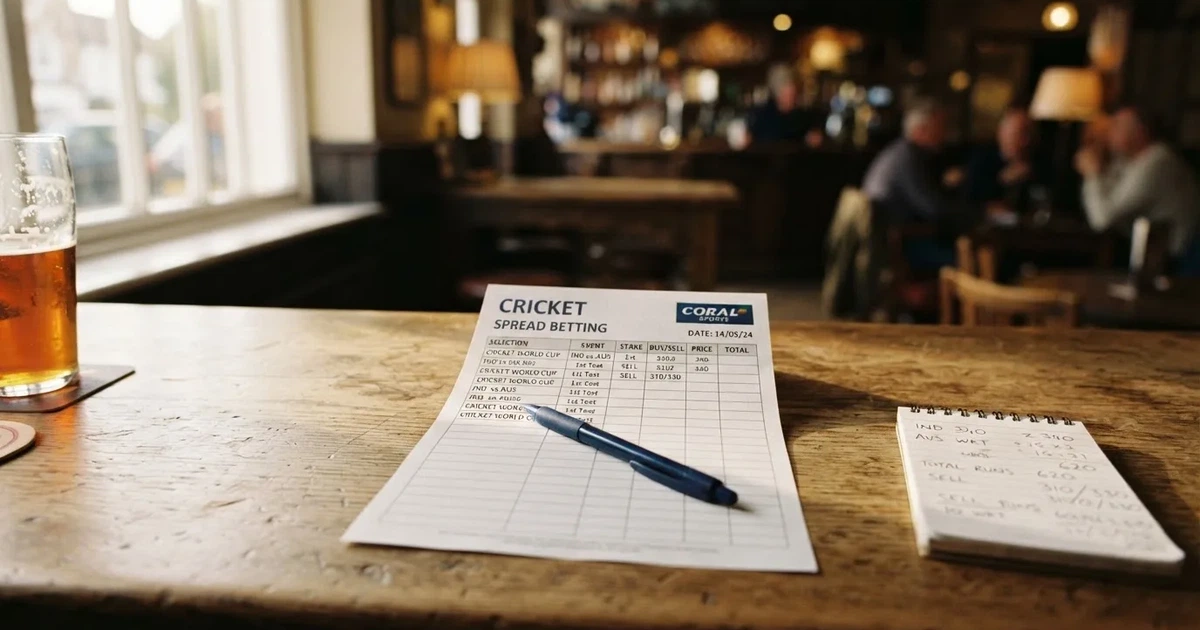
Spread betting is a phrase New Zealand punters hear often and almost never meet in practice. The reason is blunt: under the law as it stands, no spread-betting provider is allowed to serve customers in New Zealand. TAB NZ and its online sister brand Betcha hold the only lawful channel for racing and sports betting here, and the markets they offer are fixed-odds and tote (pool) bets, not the points-away-from-a-line wager that defines spread betting in the United Kingdom and parts of Europe.
That gap between the name and the offer is what this page closes. The first half explains what spread betting actually is, why it sits outside New Zealand’s betting definition, and what a bettor who wants a stake on a sports event ends up doing instead. The second half maps the brands a New Zealand reader is most likely to encounter online, ranks them on the criteria that matter, and shows where each one fits.
The statute that shapes the market
The single most important sentence in New Zealand betting law is section 74AAA of the Racing Industry Act 2020. Inserted by the Racing Industry Amendment Act 2025 and in force from 28 June 2025, it states that no person other than TAB NZ may offer racing betting, sports betting, or other racing or sports betting to a person in New Zealand, regardless of where that person is resident or where the operator is incorporated. The Department of Internal Affairs told providers serving New Zealand to withdraw with immediate effect.

There is no licence to apply for. There is no licence register for bookmakers, because there is only one lawful operator. TAB NZ runs two online brands, TAB and Betcha, and they are not rivals. Entain operates the business under a 25-year partnership signed in 2023, with a 50/50 share of gross profits, at least $150 million a year going to TAB NZ for the first five years, and a one-off $100 million payment to the racing sector. The monopoly is by design, not by accident, and it has no expiry date written into the section.
What the law covers and what it leaves alone
The Racing Industry Act 2020 reads “sports betting” narrowly. It names fixed-odds and tote bets; it does not name spread betting or exchange betting, and the absence matters because section 74AAA closes off any “other racing or sports betting” along with the named forms. Spread betting is, on that reading, inside the prohibition even though the Act never uses the words. Online casino gambling is a separate question: the Online Casino Gambling Act 2026 licenses online casinos only, and TAB NZ holds the right to apply for that licence. A casino permit is not a sports-betting permit, and gaining the first does not extend the second.

The law does not block websites. New Zealand does not geo-block offshore bookmakers; the obligation sits with the operator. Section 19(4) of the Gambling Act 2003 says an individual may not be convicted simply for placing a bet with an offshore operator in breach of section 74AAA, and no source publishes a penalty for a player who does. What the Department of Internal Affairs does publish is a warning: overseas operators may sit in jurisdictions with minimal consumer safeguards, may not return unspent credits, and may not pay out large wins. That warning is the legal frame a New Zealand bettor ought to weigh before opening an offshore account.
The greyhound racing industry is closing in stages from 1 August 2026, and offshore operators may not take bets on greyhound races from that date. The rule tracks section 74AAA: the moment a racing code leaves the calendar, the betting channel for it closes with it.
Tax and what a winning bet leaves with
Inland Revenue treats recreational gambling winnings as generally not taxable, and prize money from TAB horse, dog, and trotting races is explicitly outside the tax base. A person who bets as a business sits in a different case; that is general information, not tax advice, and anyone in that bracket ought to check with Inland Revenue or an accountant.
The operator side carries two figures. TAB NZ pays the Problem Gambling Levy of 0.74% of gross profit, set for the period from 1 July 2025 to 30 June 2028. Offshore operators supplying New Zealand residents pay an online gambling duty of 12% of profits since 1 July 2024, rising to 16% from 1 January 2027. The duty is not a legality stamp: paying tax to a foreign jurisdiction does not turn an unlawful offer into a lawful one under New Zealand law. The point-of-consumption charge on offshore racing and sports bets ceased on 30 June 2026.
Safeguarding the punter
The single lawful operator has to carry the safeguarding work for the whole market. TAB NZ’s app lists deposit limits, time-outs, and self-exclusion among its tools, and an exclusion applies across both online brands. The free Gambling Helpline is 0800 654 655, with a text line at 8006, and Safer Gambling Aotearoa publishes material for anyone wanting to read before acting.
The age for TAB NZ betting is 18. Land-based casinos in New Zealand are 20, a gap that catches the unwary. Betting under 18 is an offence under section 89 of the Racing Industry Act 2020. Accounts at TAB NZ require a verified New Zealand address and identity, which means offshore punters are not eligible for the lawful channel at all.
There is no single national online-betting exclusion register in New Zealand. The online-casino register the 2026 law creates is for casinos only, and the betting register, if one ever comes, has not been announced. For now, a punter who wants to step away has to do it operator by operator, and offshore operators carry no New Zealand complaints route at all.
New Zealand’s betting advertising is governed by the Advertising Standards Authority’s Gambling Advertising Code. Ads must not target children under 14 or young people aged 14 to under 18, judged by context, appeal, and expected audience; ads must not encourage harm and must be truthful, with terms available. No New Zealand equivalent of a “whistle-to-whistle” broadcast ban was found. TAB NZ runs “bonus bets” promotions, and there is no statutory cap on either the size of a bonus bet or the wagering terms attached to one; the figures come from TAB NZ’s own terms, not from a regulator’s rule book. The page does not print a working bonus code or a sign-up link; describing what an offer is worth is one thing, advertising it is another.
What spread betting actually is, and why it is not on TAB NZ’s slip
Spread betting, in the British form most readers meet online, is a wager on whether a number is above or below a quoted range. The bookmaker posts two prices around an expected value, and the punter either buys at the top of the range or sells at the bottom. Settlement is not “win the stake or lose the stake”; it is the stake multiplied by the number of points the outcome lands away from the bet level. Buy at 350 on a cricket spread of 340–350, stake $10 a point, and a final team score of 400 returns $500 in profit; the same bet loses $500 if the team is bowled out for 300. The same arithmetic drives financial spread betting on indices, FX, and commodities, with collateral typically set at 5% to 10% of total exposure and losses that are not capped by the stake.
In a North American point-spread football market the structure looks similar but settles differently. A spread of -4.5 for the favourite means the favourite must win by five or more for the bet to cash; the standard price is -110, which in decimal terms is roughly 1.91. A result landing exactly on the spread is a push and the stake is refunded. Neither form appears on TAB NZ’s published betting rules. TAB NZ offers Win, Place, Each Way, Quinella, Exacta, Trifecta, First Four, Double, Treble, Daily Double, Running Double, Quaddie, Big6, and multis (including same-game multis), but no spread product.
The mismatch explains why a New Zealand punter searching for spread betting meets a wall. The product exists in other markets; under section 74AAA the provider does not, and the terms of engagement with the only lawful channel sit in a different vocabulary altogether.
The arithmetic that drives the price
A bookmaker’s margin is what separates a fair book from the actual line you see. For a two-way market with decimal odds of 1.90 on both sides, the payout share is the reciprocal of the sum of the implied probabilities, so 1 ÷ (1 ÷ 1.90 + 1 ÷ 1.90) = 1 ÷ (0.5263 + 0.5263) = 1 ÷ 1.0526 ≈ 0.95, and the margin is roughly 1 − 0.95 = 0.05, or about 5%. That figure is an estimate of what the bookmaker keeps from every unit staked on that market, before any other deductions. Higher-profile markets tend to run with a smaller margin; novelty markets and in-play markets tend to run wider. The odds you see at 1.90 and 1.90 are not a generous offer; they are a balanced book with a built-in edge.
For a combined bet, the odds multiply leg by leg. Two selections at 1.90 each combine to 3.61; the bookmaker’s margin stacks with each leg, so two-leg parlays are usually a worse deal per unit of risk than the singles they came from. This is why serious punters shop singles harder than they shop accumulators.
A “free bet” worth $20 at 1.90 odds is not a $20 bankroll. The stake is usually not returned with a win, so the value comes out at roughly $20 × (1.90 − 1) ÷ 1.90, which is about $9.47 on a winning outcome, less if the bet loses outright. The “free” is in the participation, not the headline number.
Sports and tournaments a New Zealand punter bets on
New Zealand is a market where racing carries weight even in the age of streaming sport. Thoroughbred, harness (trots), and greyhound racing until the code closes from 1 August 2026 sit at the heart of TAB NZ’s calendar, with the Melbourne Cup and other spring features drawing pools that dwarf most rugby league weekly cards. Super Rugby Pacific, the All Blacks in test windows, NRL, the Warriors, the Black Caps in summer and winter, and the football codes through the European leagues fill the rest of a typical week.
Spread betting markets, in jurisdictions that allow them, attach most often to total team scores in cricket, points totals in basketball, and goal totals in football. The reason is volume: each match produces enough scoring events to make a high or low range tradeable. New Zealand’s TAB NZ menu runs fixed-odds and tote markets on the same fixtures, with head-to-head, line (handicap), and totals offered on the marquee events.
The greyhound closure is a meaningful change for punters who built a routine around it. From 1 August 2026 TAB NZ does not offer greyhound betting and offshore operators may not take bets on greyhound races from anyone in New Zealand. The racing codes that remain are thoroughbred and harness, alongside the rest of the sports calendar. For a punter whose portfolio leaned mostly on the dogs, the next month or two is the window to redirect.
How a TAB NZ bet actually moves from click to payout
The day-of-race procedure is the simplest version. A punter with a TAB NZ account opens the app or site, finds the race, picks a runner, enters a stake, and confirms the bet. The odds displayed are fixed at the moment the bet is struck, and the result pays the dividend declared after the race. A win bet pays win only; an each-way bet splits into two stakes, one for the win and one for the place, with place paying a fraction of the win dividend.
For a sports multi, the procedure is much the same, with legs added to a slip until the punter confirms. A same-game multi restricts the legs to one event; a standard multi pulls from different events. A “cash out” feature, where TAB NZ buys the bet back before all legs settle, is offered on selected slips, with the cash-out figure fixed at the moment the punter accepts. Where the cash-out button is greyed out, the feature is not available for that market at that time.
Live betting is listed in the TAB NZ apps, and the rule that distinguishes New Zealand from some European markets is that no statutory ban on in-play betting exists here. The available markets in-play are TAB NZ’s choice, not a regulator’s. Any restriction on what can and cannot be bet on in-play play sits in TAB NZ’s published terms, not in the Act.
For a withdrawal, the punter requests a payout to the original deposit method or to a verified bank account. Timeframes are operator-level and vary by method; payouts to a domestic bank account typically settle faster than withdrawals back to international cards. The page does not generalise a “fastest withdrawal” claim; punters checking before they deposit find the live figures on TAB NZ’s help pages.
Ranking the brands a New Zealand punter meets
The ranking below follows one rule. TAB NZ and Betcha come first because they are the lawful option for a New Zealand address; the rest of the list is reference material, marked clearly as not licensed in New Zealand, rated on the same criteria but never presented as an alternative to the monopoly. The table has three columns: the brand, its New Zealand status, and what the operator’s own terms state about the section’s subject — in this case, what a New Zealand reader is most likely to care about: bet types offered, payment reach, and any local-protection claim.
The comparison
| Brand | New Zealand status | What the operator’s own terms state |
|---|---|---|
| TAB | One of two online brands of TAB NZ, the only lawful online sports and racing bookmaker in New Zealand (Racing Industry Act 2020, section 74AAA, in force since 28 June 2025). | Fixed-odds and tote bets on thoroughbred, harness, and greyhound racing (greyhound betting ends from 1 August 2026) and on a wide sports menu; same-game multis; live in-play on selected markets; deposit limits, time-outs, and self-exclusion in the app; accounts require a verified New Zealand address. |
| Betcha | One of two online brands of TAB NZ, the only lawful online sports and racing bookmaker in New Zealand (Racing Industry Act 2020, section 74AAA, in force since 28 June 2025). | Daily Toolbox with odds boosts and insurance tools for bets that do not land; Bet Social section where punters chat, follow tipsters, and share bets or pools; Playbook with tips and match analysis; same gambling-harm tools as TAB across both brands. |
| Rabona | Not licensed in New Zealand — only TAB NZ may offer racing and sports betting to people in New Zealand (section 74AAA); named Curaçao licence gives no right to take bets from people in New Zealand; no New Zealand complaints route. | Launched 23 December 2019 as the sixth online sportsbook of the Soft2Bet group; offers a sportsbook and casino menu under Curaçao oversight; subject to that licence’s terms only. |
| Sportaza | Not licensed in New Zealand — only TAB NZ may offer racing and sports betting to people in New Zealand (section 74AAA); named Anjouan licence (ALSI-202606064-FI2) gives no right to take bets from people in New Zealand; no New Zealand complaints route. | Cash out before an event or market is finalised; Bet Builder where, if one selection is void, the whole betslip is void; multiples; Asian lines; interval markets in 1, 5, 10, or 15 minute ranges. |
| RTbet | Not licensed in New Zealand — only TAB NZ may offer racing and sports betting to people in New Zealand (section 74AAA); named Curaçao licence gives no right to take bets from people in New Zealand; no New Zealand complaints route. | Cash out before an event or market is finalised; the cash-out amount is fixed at the moment it is accepted; no guarantee that the feature is always available. |
| Telbet | Not licensed in New Zealand — only TAB NZ may offer racing and sports betting to people in New Zealand (section 74AAA); the brand names no licence that applies in New Zealand; no New Zealand complaints route. | Crypto casino and sportsbook; offers single bets and stake formats in fiat and crypto; account terms sit outside any New Zealand regulatory framework. |
| 22Bet | Not licensed in New Zealand — only TAB NZ may offer racing and sports betting to people in New Zealand (section 74AAA); named Curaçao licence 8048/JAZ (holder TechSolutions Group N.V.) gives no right to take bets from people in New Zealand; no New Zealand complaints route. | Single bets, accumulators, systems, and chains; live betting with real-time odds and score updates. |
| Rooster.bet | Not licensed in New Zealand — only TAB NZ may offer racing and sports betting to people in New Zealand (section 74AAA); named Tobique Gaming Commission e-gaming licence No. 0000002 (holder Novatrix SRL) gives no right to take bets from people in New Zealand; no New Zealand complaints route. | Sportsbook and casino under a Tobique e-gaming licence; subject to that licence’s terms only. |
| Spinbara | Not licensed in New Zealand — only TAB NZ may offer racing and sports betting to people in New Zealand (section 74AAA); the brand names no licence that applies in New Zealand; no New Zealand complaints route. | First deposit bonus advertised at 100% up to EUR 100 and a sport crypto welcome bonus of 100% up to 200 USDT on the English site, alongside a separate casino welcome offer. The page describes these in their stated form; it does not run them as a recommendation. |
| Thunderpick | Not licensed in New Zealand — only TAB NZ may offer racing and sports betting to people in New Zealand (section 74AAA); named Curaçao licence OGL/2024/677/0722 (holder Paloma Media B.V.) gives no right to take bets from people in New Zealand; no New Zealand complaints route. | Crypto esports betting and casino under a Curaçao licence; subject to that licence’s terms only. |
The status column drives every other decision. A punter with a New Zealand address betting on a New Zealand-eligible event ought to use TAB or Betcha; the offshore list is for context only, and the obligation sits with the operator, not with the punter, when someone uses them anyway.
TAB: the channel you use by default
TAB’s proposition is the proposition every other brand in the table is judged against. Fixed-odds and tote markets on every racing code until greyhound racing closes; a sports menu covering rugby league, rugby union, cricket, football, basketball, and the international events New Zealand punters follow; same-game multis on the marquee matches; live in-play on selected markets; safer-gambling tools inside the app; and an account-verification process that locks offshore punters out of the lawful channel entirely.
The strengths sit in three places. The first is volume on racing: the tote pools and the fixed-odds markets run side by side, with quinella, exacta, trifecta, and First Four on the bigger meetings. The second is the safety framework: deposit limits, time-outs, and self-exclusion that an exclusion applies across both TAB NZ brands; the helpline and text line at 0800 654 655 and 8006; and the operator’s contribution to the Problem Gambling Levy at 0.74% of gross profit. The third is accountability: TAB NZ is a statutory body under the Racing Industry Act 2020, and the Department of Internal Affairs oversees its compliance.
The limits are where they always are in a monopoly. The promotional depth is what one bookmaker decides, not what a competitive market produces. The in-play range is what TAB NZ chooses to list, and punters used to a wider menu will notice the gaps. The settlement product set is fixed-odds and tote; spread betting, exchanges, and the points-away-from-the-line wager are not on the slip and will not be under the current Act.
For a New Zealand resident betting on racing and sport, the verdict is straightforward: TAB is the lawful choice, and the punter who wants a stake on a New Zealand-eligible event uses it by default, with the safety tools and the complaints framework that go with that choice.
Betcha: the second skin of the same operator
Betcha is the second online brand of TAB NZ, and the same legal analysis applies. The brand wraps the TAB NZ wagering engine in a more social product: a daily Toolbox with odds boosts and insurance tools for bets that do not land, a Bet Social section where punters chat, follow tipsters, and share bets or pools, and a Playbook with tips and match analysis. The point-of-difference from TAB is presentation, not the underlying offer.
The strengths mirror TAB’s at the regulatory level and diverge on the surface. A punter who wants the racing-and-sport depth of TAB with a community layer on top gets it here. The safer-gambling settings carry across because the parent operator applies the exclusion brand-wide. The risk profile is identical to TAB for the same wager.
The limit is that “second brand of the same operator” is the only honest reading. Presenting Betcha as a rival bookmaker creates a choice that does not exist in law. For a punter who likes the social features, the verdict is to use it as a TAB-shaped alternative experience, recognising that the change is in the chrome and not in the wager.
Rabona: a Curaçao bookmaker with a Soft2Bet pedigree
Rabona launched on 23 December 2019 as the sixth online sportsbook of the Soft2Bet group and runs under a Curaçao licence that carries no local recognition. The brand is reference material in this table: it sits here because New Zealand readers meet the name, not because it is a lawful option.
The strengths are in the product breadth typical of a Soft2Bet site: a sportsbook with major European leagues, a casino floor, and the bonus structure common to that group. The limits are everything that follows from sitting outside the New Zealand framework: no New Zealand complaints route, no recourse to the Department of Internal Affairs, and the operator’s own terms sit in a Curaçao-court jurisdiction. The Department of Internal Affairs warning about unreturned credits and unpaid large wins applies in full.
For a local resident, Rabona represents an offshore name rather than a functional alternative, and the safest approach is to use TAB or Betcha for any wagering needs.
Sportaza: cash out, bet builder, and the void-leg rule
Sportaza’s published terms name cash out, a Bet Builder, multiples, Asian lines, and interval markets in 1, 5, 10, or 15 minute ranges, with the rule that if one Bet Builder selection is void, the whole betslip is void. The brand holds an Anjouan licence (ALSI-202606064-FI2), which has no legal status for local operators.
The strengths are in the in-play and builder coverage: cash out before settlement, void single leg clear in print, and 15-minute interval markets on selected sports put feature density ahead of competitors. The limits are familiar. Anjouan oversight, no New Zealand complaints route, and the Department of Internal Affairs warning in full apply.
The verdict matches the rest of the offshore list. Sportaza is a brand with a strong product page that does not extend into New Zealand as a lawful choice.
RTbet: a cash out pinned to the moment of acceptance
RTbet’s terms make the cash-out feature’s mechanics explicit: the amount is fixed at the moment the punter accepts it, and the brand does not guarantee that the feature is always available. The bookmaker runs under a Curaçao licence that is not recognised within the national framework.
The strengths are in clarity. A punters who has been burned by a cash-out figure that slipped between the offer and the acceptance knows why this disclosure matters. The limits remain the framework ones. Curaçao oversight, no New Zealand complaints route, the same warning.
RTbet is a product page with no pathway for a local resident.
Telbet: a crypto sportsbook and casino
Telbet describes itself as a crypto casino and sportsbook, with stake and bonus formats in fiat and crypto, and a welcome offer displayed on its Russian-language site. The brand names no licence that applies in New Zealand.
The strengths are in the dual rail of crypto and fiat, which makes the brand easy to access from jurisdictions where cards are restricted. The limits are the framework limits. No New Zealand-recognised licence, no New Zealand complaints route, and the Department of Internal Affairs warning applies.
The verdict is again the same. Telbet is on the list for completeness, not as a New Zealand option.
22Bet: Curaçao 8048/JAZ, singles to chains
22Bet’s menu covers single bets, accumulators, systems, and chains, with live betting that updates odds and scores in real time. The Curaçao licence is 8048/JAZ, holder TechSolutions Group N.V., and it operates outside the New Zealand jurisdiction.
The strengths are breadth: the chain bet, where the stake from a winning leg rolls into the next selection, is a 22Bet staple that adds a structural option most books do not carry. The limits are the framework limits. Curaçao 8048/JAZ, no New Zealand complaints route, the warning.
22Bet offers an expansive product list, yet without local authorisation, it cannot be recommended as a reliable destination for any local account.
Rooster.bet: a Tobique e-gaming licence and a Costa Rica operator
Rooster.bet is operated by Novatrix SRL, a Costa Rica company with registration number 3-102-893958, under e-gaming licence No. 0000002 from the Tobique Gaming Commission. The licence does not give a right to take bets from people in New Zealand.
The strengths of the Tobique framework, in jurisdictions that recognise it, are a streamlined online-gaming registration and a single licence covering casino and sportsbook. The limits are the framework limits for a New Zealand reader. Tobique oversight, no New Zealand complaints route, the warning.
The verdict is the same. Rooster.bet is a recognisable brand on the offshore rail, not a New Zealand option.
Spinbara: bonus figures worth reading before any decision
Spinbara’s English site advertises a first deposit bonus of 100% up to EUR 100, a sport crypto welcome bonus of 100% up to 200 USDT, and a separate casino welcome offer of 100% up to EUR 500 plus 200 free spins. The brand names no licence that applies in New Zealand.
The strengths are in the bonus structure’s depth, with sport and casino offers side by side and a crypto option for the sport welcome. The limits are in the offering itself. A bonus that draws a punter in is not a free bankroll; the wagering terms, the minimum price for a qualifying bet, and the deadline sit in the brand’s terms and are not on the landing page. No New Zealand-recognised licence; the Department of Internal Affairs warning applies.
Spinbara’s flashy welcome offers may catch the eye, but their lack of local licence means the prudent punter will prefer the regulated path offered by TAB or Betcha.
Thunderpick: Curaçao OGL/2024/677/0722 with an esports lean
Thunderpick is owned and operated by Paloma Media B.V., a Curaçao company with company number 146988, licensed by the Curaçao Gaming Authority under licence number OGL/2024/677/0722. The licence gives no right to take bets from people in New Zealand.
The strengths are in the crypto esports focus, with a casino layered on for users who want it. The limits are the framework limits. Curaçao oversight, no New Zealand complaints route, the warning.
The verdict closes out the table in the same shape as the rest of the offshore list. Thunderpick is on the list because New Zealand punters meet the name; it is not a New Zealand option.
Reading the market behind the brands
Three reads cut across the operator-by-operator review. The first is that New Zealand is structurally a single-operator market for racing and sports, with two brands painted over the same engine. Any comparison that places an offshore bookmaker ahead of TAB or Betcha on legality gets the comparison wrong; any review that omits the offshore operators because they are illegal here undersells the choice problem a New Zealand punter faces when a friend mentions a name from a streamside chat.
The second is that the offshore list is not a ranking of quality but a record of reach. Brands that originate from Curaçao, Anjouan, and Tobique carry product features that compete on their own turf. None of those features matter to a New Zealand address if the punter wants the safer-gambling tools, the New Zealand complaints route, and the Department of Internal Affairs oversight that come with the monopoly.
The third is that the gap between the two groups is the rule, and the rule is the point. Punter protection is what an offshore licence does not provide, and what TAB NZ’s statutory position does. The page sits in favour of the lawful option for anyone placing a bet from a New Zealand address, and it states plainly that the offshore brands listed are not in the same category.
Choosing a path when the path is one
The choice is narrower than it looks. A New Zealand resident wanting to bet on racing or sport has one lawful channel with two faces. TAB is the racing-depth face, with tote and fixed-odds on every code until greyhound closes, and a sports menu covering the leagues Kiwis follow. Betcha is the same engine with a community layer, a daily Toolbox, and a Playbook of tips.
For the punter who already has a TAB NZ account and wants the safety tools, deposit limits and self-exclusion applied across both brands carry the same weight on either brand. For the punter who is new, the better starting point is whichever app a friend uses, because the underlying offer and the safety framework are identical. For the punter who has stepped away and wants to set a deposit limit, the limit applies on either TAB or Betcha and the helpline is the same.
For the punter who has met an offshore brand and is considering it, the test is whether the New Zealand features matter. They probably do. The Department of Internal Affairs warning about unreturned credits and unpaid large wins is the regulator’s own read; the offshore dispute path is whatever the operator’s own licence provides, which is not a New Zealand framework; and the section 74AAA position that the offering is unlawful for the operator to make does not change because the player chooses to use it.
The greyhound closure from 1 August 2026 is the live change a New Zealand punter needs to plan for. Punters with a dog-racing habit have a closing window to redirect to thoroughbred, harness, or sports, and to ask TAB NZ what its staking plan looks like on the codes it retains. The offshore list does not pick up the gap: offshore operators may not take greyhound bets from New Zealand from that date either, which closes the rail both ways.
Frequently asked questions
How does spread betting work in football?
In a spread-betting football market the bookmaker quotes a range around an expected total — goals, corners, cards — and the punter buys the high end or sells the low end. The stake is multiplied by the number of units the outcome lands away from the chosen level, so a $10-per-goal bet at 2.7 goals returns $30 profit if the match finishes with five goals, and loses $30 if it finishes with none. This product is not on TAB NZ’s menu.
How do you bet against the spread?
Betting against the spread, in the North American sense, means taking the points the favourite gives or the points the underdog receives. A favourite at -4.5 must win by five or more for the bet to cash; the price is typically -110 in American, roughly 1.91 in decimal. The North American product is not on TAB NZ’s menu, which lists head-to-head, line (handicap), and totals rather than point spreads.
How do you bet against the spread in football?
The same arithmetic, applied to a football spread of -4.5 on the favourite, requires a five-point margin of victory to win. A push (the favourite wins by exactly four and a half, which is the line because point-spread books quote at half-points to avoid the void) is structurally impossible; the half-point rule is what makes the line work. New Zealand punters using TAB NZ bet line (handicap) rather than against the spread.
Which bookmaker may lawfully take sports and racing bets in New Zealand?
TAB NZ and its online sister brand Betcha are the only operators lawfully offering racing and sports betting to people in New Zealand under section 74AAA of the Racing Industry Act 2020, in force since 28 June 2025. Both brands are run by TAB NZ in partnership with Entain; they are the same operator with two faces.
How is the return on a bet worked out from the stake and the odds?
For a single bet at decimal odds, the gross return is the stake multiplied by the odds, and the net profit is the stake multiplied by (odds − 1). A $10 bet at 2.10 returns $21 gross and $11 net. For a multi, the legs’ decimal odds multiply into a single price before the stake is applied; a two-leg multi at 2.10 and 1.90 carries combined odds of 3.99 and a $10 stake returns $39.90 gross.
What is the bookmaker’s margin and how can it be seen in the odds?
A bookmaker’s margin is the share of every dollar staked that the book expects to keep on a market in the long run, before any deductions. For a balanced two-way market at decimal odds of 1.90 and 1.90, the payout share is roughly 0.95 and the margin is roughly 0.05, or about 5%. Higher-margin markets show wider odds gaps (1.80 versus 2.05), and competitive markets show tighter gaps. The margin is an estimate of an edge, not a promise of profit.
Tips & strategy – dogracingnz.com
Content created by the «dogracingnz.com» team
