
Betting with Visa in New Zealand: who can take your money, and who can pay it back
 Available in US
A punter who reaches for a Visa card at the checkout of a sportsbook is asking the same question in two voices: “which bookmakers accept Visa?” and “what happens once the bet is settled?”. In New Zealand those two questions land in different places. The first sits inside a market that no longer accepts new entrants: since 28 June 2025, TAB NZ and its sister brand Betcha are the only operators allowed to take online racing or sports bets from a person in New Zealand. The second sits inside ordinary payment plumbing — Visa rails, a 1.3% interchange ceiling Visa sets for many European member-state regulators, settlement windows that Visa itself does not enforce but that card issuers and merchants agree on between themselves.
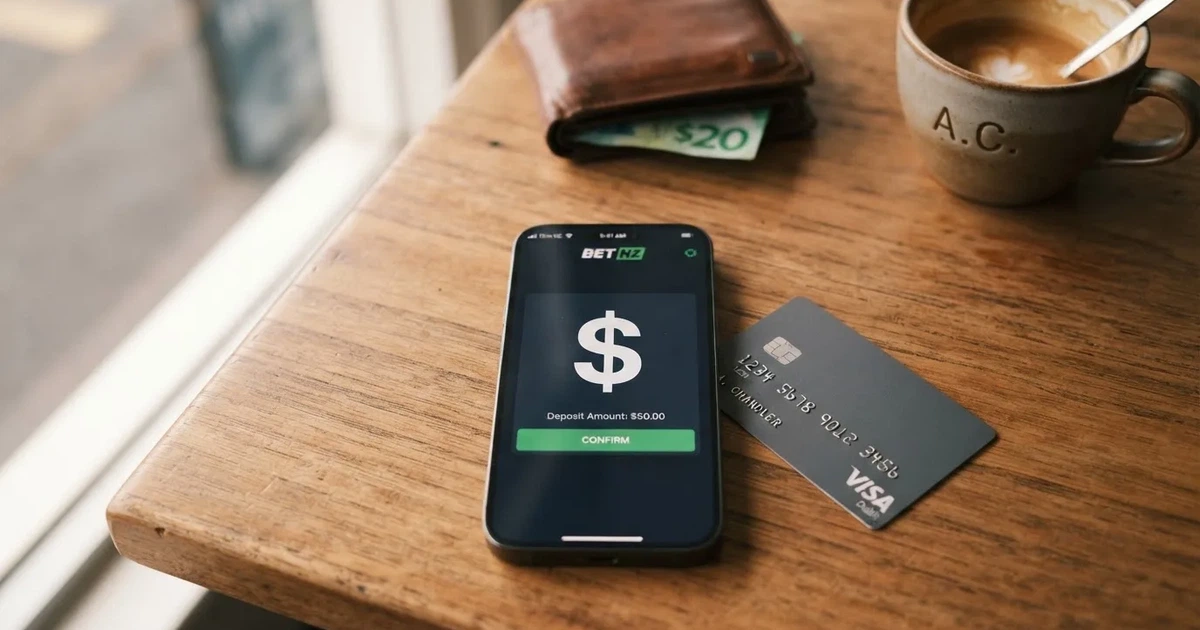
This page reads both halves in turn. It explains who can lawfully take a Visa deposit from a New Zealand bettor in 2026, what the Visa acceptance of an offshore brand looks like in its own terms, and what the punter pays for the convenience in deposit minimums, in payout speed, and in recourse if the operator stops returning money. The angle throughout is consequence: a payment method is a contract, and what it costs the punter shows up not in the headline brand promise but in the rule that sits beside it.
Currency snapshot: 31 October 2026, verified against the Department of Internal Affairs register and TAB NZ’s published terms.
The six brands this page covers, ranked
The ranking that follows has to be read carefully. New Zealand law allows only one operator group, TAB NZ, to take racing and sports bets from people in New Zealand. Every other brand reviewed here is unlawful for the operator to serve New Zealand — that is the law’s verdict, not a footnote. Within that constraint, the six are ordered for the bettor who is comparing them on payment terms, payout speed and minimum deposit, with the lawful New Zealand options at the top because they are the only ones the punter can use without legal exposure for the operator and without the recourse problems the Department of Internal Affairs warns about.

| Brand | New Zealand status | What its own terms say about Visa deposits and withdrawals |
|---|---|---|
| TAB | TAB NZ brand (lawful) | TAB NZ’s own published terms list its accepted deposit methods; Visa acceptance is set there, not by the brand. |
| Betcha | TAB NZ brand (lawful) | Same wallet as TAB NZ, governed by the same TAB NZ terms; Visa flows through the parent platform. |
| Rooster | Not licensed in New Zealand | Card deposits by Visa and Mastercard from a €/$20 minimum, instant processing, no fees; card withdrawals 1–3 banking days. |
| RTbet | Not licensed in New Zealand | NZD appears in the withdrawal-limits table; Visa is among the card rails but the public terms focus on crypto and e-wallets. |
| Sportaza | Not licensed in New Zealand | NZD appears in the withdrawal-limits table; Visa card rails are listed, with the same day-level limits as RTbet. |
| Winz | Not licensed in New Zealand | Crypto-only cashier — BTC, ETH, USDT and others; no Visa card rail in the cashier at all. |
The order holds for one reason: a New Zealand punter who wants to bet lawfully must use TAB or Betcha, and a punter who chooses an offshore brand accepts a different cost in recourse and a different status under section 74AAA of the Racing Industry Act 2020. The detail behind each row sits in the operator reviews later in the page.
What “sports betting with Visa” actually means in 2026
Visa is a card network, not a betting product. The card a punter slides into a sportsbook checkout is issued by a bank, routed through Visa’s network, and settled against the punter’s bank account or credit limit. Two thirds of the world’s cards outside China carry a Visa logo, which is why almost every online bookmaker that takes cards lists Visa first. In 2026 the operative question for a New Zealand punter is not whether a brand “accepts Visa” — most do — but whether the brand can lawfully serve a New Zealand cardholder, and what the brand’s own terms do to the deposit and the withdrawal once the card is in play.

Three things follow from that distinction.
First, Visa itself does not choose which merchants can take Visa-branded cards. Banks that issue Visa cards do, by deciding which merchant category codes they block or allow; sports betting sits under a merchant category code that some banks — Barclays in the United Kingdom is one — let customers toggle off entirely through a gambling transaction block. A punter whose Visa has been switched off at the issuer cannot transact with a sportsbook even if the sportsbook’s own cashier lists Visa. A punter whose Visa has not been switched off transacts normally; the bank lets the payment through, and the sportsbook either accepts or declines it on its own terms. Both decisions sit outside Visa’s network.
Second, the speed of a Visa deposit is set by the sportsbook, not by Visa. A merchant can hold a pre-authorisation for up to several days before releasing it; a sportsbook can mark a deposit “instant” while the issuer’s actual posting takes hours; a withdrawal can be queued for one to three banking days while Visa’s rails themselves settle in seconds. The discrepancy between the brand’s marketing claim and the punter’s experience is almost always on the merchant or the issuer side, not the network side.
Third, the cost of a Visa transaction splits three ways. The interchange fee — what the merchant’s bank pays the punter’s bank — sits in a regulated band: a 0.20% debit-cap ceiling applies across the European Economic Area, a 1.65% that regulation cuts to roughly 0.30% once interchange caps are applied for credit cards. The merchant’s bank adds a scheme fee and an acquiring margin. The punter usually sees none of these. In the United Kingdom, the law changed in January 2018 to stop retailers adding surcharges on card transactions, including Visa payments. None of this is gambling-specific; it is the rail every punter is paying for whether the merchant or the punter notices.
The page does not promise that paying with Visa is cheaper, faster or safer than paying by bank transfer, by e-wallet or by crypto. It does promise that the punter who understands which of those costs sits on the merchant, which sits on the bank and which sits on the punter will not be surprised by the charge that turns up a week after a deposit.
How the New Zealand market for sports betting actually works
A punter searching for “sports betting with Visa” in 2026 is searching against a market that has been redrawn. Three dates shape it.
The Racing Industry Act 2020 reorganised the racing and sports-betting framework and named TAB NZ as the sole provider. The Racing Industry Amendment Act 2025 inserted section 74AAA into that act, and the new section took effect on 28 June 2025: no person other than TAB NZ may offer racing betting, sports betting or other racing or sports betting to a person in New Zealand, regardless of where that person is resident or incorporated. The Department of Internal Affairs, the regulator under the Gambling Act 2003, told unlicensed providers to withdraw with immediate effect. The Online Casino Gambling Act 2026, which sits beside the betting monopoly rather than on top of it, licenses online casino gambling only and does not open a route for a second sportsbook.
The effect on the punter is structural. There is no licensing route for another bookmaker in racing or sports. There is no licence register for betting, because there is only one lawful operator. New Zealand does not geo-block offshore websites, so a punter who clicks through to an offshore brand from a New Zealand address still reaches a working site. The law targets the operator, not the punter: section 19(4) of the Gambling Act 2003, inserted in 2025, says an individual may not be convicted for placing a bet with an offshore betting operator in breach of section 74AAA. No source states a penalty for the punter. Honest framing matters here. Offshore betting is not illegal for the player in the published record, and offshore betting is not legal either — it is unlawful for the operator to serve the player, and the player accepts the consequences the Department names without the protection the New Zealand framework offers.
TAB NZ is run under a 25-year partnership Entain signed in 2023. Entain operates the TAB business; TAB NZ keeps a 50/50 share of gross profits; TAB NZ receives at least NZ$150 million a year for the first five years; Entain made a one-off NZ$100 million payment to the racing sector on signing. TAB and Betcha are not rival bookmakers. They are the two online brands of TAB NZ, sharing a wallet, a cashier, a safer-gambling framework and an exclusion system that crosses between them.
The punter who compares Visa acceptance between TAB and an offshore brand is consequently not comparing two products of the same kind. TAB offers the product inside a regulator’s oversight, with deposit limits and self-exclusion inside the app, a Problem Gambling Levy of 0.74% (in force 1 July 2025 to 30 June 2028), and the Gambling Helpline (0800 654 655, text 8006) listed alongside. An offshore brand offers the product with no New Zealand regulator behind it, no local harm-minimisation framework, and a published warning from the Department that overseas operators may not return unspent credits or pay out large wins.
How to compare a Visa-accepting sportsbook against the field
The comparison on this page tests six brands across the same five matters, in the same order. The matter each row tests is set by what a punter’s payment actually depends on, not by what the brand’s marketing names first.
The first matter is New Zealand status. TAB and Betcha are TAB NZ brands; the rest are not licensed in New Zealand. The status decides whether the brand can lawfully serve a New Zealand cardholder at all. A punter who treats this as background and not as a primary filter is reading the comparison the wrong way round.
The second matter is the cashier itself. Does the brand take Visa at the deposit, at the withdrawal, or at both? Does it take Visa in the same currency the punter’s bank charges in, or only in euro and US dollar with a conversion fee baked into the spread? A brand that takes Visa only for deposits and pays back through bank transfer or crypto is not “a Visa bookmaker” in the punter’s working sense — it is a brand whose deposit rail is Visa and whose payout rail is something else.
The third matter is the minimum deposit and the minimum withdrawal. Rooster publishes a €/$20 minimum on Visa and Mastercard, which is the cleanest public floor on the list. RTbet, Sportaza and FunBet publish NZD in their withdrawal-limits tables — a useful tell that the brand knows New Zealand customers exist and has sized the limits in their currency. A brand that publishes the floor in euro and dollar and leaves New Zealand dollars to a conversion is one the punter pays a margin to use.
The fourth matter is payout speed. Rooster publishes 1–3 banking days for card withdrawals. BigClash, off-list but in the wider research, publishes the same window. Winz publishes instant withdrawals on crypto, which is the floor; RTbet, Sportaza, FunBet, Rooster all leave the card-withdrawal window at the same 1–3 days.
The fifth matter is recourse. TAB NZ offers the punter the New Zealand harm-minimisation framework and a regulator the punter can complain to. Offshore brands offer the punter the licence they name on their terms page — Tobique Gaming Commission for Rooster, Curaçao for RTbet, Anjouan for Sportaza, Anjouan and Tobique for Winz — and no New Zealand complaints route reaches any of them.
A sixth matter, the punter’s own bank, sits underneath the rest. A Barclays-style gambling transaction block in the punter’s mobile banking app stops detectable debit card payments to gambling providers, including Visa-branded payments. The same block at ANZ or ASB or Westpac works to the same end through the merchant category code that identifies the merchant as a gambling operator. A punter whose bank has activated that block cannot reach the cashier at all, no matter what the brand publishes. The block is set by the punter’s bank, not by Visa, and it is the cheapest cut a New Zealand punter can make before deciding which bookmaker to use.
The brands, in order
TAB — the lawful New Zealand sportsbook, with Visa acceptance set by TAB NZ’s own cashier
TAB is the longest-established brand in the New Zealand betting market. It is one of two online brands of TAB NZ, the operator that holds the section 74AAA monopoly on online sports and racing betting from people in New Zealand. Visa acceptance here is set by TAB NZ’s published terms, not by TAB the brand, and the cashier flows through the parent platform’s deposit and withdrawal methods.
What the punter pays for the convenience is what every regulated TAB NZ customer pays: a deposit in New Zealand dollars with no spread on the Visa rails, a withdrawal that goes back to the same Visa card the punter used to fund the account in the first place, and a regulator behind the cashier. The minimums, the maximums and the speed sit inside TAB NZ’s own published payment terms rather than in a marketing claim. The punter who reads those terms before the first deposit avoids the kind of dispute that an offshore brand’s terms put on the punter by default.
The TAB NZ app lists the safer-gambling tools the punter can switch on at any time: deposit limits, time-outs, and self-exclusion. The exclusion crosses between TAB and Betcha — one switch, both brands — and the helpline (0800 654 655, text 8006) sits in the same menu. The app also adds Trackside live race streaming with in-app betting, racing form, Blackbook and Jockey Challenge tools, and a simplified wallet. None of these are Visa features; they are the package TAB NZ wraps around the Visa rail, and they are the reason a New Zealand punter who has a problem at the cashier has somewhere to take it.
The verdict for this brand is straightforward. TAB is the only lawful online sportsbook in New Zealand, it accepts Visa through TAB NZ’s own cashier, and the punter pays nothing for the privilege of using it beyond the ordinary bookmaker margin on every market. A punter whose goal is to bet on Super Rugby Pacific, on the All Blacks, on the Melbourne Cup or on the Black Caps without leaving the New Zealand regulatory framework chooses TAB by default.
Betcha — the second TAB NZ brand, with the same cashier and the same Visa rail
Betcha sits beside TAB in the ranking for one reason only: it is the other online brand of TAB NZ, the punter reaches it through a different product surface, and it shares the wallet, the cashier and the exclusion framework with TAB. A punter who opens a Betcha account and a TAB account in the same name opens one account, because the platform is one. The Visa rail flows through the same TAB NZ deposit and withdrawal methods.
The brand exists because TAB NZ wanted a second online front door, not a second bookmaker. The product mix is TAB NZ’s: fixed-odds and tote bets, racing and sports, the same Win, Place, Quinella, Exacta, Trifecta, First Four and Same Game Multi formats, and the same deposit limits, time-outs and self-exclusion tools. The brand’s marketing differs from TAB’s; the operator behind it does not.
The verdict sits one line below the TAB verdict. A punter who prefers Betcha’s product surface chooses it for the same reason the punter chooses TAB — the lawful New Zealand brand under TAB NZ, with Visa acceptance in the TAB NZ cashier and the same exclusion, helpline and regulator behind both. There is no second-best here, only a second front door.
Rooster — the card-friendly offshore brand, with a €/$20 Visa minimum and a Curaçao-style licence
Rooster takes card deposits by Visa and Mastercard from a €/$20 minimum, processes them instantly, charges no fee, and pays card withdrawals back in 1–3 banking days. That is the cleanest public card policy on the offshore side of the table and the reason the brand sits third in the ranking.
The licence the brand names is a Tobique Gaming Commission e-gaming licence (No. 0000002), held by Novatrix SRL. The Tobique licence is a Canadian First Nations licence and is not recognised by the New Zealand Department of Internal Affairs for the purpose of section 74AAA. The brand can lawfully take bets in Tobique’s jurisdiction; it cannot lawfully serve a person in New Zealand. The terms page does not list New Zealand among the explicitly excluded jurisdictions, and a punter who reaches the cashier from a New Zealand address reaches a working site.
The punter’s recourse is the licence Rooster names on its terms, plus the merchant category-code rules the punter’s bank applies. There is no New Zealand complaints route, no New Zealand harm-minimisation framework, and no New Zealand regulator the punter can complain to if the brand stops returning money. The Department of Internal Affairs warns that overseas operators may not return unspent credits and may not pay out large wins.
The verdict for Rooster is that the brand offers the cleanest public card policy among the offshore options reviewed here, and the punter who chooses it accepts that the policy is enforced only by the brand and the Tobique regulator, not by anyone in Wellington. A €/$20 minimum keeps the brand accessible to small stakes; a 1–3 day card payout sits inside the same window the other offshore brands publish. A punter who wants a Visa deposit and a Visa withdrawal under one cashier finds Rooster’s policy the most legible of the offshore options reviewed.
RTbet — NZD in the withdrawal-limits table and Curaçao behind the licence
RTbet publishes New Zealand dollars in its withdrawal-limits table, which is the second-most useful public tell the punter can read: the brand has sized its limits for New Zealand customers and has set them at 1,000 per day / 13,000 per month at the Bronze level rising to 3,000 per day / 35,000 per month at the Elite level. RTbet’s terms do not list New Zealand among the excluded jurisdictions in section 2.3, so the cashier opens to a New Zealand card.
The brand runs on a Curaçao licence. Curaçao licences do not authorise a brand to serve a person in New Zealand under section 74AAA. The brand can lawfully serve Curaçao-jurisdiction customers; it cannot lawfully serve New Zealand residents. The punter’s recourse is Curaçao’s regulator and the merchant category-code rule the punter’s bank applies.
The Visa rail at RTbet is part of a wider cashier that runs from card into e-wallets and into crypto, and the punter’s cheapest route is the one the punter’s own bank allows. Card deposits and withdrawals move through the same 1–3 banking-day window that Rooster publishes; NZD limits mean a New Zealand punter pays no conversion spread on the limits themselves, only on the stake if the punter deposits in another currency.
The verdict is that RTbet offers the New Zealand punter a sized-in-NZD cashier with a Curaçao licence behind it, and the punter pays for the convenience by accepting that no New Zealand regulator reaches the brand. The NZD limits are the reason this brand sits above the rest of the offshore set in the ranking — the punter who bets in NZ dollars pays no surprise conversion margin inside the limit.
Sportaza — Anjouan licence, NZD limits, the same Visa rail
Sportaza runs on an Anjouan licence (ALSI-202606064-FI2), and the punter reaches a working cashier from a New Zealand address because Sportaza’s terms do not list New Zealand among the excluded jurisdictions in section 2.3. The NZD appears in Sportaza’s withdrawal-limits table, from NZ$1,000 per day / NZ$13,000 per month at level 1 to NZ$3,000 per day / NZ$35,000 per month at level 5. The NZD limits sit at the same shape as RTbet’s limits, which is the second NZD-sized cashier in the offshore set.
The Anjouan licence is recognised by Sportaza’s own regulator; it is not recognised by the Department of Internal Affairs as a route to serve a person in New Zealand under section 74AAA. The punter’s recourse is Anjouan and the merchant category-code rule the punter’s bank applies, with no New Zealand complaints framework behind the cashier.
The Visa rail at Sportaza takes card deposits and pays card withdrawals back through the same 1–3 banking-day window the offshore brands publish. The punter who bets in NZ dollars pays no conversion spread on the limits. The punter who bets in euro or US dollar pays the spread the punter’s bank charges on the conversion, which is the rail’s ordinary cost rather than the brand’s.
The verdict is that Sportaza offers the New Zealand punter the same sized-in-NZD cashier as RTbet, with the same 1–3 banking-day card payout and the same absence of a New Zealand complaints route. A punter comparing RTbet and Sportaza on payment terms reads them as near-twins; the differentiator for the punter is the product surface and the markets each brand offers, not the cashier.
Winz — crypto-only, with no Visa rail at all
Winz accepts BTC, ETH, LTC, BCH, DOGE, USDT, BNB, ADA, TRX, XRP and SOL. Deposits are made by connecting a crypto wallet; withdrawals go back to the same wallet. The brand advertises no deposit limits and instant withdrawals. There is no Visa rail in the Winz cashier.
The brand runs on Anjouan and Tobique licences, both held by Novatrix SRL. The licences are not recognised by the Department of Internal Affairs as a route to serve a person in New Zealand under section 74AAA. The punter’s recourse is the licence Winz names and the wallet provider the punter uses.
The verdict is that Winz is the outlier of the offshore set and is included because the comparison asked for a brand without a Visa rail to set the floor. A New Zealand punter who wants to bet with Visa does not choose Winz. A New Zealand punter who has decided to move the stake onto a chain chooses Winz for the speed; a punter who has not has no reason to be here.
What a Visa deposit actually costs the punter
A Visa transaction in 2026 splits its cost between three parties, and the punter sees one of them, sees hints of another, and never sees the third. The third is the interchange fee: what the merchant’s bank pays the punter’s bank for accepting the card. In the European Economic Area, interchange is capped at 0.20% for consumer debit cards and at 0.30% for credit cards. In the United Kingdom, the Payment Systems Regulator proposed new transparency rules in May 2024 requiring Visa and Mastercard to disclose detailed fee information to merchants — the proposal is a merchant-side disclosure, not a punter-side one.
The second is the merchant’s bank, which adds a scheme fee and an acquiring margin on top of interchange. The merchant’s bank sets the merchant’s effective cost, and the merchant absorbs it. The punter sees nothing on the receipt because the merchant’s bank has not raised a separate charge.
The first is the punter’s bank, which can charge a foreign-transaction fee if the merchant settles in a currency other than the punter’s account currency. A New Zealand punter depositing in euro or US dollar pays whatever spread the punter’s bank applies to the conversion. A New Zealand punter depositing in NZ dollar pays nothing on this line, which is the case at TAB and Betcha and at the brands that publish NZD limits.
A punter at TAB or Betcha pays the bookmaker’s margin on every market. A punter at an offshore brand pays the bookmaker’s margin plus whatever markup the brand adds on the currency conversion if the punter deposits in euro or US dollar. The brand’s headline “no fees” claim is true on the merchant side; it is silent on the issuer side.
When a Visa deposit lands and when it does not
The Visa rail itself settles in seconds. The merchant decides when to capture a pre-authorisation; the punter’s bank decides when to post the transaction; the merchant’s bank decides when to credit the merchant. The punter’s experience of “instant” or “1–3 days” is set by the merchant and the bank, not by Visa.
At TAB and Betcha, deposits clear in real time on the cashier, and TAB NZ’s published terms set the ceiling. The punter who reaches the cashier with a New Zealand Visa debit card sees the deposit on the TAB NZ balance inside the same session.
At Rooster, deposits are processed instantly with no fees. Withdrawals take 1–3 banking days. The punter sees the deposit on the Rooster balance inside the same session, and the punter sees the withdrawal on the Visa statement one to three banking days later.
At RTbet, Sportaza and FunBet, deposits clear in real time and withdrawals clear in the same 1–3 banking-day window. The brand publishes the window; the punter’s bank may add a day on top of it.
At Winz, deposits and withdrawals are settled on-chain, and the punter sees the credit inside the punter’s own wallet once the network has confirmed the transaction.
A punter whose deposit does not land is almost always on the bank side, not the network or the merchant side. The Barclays-style gambling transaction block is the most common cause: the punter’s bank has identified the merchant’s category code as gambling and has declined the transaction at the issuer level. The block is set by the punter’s bank, in the punter’s own mobile banking app, and it can be removed by the same channel. New Zealand banks offer the same toggles through their own fraud and gambling-block features; the punter who wants to turn one off turns it off in the bank app, not in the brand’s cashier.
When the payout comes back
The brand’s cashier is the queue. Rooster publishes 1–3 banking days for card withdrawals; BigClash publishes the same; the wider card-withdrawal market sits in the same window. RTbet, Sportaza and FunBet publish the same window for their card rails; the NZD limits the brands list do not shorten it. Winz publishes instant withdrawals on crypto and skips the rail entirely.
Three things sit between the brand’s published window and the punter’s bank statement. The brand’s internal processing, which is usually faster than the published window for compliant withdrawals; the card network’s settlement, which is in seconds; and the punter’s bank, which can hold the credit for an additional day on its own fraud checks. A punter who has bet with an offshore brand and is waiting on a large win must expect the brand’s window to be a floor, not a ceiling, and the punter’s own bank’s hold to be the swing factor.
The wider risk is the one the Department of Internal Affairs names. A New Zealand punter who bets with an offshore brand has no recourse in New Zealand if the brand stops paying. The Department warns that overseas operators may not return unspent credits and may not pay out large wins. A punter who has bet small, withdrawn often, and kept the balance low avoids the worst of the risk; a punter who has let a balance build is exposed to it.
What the law actually says about using Visa at an offshore brand
The law targets the operator, not the punter. Section 74AAA of the Racing Industry Act 2020 prohibits any person other than TAB NZ from offering racing or sports betting to a person in New Zealand, regardless of where that person is resident or incorporated. The Department of Internal Affairs told unlicensed providers serving New Zealand to withdraw with immediate effect. The penalty for the operator is not stated in section 74AAA, and no prosecution of an offshore bookmaker was found.
The punter’s position is set by section 19(4) of the Gambling Act 2003, inserted in 2025, which says an individual may not be convicted for placing a bet with an offshore betting operator in breach of section 74AAA. No source states a penalty for the punter. The Department warns the punter of the risks without prosecuting the punter.
A New Zealand punter who uses Visa at an offshore brand is not breaking a published rule. The punter is using a brand that is breaking one. The difference matters because the punter’s recourse is the brand and the brand’s regulator, not the New Zealand framework. A punter who has a dispute at the cashier takes it to the Tobique Gaming Commission (Rooster), Curaçao (RTbet) or Anjouan (Sportaza, Winz) — never to the Department of Internal Affairs, which has no power over an offshore operator’s cashier.
What the bookmaker’s margin does to the Visa punter
Every price on every market carries the bookmaker’s margin. A market with three outcomes priced at 1.91 / 3.40 / 4.50 has a margin of roughly 5.5% — the bookmaker keeps 5.5 paise of every dollar wagered on that market, on average, across a large number of bets. A market priced at 1.85 / 3.60 / 4.75 carries a tighter margin, closer to 4%. A market priced at 2.00 / 3.20 / 4.20 carries a wider one, closer to 7%. The punter never sees the margin in the price, but the price is what the punter pays for the bet.
The Visa rail does not change the margin. The brand’s margin is the brand’s margin; it does not move with the deposit method. What does move with the deposit method is the conversion spread the punter pays if the brand settles in a currency other than the punter’s account currency. The spread is small on a single deposit; it adds up across a season.
The honest framing here is the one the punter can act on. A New Zealand punter who bets at TAB or Betcha pays TAB NZ’s margin on the market and nothing on the rail. A New Zealand punter who bets at an offshore brand with a Visa card pays the brand’s margin on the market and the punter’s bank’s conversion spread if the brand settles in euro or US dollar. The two costs are not the same, and the difference shows up on the bank statement rather than on the betting slip.
Safer gambling tools available to a Visa punter
TAB NZ publishes deposit limits, time-outs and self-exclusion in its apps, and the exclusion crosses between TAB and Betcha. The Gambling Helpline (0800 654 655) and the text line 8006 sit in the same menu. The Problem Gambling Levy of 0.74% is paid by TAB NZ to fund harm-minimisation services, with the current rate in force from 1 July 2025 to 30 June 2028.
The offshore brands reviewed here publish their own safer-gambling tools — deposit limits, time-outs, self-exclusion — but the tools are set by the brand and enforced by the brand’s regulator, not by the New Zealand framework. A New Zealand punter who has self-excluded at TAB NZ has not self-excluded at RTbet, Sportaza or Rooster; the punter who has self-excluded at an offshore brand has not self-excluded at TAB NZ. The punter who wants a single switch off all the brands the punter uses has to set the switch at each one.
A second tool sits at the punter’s own bank. Barclays offers customers a gambling transaction block in its mobile banking app that stops detectable debit card payments to gambling providers, including Visa-branded payments. New Zealand banks offer the same toggle through their own banking apps, and the punter who switches the block on stops the Visa rail at the issuer. The punter who wants to bet cannot, until the punter switches the block off again. The block is the cheapest, fastest cut a New Zealand punter can make, and it sits in the punter’s own banking app rather than in any brand’s cashier.
What a Visa-only punter must check before choosing a brand
Three checks before the first deposit save the punter the disputes that come after.
First, the New Zealand status. TAB and Betcha are lawful for the punter. Every other brand in this comparison is unlawful for the operator to serve the punter, and the punter accepts the consequences the Department names. The punter who decides the law’s verdict on the operator is the punter’s problem is choosing on a different axis.
Second, the currency. A punter who bets in NZ dollars pays no conversion spread at TAB, Betcha, RTbet or Sportaza — the brands that publish NZD in their cashier. A punter who bets in euro or US dollar pays the spread at every brand. A punter whose Visa is denominated in NZ dollars pays the spread the punter’s bank charges for the conversion; a punter whose Visa is denominated in euro pays no spread at a euro-settled brand and a spread at a NZD-settled brand.
Third, the payout window. Rooster publishes 1–3 banking days for card withdrawals; the wider offshore set sits in the same window. The punter who bets small and often sees no difference. The punter who lets a balance build and waits for a single large withdrawal sees the brand’s window as the floor and the punter’s own bank’s hold as the swing factor.
A punter who has decided to bet offshore must also check the bank’s gambling-block toggle. The punter whose block is on cannot reach the cashier; the punter whose block is off can, and the punter who wants the option can switch it on and off by the visit.
What a Visa card actually is, in case it helps
Visa originated as BankAmericard, founded by Bank of America in 1958, before being reorganised into the independent Visa network under Dee Hock. Visa Inc. is headquartered in San Francisco, California, at 300 Toni Stone Crossing in the Mission Bay district. Visa Inc. held its initial public offering on 18 March 2008, selling 406 million shares at US$44 per share and raising US$17.9 billion. In 2025, VisaNet processed 257.5 billion transactions worth a combined US$14.2 trillion.
Barclaycard was the primary UK issuer of BankAmericard, the forerunner of Visa cards, in the 1960s and 1970s. In the UK, Visa’s debit brand was called Visa Delta before being rebranded Visa Debit from September 1998, and the UK’s first debit card was Barclays Connect, launched in June 1987, which later merged into the Visa network. Visa Debit functionality lets UK cardholders use one card for internet payments, point-of-sale transactions and ATM access, drawing directly on their bank account balance rather than credit.
None of them are buying or selling a betting product. They are background to the rail the punter uses, and the rail is what the punter is paying for.
Frequently asked questions
Can I use Visa on betting sites?
Yes — Visa is the most widely accepted card network at online sportsbooks, and most brands reviewed here list Visa in their cashier. In New Zealand the operative question is whether the brand can lawfully serve you: TAB NZ and Betcha (the two TAB NZ online brands) are the only operators allowed to take online racing or sports bets from a person in New Zealand since 28 June 2025, and every other brand reviewed here is not licensed in New Zealand. Your bank’s gambling transaction block can also decline a Visa payment at the issuer level, regardless of what the brand’s cashier accepts.
Do any sports betting sites accept Visa?
Yes. The brands reviewed here all accept Visa at the deposit rail except Winz, which is crypto-only. TAB and Betcha accept Visa through TAB NZ’s published cashier terms. Rooster publishes a €/$20 minimum on Visa and Mastercard with instant processing and no fees. RTbet, Sportaza and FunBet all list Visa as a card option, alongside e-wallets and crypto. The question of acceptance is settled by the brand’s cashier; the question of lawfulness is settled by section 74AAA of the Racing Industry Act 2020, which limits lawful online racing and sports betting in New Zealand to TAB NZ’s two brands.
What betting apps use Visa?
The TAB NZ app accepts Visa through TAB NZ’s published cashier terms and adds Trackside live race streaming with in-app betting, racing form, Blackbook and Jockey Challenge tools. The Betcha app runs on the same TAB NZ wallet. Offshore apps — Rooster, RTbet, Sportaza, FunBet — list Visa at the cashier in their apps and on mobile browsers, with card deposits processed instantly and card withdrawals taking 1–3 banking days. Winz does not list Visa at all. Your bank’s mobile app also carries a gambling transaction block that can stop detectable debit card payments to gambling providers including Visa-branded payments.
Which payment methods does TAB NZ accept, and where are they listed?
TAB NZ’s accepted deposit and withdrawal methods are published in TAB NZ’s own terms, not in a marketing claim. The methods are operator-level rather than set by statute, and the cashier applies across both TAB and Betcha because they share a wallet. The TAB NZ app lists the methods at the deposit and withdrawal screens and links to the full terms in the help section. A New Zealand punter who reads those terms before the first deposit avoids the kind of dispute an offshore brand’s terms put on the punter by default.
Which bookmaker may lawfully take sports and racing bets in New Zealand?
TAB NZ is the only provider allowed to take online racing and sports bets from a person in New Zealand, under section 74AAA of the Racing Industry Act 2020, in force since 28 June 2025. TAB and Betcha are the two online brands of TAB NZ, run by Entain under a 25-year partnership signed in 2023 that gives TAB NZ at least NZ$150 million a year for the first five years and a 50/50 share of gross profits. The Department of Internal Affairs told unlicensed providers serving New Zealand to withdraw with immediate effect. There is no licensing route for a second bookmaker and no licence register for betting, because there is only one lawful operator.
What does a player lose by betting with a bookmaker that has no New Zealand licence?
The player loses the New Zealand regulatory framework: no recourse to the Department of Internal Affairs, no harm-minimisation regime run under New Zealand law, no TAB NZ-style cross-brand self-exclusion, and no guarantee under New Zealand consumer law that unspent credits will be returned or large wins paid. The Department of Internal Affairs warns that overseas operators may be in jurisdictions with minimal consumer safeguards, may not return unspent credits and may not pay out large wins. Section 19(4) of the Gambling Act 2003 says an individual may not be convicted for placing a bet with an offshore betting operator in breach of section 74AAA, so no penalty for the player is published; the player accepts the consequences the Department names without the protection the New Zealand framework offers.
Payments – dogracingnz.com
Content created by the «dogracingnz.com» team
