
Sports betting calculators in New Zealand: what they show, what they cost, who offers them
 Available in US
The phrase *sports betting calculator* means two things at once. To a punter, it is a tool on a bookmaker’s app or a stand-alone site that takes a stake and a set of odds and prints a return — the kind of widget that sits beside a bet slip and lets you see, before you commit, what a winning four-leg multi pays. To the rest of the trade, it is shorthand for the small set of arithmetic operations that every bet, every market and every offer ultimately comes down to: a stake multiplied by odds to give a return, a free bet whose stake is not paid back, a margin folded into a price, a turnover requirement written into a bonus. The first meaning is what a search engine returns; the second is what this page is actually about, because the arithmetic is the same whether you do it on a screen or in a notebook, and the rest of this guide is the work the calculator is sparing you.
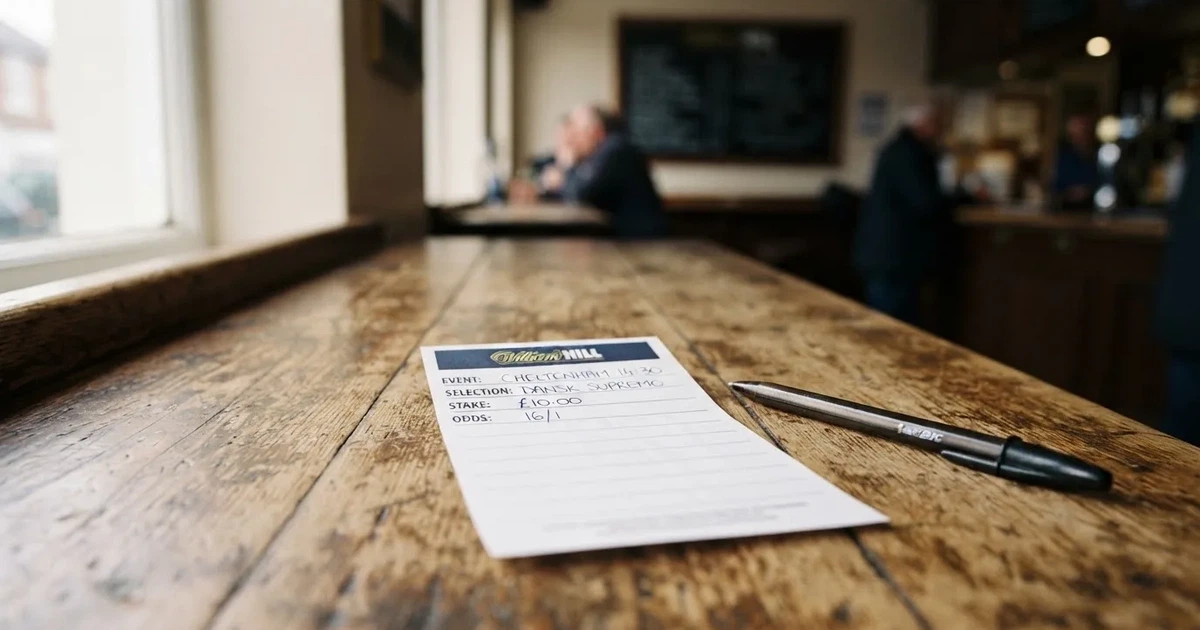
A note before anything else. Since 28 June 2025 the only online operators lawfully allowed to take racing and sports bets from a person in New Zealand are TAB and Betcha, the two online brands of TAB NZ. Every calculator a New Zealand punter is going to find, use or argue about runs on one of those two platforms, and the two are not rivals — they are the same operator on different skins, run by Entain under a 25-year partnership signed in 2023. Everything that follows is written for that fact, and the offshore brands named later are named only because New Zealand players meet them; none of them holds a New Zealand betting licence, and none of them has a New Zealand complaints route.
Data current as of 31 October 2026, verified against TAB NZ’s published terms and the Department of Internal Affairs’ public statements on the Racing Industry Act 2020.
The legal frame: what a New Zealand bookmaker is allowed to be
The 2025 change and why no calculator comparison is really a list of rivals
Section 74AAA of the Racing Industry Act 2020, inserted by the Racing Industry Amendment Act 2025 and in force since 28 June 2025, says that no person other than TAB NZ may offer racing betting, sports betting or other racing or sports betting to a person in New Zealand, regardless of where that person is resident or incorporated. The Department of Internal Affairs told unlicensed providers to withdraw with immediate effect. There is no licence to apply for and no licence register for bookmakers, because there is only one lawful provider. The law does not geo-block offshore websites; it puts the law on the offshore operator. New Zealand does not block bookmaker sites. The penalty for an offshore operator breaching section 74AAA is not stated in the section, and no prosecution of an offshore bookmaker was found. On the player side, section 19(4) of the Gambling Act 2003 (inserted in 2025) says an individual may not be convicted for placing a bet with an offshore operator in breach of section 74AAA; no source states a player-facing penalty. The honest framing, used throughout this page: TAB and Betcha are the only lawful option, with New Zealand harm-minimisation tools, regulator oversight and a complaints framework; offshore brands are unlawful for the operator to serve New Zealand, with no New Zealand complaints route and the risks the Department of Internal Affairs has named in writing.

The Online Casino Gambling Act 2026 sits beside this and is a separate regime. It licenses online casino gambling only. TAB NZ winning the right to apply for a casino licence does not extend its betting monopoly, and an online casino licence is not a betting licence. Greyhound racing is closing in stages from 1 August 2026, and from that date offshore operators may not take bets on greyhound races either.
What the operator’s partnership means for what the calculator shows
TAB NZ’s day-to-day sportsbook and tote operations are run by Entain under a 25-year agreement signed in 2023. The deal gives Entain a 50/50 share of gross profits, with at least NZ$150 million a year going to TAB NZ for the first five years, and Entain pledged a one-off NZ$100 million payment to the racing sector. The point for this page is the smaller, mechanical one: TAB and Betcha run on the same platform, settle bets under the same published betting rules, and share the same wallet, safer-gambling tools and self-exclusion. The two are not competing on price or promotion in any ordinary sense — they are two front doors into the same product. A calculator that returns one set of numbers on TAB returns the same set on Betcha, with the cosmetic difference that Betcha wraps the slip in a “Toolbox” of odds boosts and insurance tools.

What a calculator may not calculate: in-play restrictions, exchanges and spread bets
A New Zealand-licensed calculator can only be working on what TAB NZ is offering. Live betting is listed in the TAB NZ apps, and any statutory restriction on in-play markets is not established. No lawful New Zealand betting exchange exists, and spread betting is outside TAB NZ’s sports-betting definition — there is no exchange or spread book to run a calculator against in New Zealand, and writing about one is writing about a market that does not exist here. Bets on politics and novelty markets are not established either. Virtual (computer-simulated) sport is treated by the 2026 online casino law as casino gambling; whether esports betting counts as sports betting under the Racing Industry Act is not established, and the page says nothing either way.
Safer gambling: the part a calculator does not have
The tools built into the only platform you can use
TAB NZ’s app lists deposit limits, time-outs and self-exclusion as built-in safer-gambling tools. The same tools are available across both TAB and Betcha, and an exclusion set on one applies across both. There is no single national online-betting exclusion register: the register the 2026 casino law will require is for online casinos only, not sports and racing. TAB NZ must keep the risks of problem and underage gambling minimised, and pays a Problem Gambling Levy of 0.74%, in force from 1 July 2025 to 30 June 2028.
Help outside the platform is the national one. The free Gambling Helpline is 0800 654 655, with a text line on 8006, and Safer Gambling Aotearoa is the named service. Both are listed in TAB NZ’s own app listing. The page repeats them once, here, and does not paste them into every section that follows.
Age, identity and the cost of being turned away at account opening
The age for TAB NZ betting is 18. Betting under 18 is an offence under section 89 of the Racing Industry Act 2020. The TAB NZ app carries a 17+ App Store age rating; the legal minimum is 18, and this higher limit applies regardless of the store setting. Land-based casinos in New Zealand have a separate 20-year minimum; the two are different regimes and the page does not merge them. TAB NZ accounts need a verified New Zealand address and ID. New Zealand punter who cannot meet those checks does not have a TAB account, and that is a hard cut: there is no New Zealand-licensed operator behind it to fall back on.
What a New Zealand punter loses by betting with an operator that has no New Zealand licence
The Department of Internal Affairs warns that overseas operators may be in jurisdictions with minimal consumer safeguards, may not return unspent credits and may not pay out large wins. None of the offshore brands named later on this page has a New Zealand complaints route or harm-minimisation framework. The problem gambling levy, the helpline, the self-exclusion across brands — none of those reach an offshore account. Player money sits behind the offshore operator’s own terms and the regulator of whichever licence the operator happens to hold, and that regulator is not the Department of Internal Affairs. New Zealand law targets the operator; DIA warns players of the risks; no published penalty for a player was found. None of that makes an offshore bet illegal for the player, and none of it makes one safe.
Bonuses and free bets: what the calculator is really being asked to value
Bonus bets, Mega Multi and what “bonus cash” actually pays back
TAB NZ runs its promotions under the label Bonus Cash. New TAB NZ customers can receive Bonus Cash that can be split across multiple bets, and the app lists a Mega Multi bonus of up to NZ$50 in Bonus Cash when a multi of four or more legs falls short by a set number of legs (terms and conditions apply). The page does not print the headline of either offer; the printed number is a marketing line, and the actual value lives in the small print a calculator is built to expose.
The general shape of a “free bet” offer, whether called Bonus Cash, a free bet token or a stake-back, is this: the stake is usually not returned with a win. A free NZ$10 bet at odds of 3.00 pays NZ$20 — the NZ$10 win, not the NZ$30 a real-stake bettor collects. The same offer dressed up as a “risk-free bet” is the same offer: a refund as a free bet is a refund in tokens, not in cash. Where the calculator earns its keep is in writing that out, in NZ dollars, so the punter sees what the headline is worth before claiming it.
Boosted odds and odds boosts on Betcha’s Toolbox
Betcha runs a daily Toolbox of odds boosts and insurance tools for bets that do not land. The mechanics of an odds boost are simple: the bookmaker raises the price of one leg of a multi or a single market, and the calculator prints the new return against the same stake. The catch is the matching restriction — the boost is usually tied to a specific selection, and a voided leg or a late scratcher can pull the boosted price back down to its starting line. Insurance tools work the other way: a stake refund, often as a Bonus Cash token, if one leg of a multi misses. The two are different products priced differently, and the calculator shows both the upside and the refund path side by side.
Rollover and turnover: the arithmetic nobody likes to do
A matched deposit or a bonus carry a turnover requirement: a multiple of the bonus (and sometimes the deposit) that must be bet through before winnings are withdrawable. The arithmetic, plain, is turnover = bonus base × wagering factor; bets needed = turnover ÷ stake per bet; only bets at or above the minimum price count. A NZ$100 bonus with a 5x turnover on the bonus at a minimum price of 1.50 means NZ$500 of qualifying bets, all of them at decimal odds of 1.50 or higher, before any winnings are withdrawable. At a market margin of, say, 5%, the expected cost of clearing that turnover is roughly NZ$25 — NZ$500 × 0.05 — which is a quarter of its face value gone before the bonus is yours.
The page does not pin TAB NZ’s own Bonus Cash to a turnover figure; the small print is the only place that number lives, and the small print is the part to read before claiming. The arithmetic here is the general shape of a turnover requirement, in case the punter meets one on TAB, on Betcha or on any offshore brand named later.
Betting systems, predictions and what the strategy pages are really saying
Betting systems: the Labouchere, the Martingale and what they cost
The “betting system calculator” cluster is a search for two things at once: the Labouchere and the Martingale. The Labouchere is a recovery system: the punter writes a target profit as a sequence of numbers, bets the sum of the ends until it wins (and crosses those off) or loses (and appends the stake to the end). The Martingale doubles the stake after each loss. Both are dressed up as a way to “guarantee” a profit, and neither is. The arithmetic that exposes them is a single line: every system that varies the stake by past results is still betting into a margin, and a margin pays the bookmaker over the long run regardless of how the stake is sized. A system calculator prints the next stake for you; it does not change the expected cost of the bet.
The honest reading is that a system turns a stream of independent bets with negative expected value into a stream of dependent bets with the same negative expected value, and sometimes a much higher variance. The Labouchere can run a bankroll through a long losing sequence; the Martingale can do it in fewer steps. The calculator is a useful planning tool — it tells a punter what the next stake has to be — and a useless forecasting tool, because the next bet’s odds are what the next bet’s odds are.
Forecasts, predictions and the difference between a tip and a market
Betcha and several of the offshore brands named later carry a “Forecasts” or “Predictions” section. The page treats these as editorial content, not as a market signal. A tipster’s hit rate, even a high one, is not the same as a margin’s complement, and the calculator that prints a return on a bet does not print the probability that the bet wins. A punter who wants to use a tip treats it as one input to a stake-sizing decision, sized against the bankroll and the calculator’s expected-cost line, not as a forecast of the result.
The reverse forecast bet calculator named in research is a different thing — it is the wagering tool for a reverse forecast on a horse or greyhound race, where the punter names first and second in either order. The arithmetic is the same as a quinella or an exacta, and TAB NZ’s published betting rules cover both. A punter reading this page is more likely to meet a “predictions” section than a reverse-forecast bet, and the two are not interchangeable.
Bankroll and the only honest use of a calculator
The single honest use of a betting calculator, in this page’s reading, is bankroll planning: how much the punter is going to stake, on what kind of bet, at what minimum price, across how many bets, before the bankroll is gone. That arithmetic is what the calculator is for. The arithmetic that prints a return on a winning bet is just multiplication. The arithmetic that prints the expected cost of clearing a bonus is the one that decides whether the bonus is worth claiming. The arithmetic that prints a system’s next stake is the one that decides whether the system is affordable. None of those arithmetic operations predict the result of a single bet.
Bet types and odds: the substrate every calculator is built on
Win, place, each way and the rest of the tote vocabulary
TAB NZ’s published betting rules define a fixed set of bet types, and the calculator on TAB or Betcha is built around them. *Win* is a single runner finishing first. *Place* is a single runner finishing in the placings (top two, three or four, depending on field size and race type). *Each way* is two bets of equal stake — one win, one place — and the return is the sum of the two. The exotic singles are *Quinella* (first two in any order), *Exacta* (first two in order), *Trifecta* (first three in order) and *First Four* (first four in order). The exotic multiples are *Double* (two races), *Treble* (three), *Daily Double*, *Running Double*, *Quaddie* (four nominated races) and *Big6* (six). Each multi multiplies the prices of its legs into one number, which is what the calculator prints.
The *Same Race Multi* and the *Same Game Multi* are TAB NZ’s branded variants: a multi whose legs come from one event. A Same Game Multi on rugby league might take the Warriors to win, the total points to go over 40.5, and a try-scorer — three legs, one match, one price. The price is the product of the three legs, less the margin on each leg, and the calculator is the easiest way to see what the multi pays before committing.
Multiples, accumulators and the way margins stack
A multi’s headline price looks generous because the legs multiply into one number. The number the calculator prints is also where the margin stacks. Every leg carries its own margin, and the margin on the multi is the joint margin — the gap between the true probabilities of every leg and the implied probabilities of the multiplied price. A four-leg multi at 3.00, 1.80, 2.10 and 1.60 multiplies to 17.28, but the implied probability from those four prices is roughly 1/3.00 + 1/1.80 + 1/2.10 + 1/1.60 in the inverse sense — added back through the formula rather than added across — and the result is several percentage points tighter than the leg prices suggest. The calculator exposes this in one line; doing the maths by hand takes a sheet.
This is the part of the page where the calculator is most useful and least appreciated. A punter who reads four prices and trusts the multiplied result overestimates the value of the multi by the margin. A calculator that prints the multi’s effective margin, in percentage points, before the bet is placed is doing the punter a real service.
The decimal form and what the odds are really saying
TAB NZ writes odds in decimal form — $2.10 for a near-even-money favourite, $6.50 for an outsider. The decimal form is the price that returns the stake plus the win: a NZ$10 bet at $2.10 returns NZ$21 — NZ$10 of stake, NZ$11 of profit. The implied probability of a $2.10 price is 1 ÷ 2.10, or roughly 47.6%. The implied probability of a $6.50 price is 1 ÷ 6.50, or roughly 15.4%. The two numbers are expected to sum to more than 100% on a two-way market — and the gap between that sum and 100% is the bookmaker’s margin. A $2.10 / $6.50 market sums to roughly 63.0%, leaving 37.0% of the market on the table as the bookmaker’s take on every NZ$100 wagered.
The margin is the same number from both sides. Payout share = 1 ÷ (1/odds₁ + … + 1/oddsₙ) over all outcomes of one market; margin = 1 − payout share. On the $2.10 / $6.50 example, payout share = 1 ÷ (0.4762 + 0.1538) = 1 ÷ 0.6300 ≈ 1.587, which is the multiplier that takes every NZ$1 bet on the market and returns NZ$1.587 across all outcomes — the rest, NZ$0.413 per NZ$1, is the margin. Expressed as a percentage of stake, the margin is roughly 41.3% on this market, with roughly 63.0% returned to bettors across outcomes. The two numbers add to 100% of stake plus the over-round, which is the standard shape.
The illustrative example: what 1.90 / 1.90 says about the market
To take a market a calculator will meet repeatedly, consider an illustrative two-way market at decimal odds of 1.90 and 1.90 — the kind of line a punter sees on a coin-flipping tennis match or a basketball handicap priced close to even. The implied probability of each side is 1 ÷ 1.90 = 0.5263, or roughly 52.6%. The two sum to 1.0526, leaving an over-round of 0.0526, or 5.26%. Payout share = 1 ÷ 1.0526 ≈ 0.9500. Margin = 1 − 0.9500 = 0.0500, or 5.00%. The standard reading: roughly 95% of every NZ$1 bet on this market is returned to bettors across outcomes; roughly 5 cents in every NZ$1 is the bookmaker’s take. That 5% band — 4.5% to 5.5% on most liquid two-way markets — is the shape a calculator is showing a punter every time it prints a margin. The band is the right way to read this number: a market at 4.7% is sharp; a market at 6.2% is generous to the bookmaker; a market at 8.0% is the kind of line a casual market or a niche sport prints. The arithmetic the calculator does not change.
Same Game Multi, Bet Builder and how brands frame the same product
Betcha’s Toolbox and several offshore brands — Sportaza, RTbet, Alawin, BillyBets, Tonybet, LegendPlay, Golden Panda, FunBet — list a Bet Builder or Same Game Multi as a product. The mechanics are the same across the brands: the punter combines several selections from one event into one bet slip, the prices multiply, and the slip settles as a single bet. Sportaza’s terms are explicit that, if one selection is void, the whole betslip is void. RTbet’s terms are explicit that the cash-out amount is fixed at the moment it is accepted and that the feature is not always available. Alawin’s terms exclude free bets and risk-free bets from cash out. Each of those is a condition the calculator does not change; it is a condition the punter reads in the small print.
The bet builder is where the calculator earns the second of its two honest uses: printing the combined price and the combined stake before the punter commits. A bet builder with five legs at 1.40, 1.55, 1.70, 1.85 and 2.00 multiplies to 13.32 — a price a calculator prints in one line and a punter cannot reliably hold in their head. The void-on-one-leg condition is the reason the same product reads differently across brands; a punter who wants the same-game-multi experience needs to read each brand’s own terms, because the calculator at the front of the slip is not the document that governs the voiding of one of the legs.
The choice of bookmakers: licensed brands and offshore alternatives
The landscape, in the article language’s own words
The set of online sportsbooks a New Zealand punter is comparing in 2026 is shorter than the search results suggest. TAB and Betcha are the only two brands with a New Zealand licence to offer racing and sports betting here. The other eight brands in this ranking lack such a licence; each carries an offshore authority — Anjouan, Curaçao, Tobique Gaming Commission, the Union of the Comoros — none of which gives the holder a right to take bets from residents, and none of which provides a complaints route. The page describes the eight on their own terms, rates them by the same criteria as the two licensed brands, and marks each “not licensed in New Zealand”. It is a reference for a punter who, by whatever route, compares these brands against the only two New Zealand law permits.
The table below lists every brand: TAB and Betcha first, the eight offshore brands after, each with its New Zealand status and what the brand’s own terms say about the calculator’s home territory — bet types, bet builders, cash-out terms, odds formats, safer-gambling tools and licences that reach the punter.
| Brand | New Zealand status | What the operator’s own terms say about calculator territory |
|---|---|---|
| TAB (tab.co.nz) | TAB NZ brand — licensed | Fixed-odds and tote bets across racing and sports, including Same Race Multis, Same Game Multis, one-tap Popular Multis and Place Extra (up to 10th); Trackside live streaming with in-app betting; racing form, Blackbook and Jockey Challenge tools; deposit limits, time-outs and self-exclusion in-app; 18+ minimum age, verified NZ address and ID. |
| Betcha (betcha.co.nz) | TAB NZ brand — licensed | Daily Toolbox with odds boosts and insurance tools; Bet Social section for tipsters, chat and shared bets or pools; Playbook with tips and match analysis; runs on TAB NZ’s wallet and safer-gambling tools; 18+ minimum age. |
| Sportaza | Not licensed in New Zealand | Cash out before settlement; Bet Builder where a voided selection voids the whole betslip; multiples, Asian lines and interval markets in 1, 5, 10 or 15 minute ranges; Anjouan licence (ALSI-202606064-FI2). |
| RTbet | Not licensed in New Zealand | Cash out before settlement; cash-out amount fixed at the moment it is accepted; cash-out availability not guaranteed; Curaçao licence. |
| BetNinja | Not licensed in New Zealand | Casino-first product; online gaming licence from the Union of the Comoros; no calculator-grade sportsbook terms published in the consulted set. |
| Alawin | Not licensed in New Zealand | Cash out with partial cash-out option; not available on free bets or risk-free bets; availability not guaranteed; no licence named in the consulted set that applies in New Zealand. |
| Winz.io | Not licensed in New Zealand | Holds Anjouan and Tobique licences via Novatrix SRL; no New Zealand-facing harm-minimisation or complaints framework. |
| Rooster.bet | Not licensed in New Zealand | Tobique Gaming Commission e-gaming licence (No. 0000002) held by Novatrix SRL; sportsbook with Live, Sports Promotions, Results, Schedule, E-sports and Predictions sections; six odds formats; no New Zealand-facing framework. |
| Rabona | Not licensed in New Zealand | Curaçao licence; sixth Soft2Bet sportsbook, launched 23 December 2019; no New Zealand-facing framework. |
| BetAlright | Not licensed in New Zealand | 18+ age rule; partners site at partnersbetalright.com; no licence named in the consulted set that applies in New Zealand. |
What the spread actually looks like
The two New Zealand-licensed brands sit on top of the table by law, not by quality. The eight brands below them carry similar calculator territory — cash out, bet builders, multiples, Asian lines, several odds formats — and most of them name features TAB NZ’s sportsbook does not: interval markets in 1, 5, 10 or 15 minute ranges, a five-level VIP programme, a coin shop that exchanges play for free bets, copy-bet functionality, partial cash out. None of those features changes the legal frame. A New Zealand punter who uses any of the eight is using an operator the Department of Internal Affairs has told to withdraw; that operator has no New Zealand complaints route, no New Zealand harm-minimisation framework, and a regulator that does not sit in Wellington. The features are real; the protection is not.
The spread, read across the table, is the calculator’s view of the market: what each brand offers in terms the calculator is built to value. The New Zealand frame is the regulator’s view of the same market. The two are not in competition, because the regulator’s view is the one that decides what a New Zealand punter is allowed to use.
Reviewed operators: how each brand sits against a New Zealand punter’s calculator
TAB
TAB is one of the two online brands of TAB New Zealand — the only provider lawfully offering racing and sports betting to people in New Zealand under section 74AAA of the Racing Industry Act 2020. Its app, published on the New Zealand App Store under the seller name New Zealand Racing Board and first released on 8 September 2014, covers horse and harness racing, rugby union, rugby league and other sports, pre-match and live, and carries a 17+ App Store age rating while stating customers must be 18 or over to bet. The bet types — Win, Place, Each Way, Quinella, Exacta, Trifecta, First Four, Double, Treble, Daily Double, Running Double, Quaddie, Big6 — are the racing vocabulary a New Zealand punter already knows. The multis — Same Race Multis, Same Game Multis, one-tap Popular Multis and a Place Extra option that lets punters back runners to finish up to 10th — are the calculator’s home territory. Bonus Cash, with a Mega Multi bonus of up to NZ$50 in Bonus Cash when a multi of four or more legs falls short by a set number of legs, sits behind the calculator the way any bonus does. The safer-gambling tools — deposit limits, time-outs and self-exclusion — are built in. The complaint route is the Department of Internal Affairs. The minimum age is 18, with verified New Zealand address and ID at account opening.
What sets TAB apart, in this comparison, is the only thing that can set it apart under the 2025 change: it is the lawful option. A New Zealand punter who wants a calculator that settles against New Zealand betting rules, with a New Zealand regulator and a New Zealand complaint route, has one place to take that bet.
Betcha
Betcha is the other online brand of TAB New Zealand — the second of the two lawful online brands, sitting on the same platform, the same wallet and the same safer-gambling tools as TAB. Its differentiator is the daily Toolbox of odds boosts and insurance tools, the Bet Social section where punters chat, follow tipsters and share bets or pools, and the Playbook of tips and match analysis. The calculator on Betcha does what the calculator on TAB does; the wrapper is younger, more social, and more promotional.
Where Betcha is the right choice is the social layer. A punter who bets with a community, follows tipsters and likes the insurance-tool side of a promotion will find more of that on Betcha than on TAB. Where Betcha is the same choice as TAB is the regulator, the wallet and the harm-minimisation framework — Betcha does not offer a New Zealand punter a way around TAB’s rules, only a different front door.
Sportaza
Sportaza is not licensed in New Zealand. Its Anjouan licence (ALSI-202606064-FI2) lacks legal standing for New Zealand residents and provides no complaints route or harm-minimisation framework. The brand’s terms do name calculator territory a New Zealand-licensed bookmaker does not: cash out before settlement, a Bet Builder where a voided selection voids the whole betslip, multiples, Asian lines and interval markets in 1, 5, 10 or 15 minute ranges.
For a New Zealand punter, Sportaza is the bet-builder-and-interval-markets shop. The features are real and the calculator territory is wider than TAB’s. The protection is not. The Department of Internal Affairs has told providers serving New Zealand to withdraw, and a New Zealand punter using Sportaza has no recourse through New Zealand law if a withdrawal stalls or a settlement goes wrong.
RTbet
RTbet lacks a New Zealand licence, with a Curaçao licence that offers no regulatory standing in this country. Its terms name cash out before settlement, with the cash-out amount fixed at the moment it is accepted and the feature not guaranteed to be available — a condition worth reading before relying on it.
The calculator territory is narrower than Sportaza’s. The cash-out framing is honest in a way several offshore brands are not: the amount is fixed at acceptance, the feature is not always available, and the punter is on the brand’s own terms. For a New Zealand punter, the legal situation is exactly what section 74AAA describes: an offshore operator is serving a market that only TAB NZ may lawfully reach.
BetNinja
BetNinja lacks a New Zealand licence. Its licence is from the Union of the Comoros, with no legal authority for New Zealand residents and no local framework. The brand is casino-first; the consulted set does not name calculator-grade sportsbook terms the way Sportaza or RTbet do. The page lists the brand for completeness because New Zealand players meet it, and the rating marks it on the absence rather than the presence of calculator territory.
For a New Zealand punter, BetNinja is a casino-led site with a sportsbook of unstated depth. The calculator territory is the minimum a calculator requires; BetNinja is a casino-focused site with no specific calculator-grade sportsbook terms, and no licence that grants it the right to serve a New Zealand user.
Alawin
Alawin is not licensed in New Zealand, with no licence in the consulted set that applies in New Zealand. Its terms name cash out with a partial cash-out option, not available on free bets or risk-free bets, and not guaranteed to be available — three conditions a calculator does not surface on its own.
The partial cash-out option is the feature that sets Alawin apart. This is the Alawin licence position: a brand that offers partial cash-out but has no legal right to serve a New Zealand resident.
Winz.io
Winz.io is not licensed in New Zealand. It holds Anjouan and Tobique licences via Novatrix SRL, neither of which gives a right to take bets from people in New Zealand, and neither of which is the New Zealand regulator. The page lists Winz.io for completeness; the consulted set does not name the bet-builder, cash-out or multi-claim terms in detail.
For a New Zealand punter, Winz.io is on the same legal footing as every other offshore brand: the operator is breaking New Zealand law by offering one; the punter is not the regulator’s target; the Winz.io operator sits behind an offshore licence that provides no protection or complaints framework for a New Zealand user.
Rooster.bet
Rooster.bet is not licensed in New Zealand. It is operated by Novatrix SRL, a Costa Rica company with registration number 3-102-893958, under e-gaming licence No. 0000002 issued by the Tobique Gaming Commission. The sportsbook lists Live, Sports Promotions, Results, Schedule, E-sports and Predictions sections and shows odds in six formats.
The E-sports and Predictions sections are the calculator territory Rooster.bet names explicitly, and the six odds formats are useful for a punter who reads fractional or American prices elsewhere. Unlike the New Zealand-licensed options, Rooster.bet offers no legal assurance to a user in this country.
Rabona
Rabona is not licensed in New Zealand, with a Curaçao licence and no right to take bets from people in New Zealand. The brand launched on 23 December 2019 as the sixth online sportsbook of the Soft2Bet group, and the consulted set does not name specific calculator-grade terms beyond the licence.
Rabona is a Soft2Bet brand with an offshore licence, not a New Zealand provider. The Soft2Bet heritage is a background data point rather than a feature the calculator reads.
BetAlright
BetAlright is not licensed in New Zealand, with no licence in the consulted set that applies in New Zealand. The home page states that customers must be over 18 and lists a separate partners site at partnersbetalright.com. The calculator territory is the minimum; the protection is the same as every other offshore brand.
For a New Zealand punter, BetAlright is the cleanest legal frame of the eight — no misleading licence claim, an 18+ age rule that matches the New Zealand one, no claim of New Zealand regulatory reach — and the same absence of New Zealand-facing protection as every other brand on this list.
The calculator’s view: how the spread across the ten brands looks in numbers
The ten brands above sit on a single calculator territory, and the spread across them is what a New Zealand punter sees when the calculator prints the same bet on each. The 1.90 / 1.90 example earlier in this page is the band: roughly 95% returned, roughly 5% kept, on a typical two-way market. The exact number for any one market varies by event, by liquidity and by the brand’s own margin. The band is the right way to read the calculator, because a single point estimate of a margin is the kind of precision a margin does not have.
The table below is not the calculator’s output — it is the band the calculator exposes, and the conditions the band sits behind.
| Margin band on a typical two-way market | What it means for the punter |
|---|---|
| 4.5% to 5.5% | Sharp line; liquid two-way market; close to the theoretical floor. |
| 5.5% to 7.0% | Ordinary line; mainstream sport; standard bookmaker margin. |
| 7.0% to 9.0% | Generous line; niche sport or exotic market; the calculator is reading a wider gap than usual. |
| Above 9.0% | Outsized line; the calculator is signalling a market the bookmaker is not pricing tightly. |
The band sits over the calculator’s output, not under it. A calculator that prints 4.7% on one leg and 5.3% on another is reading two markets at the same event; a calculator that prints 8.2% on a same-game multi is reading a bookmaker’s margin on that specific product, not on the underlying sport. The band is the calibration; the per-market number is the reading.
The wider arithmetic: how the calculator fits a New Zealand punter’s bankroll
Stake sizing against a turnover requirement
The arithmetic in the bonus section above — turnover = bonus base × wagering factor; bets needed = turnover ÷ stake per bet — is the same arithmetic a New Zealand punter runs against any turnover requirement, including the Mega Multi Bonus Cash on TAB or Betcha. The expected cost of clearing that turnover, at a market margin of 5%, is roughly 5% of the turnover. The calculator prints the turnover; the punter prints the bankroll they are willing to spend to clear it; the difference is the cost.
The honest use of a turnover calculator is to ask, before claiming the bonus, whether the bonus is worth the cost. A NZ$50 Bonus Cash offer with a 5x turnover on the bonus and a minimum price of 1.50 means NZ$250 of qualifying bets at a market cost of roughly NZ$12.50 — a quarter of the face value gone before the bonus is withdrawable. The calculator exposes the NZ$250; the punter decides whether the NZ$50 minus NZ$12.50 is worth the time.
Expected cost on a market the punter cannot beat
The expected-cost formula is the same in a different shape: expected cost = required turnover × margin of the market. A punter betting NZ$1,000 through a turnover requirement at a 5% market margin is paying NZ$50 on average for the privilege of clearing it. A punter betting NZ$1,000 through a turnover requirement at an 8% market margin is paying NZ$80. The difference is the market the punter is clearing the turnover on, and the calculator that exposes the market’s margin is the same calculator that exposes the turnover.
The honest reading of the formula is that expected cost is an average across many bets, not a guaranteed cost for any one bettor. A punter can run hot through a turnover and clear it at a lower cost; a punter can run cold and clear it at a higher cost. The formula is a planning tool, not a forecast.
A free-bet value worked through
A free bet whose stake is not paid back — the shape of a TAB NZ Bonus Cash offer — is worth free-bet amount × (odds − 1) ÷ odds × payout share of the market. A NZ$50 free bet at odds of 3.00 on a market with a 95% payout share is worth NZ$50 × 2 ÷ 3 × 0.95 ≈ NZ$31.67. The same free bet at odds of 5.00 is worth NZ$50 × 4 ÷ 5 × 0.95 ≈ NZ$38.00. The arithmetic rises with the odds the punter takes, and the maximum value sits just below the edge of the market’s pricing. A punter who backs a free bet at 1.50 leaves most of the value on the table; a punter who backs it at 5.00 takes most of it.
The honest reading is the same as the expected-cost formula: an average over many free bets, not a guarantee for any one. A punter who reads the Bonus Cash headline and not the small print is reading the NZ$50; a punter who reads both is reading the NZ$31.67, and deciding whether to claim.
What a New Zealand punter checks before opening a TAB account
The four things the small print carries
The first is age. The TAB NZ app carries a 17+ App Store age rating while stating that customers must be 18 or over to bet; the legal minimum is 18, and account opening is where the check happens. A punter under 18 has no lawful route onto the platform, and an offshore bookmaker is not a lawful route around it.
The second is identity. TAB NZ accounts need a verified New Zealand address and ID. The verification is the cut between “I can place a bet” and “I cannot, and the platform knows it”. Offshore brands vary on this; the page does not generalise, and the punter checks each brand’s own.
The third is the safer-gambling tools. Deposit limits, time-outs and self-exclusion are built into TAB NZ’s app. The punter who sets a deposit limit at account opening is the punter who will keep setting it; the punter who does not is the punter the Problem Gambling Levy (0.74%) is partly funding the help line for. The Gambling Helpline is 0800 654 655, text 8006, with Safer Gambling Aotearoa the named service. The punter who reads this page and the helpline numbers once has read them enough.
The fourth is the betting rules. TAB NZ’s published betting rules define Win, Place, Each Way, Quinella, Exacta, Trifecta, First Four, Double, Treble, Daily Double, Running Double, Quaddie, Big6, Same Race Multi, Same Game Multi and Place Extra. The punter who reads the rules before placing a bet is the punter who will not be surprised by a settlement; the punter who does not is the punter who will.
What a New Zealand punter checks before placing a bet on any of the ten brands
The first is whether the brand is licensed in New Zealand. Two of the ten are; eight are not. The eight are not a recommendation, and the calculator the punter is using on them is not a substitute for the regulator.
The second is what the bet type costs. The calculator prints the return on a winning bet; the small print prints the voiding condition, the cash-out condition, the minimum-price condition, the minimum-odds condition on a Same Game Multi, the stake-not-returned condition on a free bet. The punter reads both.
The third is what happens at settlement. A voided leg in a Bet Builder on Sportaza voids the whole betslip; a same-game multi on Betcha pays the multiplied price; a TAB NZ Same Race Multi on a scratched runner pays the multiplied price minus the scratched runner. The mechanics differ, and the calculator that does the multiplying does not do the voiding.
The fourth is what happens if the bet does not pay out. The Department of Internal Affairs warns that overseas operators may be in jurisdictions with minimal consumer safeguards, may not return unspent credits and may not pay out large wins. A TAB NZ bet goes to the Department of Internal Affairs if it goes wrong; a Sportaza, RTbet, BetNinja, Alawin, Winz.io, Rooster.bet, Rabona or BetAlright bet goes to the regulator of whichever licence the brand holds, which is not the Department of Internal Affairs.
The big picture, restated in one paragraph
A sports betting calculator in New Zealand, in 2026, is one of two things. It is the widget on the TAB or Betcha app that prints a return on a bet before the punter commits it, or it is the same widget on an offshore brand’s site that is breaking New Zealand law by serving the punter at all. The arithmetic the widget does is the same — stake × odds, free-bet value, market margin, turnover requirement, expected cost — and the widget is a useful tool for the punter who reads the small print, and a useless one for the punter who does not. The two New Zealand-licensed brands are not rivals; they are two front doors on the same platform. The eight offshore brands are not licensed in New Zealand, and the protection a New Zealand-licensed platform offers is the protection a New Zealand punter is using the calculator to keep.
Frequently asked questions about sports betting calculators in New Zealand
Which bookmaker may lawfully take sports and racing bets in New Zealand?
Since 28 June 2025, only TAB NZ may offer racing and sports betting to a person in New Zealand, under section 74AAA of the Racing Industry Act 2020. TAB NZ operates two online brands — TAB and Betcha — which run on the same wallet, betting rules and safer-gambling tools. There is no licence to apply for and no licence register for bookmakers, because there is only this one lawful provider. Offshore brands holding Anjouan, Curaçao, Tobique or Comoros licences have no right to take bets from people in New Zealand.
How is the return on a bet worked out from the stake and the odds?
For decimal odds, return = stake × odds and net profit = stake × (odds − 1). A NZ$10 bet at odds of 2.10 returns NZ$21 in total — NZ$10 of stake and NZ$11 of profit. For a combination bet, the odds of the legs multiply into one price, so a three-leg multi at 2.00, 1.80 and 1.60 multiplies to 5.76, and a NZ$10 stake returns NZ$57.60 on a win. This is the same arithmetic every betting calculator does on the page.
What is the bookmaker’s margin and how can it be seen in the odds?
The bookmaker’s margin is the gap between the implied probabilities of every outcome and 100%. Payout share = 1 ÷ (1/odds₁ + … + 1/oddsₙ) over all outcomes of one market; margin = 1 − payout share. A market priced at 1.90 / 1.90 sums to an implied probability of roughly 105.3%, leaving a payout share of roughly 95.0% and a margin of roughly 5.0%. The number is the same market seen from two sides, and a calculator that prints the margin is printing the bookmaker’s edge.
What does a player lose by betting with a bookmaker that has no New Zealand licence?
The player loses the New Zealand regulator’s protection. The Department of Internal Affairs warns that overseas operators may be in jurisdictions with minimal consumer safeguards, may not return unspent credits and may not pay out large wins. There is no New Zealand complaints route, no New Zealand harm-minimisation framework, and the operator is breaking New Zealand law by serving the player. The bet is not illegal for the player — section 19(4) of the Gambling Act 2003 says an individual may not be convicted for placing such a bet — but the protection a TAB NZ account carries is not there.
From what age can bets be placed with TAB NZ, and what is checked when opening an account?
The minimum age for TAB NZ betting is 18; betting under 18 is an offence under section 89 of the Racing Industry Act 2020. The TAB NZ app carries a 17+ App Store age rating while stating that customers must be 18 or over to bet, and the legal minimum is the higher one. Account opening requires a verified New Zealand address and ID. Land-based casinos have a separate 20-year minimum and the two regimes do not merge; the betting age is the one that applies to TAB NZ.
Are betting winnings taxed in New Zealand?
Inland Revenue guidance says recreational gambling winnings are generally not taxable and prize money from TAB horse, dog and trotting races is not taxable. A person who bets as a business is a different case — the guidance is general information, not tax advice, and the responsible step is to consult Inland Revenue or an accountant. On the operator side, TAB NZ pays the Problem Gambling Levy of 0.74%, and overseas operators supplying New Zealand residents pay online gambling duty of 12% of profits since 1 July 2024 (rising to 16% from 1 January 2027) — but a duty being payable does not make an offer lawful, and the offshore operator is still in breach of section 74AAA by taking the bet.
Tips & strategy – dogracingnz.com
Content created by the «dogracingnz.com» team
