
Football betting in New Zealand: who pays the margin in every price
 Available in US
Current as of 31 October 2026, verified against the Department of Internal Affairs register and the Racing Industry Act 2020 as in force on 28 June 2025.

If you back football in New Zealand, the first price you meet is not really a price. It is a fee, dressed up as one. The bookmaker has already taken its cut before the coupon has loaded, and every dollar of any “bonus” you accept is borrowed from you at a cost the marketing page does not print. This guide walks the cost through every layer of football betting available to a New Zealand punter in 2026 — the responsible-gambling tools that exist (and what happens when a punter runs out of road), the bonuses and free bets and how to read them, the live-betting and cash-out mechanics, the systems and tips that promise to beat the book, the bet types and odds on the slip, the competitions that drive the calendar, the operators in the market and how each one prices the same fixture, the basics of the game itself, and the legal frame that determines which operator may lawfully take your bet at all.
The angle is cost throughout. Every offer, every price, every “free” thing is read as the bill it actually is. The arithmetic is small in places — a percentage here, a turnover there — but the percentages compound, and what a casual punter pays in a season is larger than what they win in one. That is the gap this article is written to close.
Safer gambling in New Zealand: who pays the cost when the fun stops
Responsible gambling in New Zealand is not a slogan on a footer. It is a regulator (the Department of Internal Affairs), a levy (the Problem Gambling Levy), an advertised age floor of 18 for betting, and a helpline whose number is short enough to remember. The point of the section is not the warm feeling. The point is who carries the cost when the wagering stops being a hobby.

TAB NZ’s app lists the safer-gambling controls it actually offers: deposit limits, time-outs and self-exclusion. The exclusion is a cross-brand one — it applies to TAB and to Betcha, the two retail and online faces of TAB NZ. The age threshold the app carries on its App Store listing (17+) is a store rating, not a betting age; the betting age is 18, and betting under 18 is an offence under section 89 of the Racing Industry Act 2020. The free Gambling Helpline is 0800 654 655, with a text line on 8006. Safer Gambling Aotearoa runs alongside it. These are the channels a New Zealand punter can actually reach.
The mechanics of harm minimisation are operator-side at TAB NZ and Betcha. A punter who has self-excluded cannot simply open a new account in the other brand and carry on; the same operator group sees both accounts and the exclusion follows the customer, not the channel. Deposit limits are sticky once set, in the same direction: they can usually be lowered immediately and raised only after a cool-off. The control is not to keep a punter betting, it is to keep the bet small. Anyone who has set a deposit limit and then tried to raise it the morning after a bad run knows the friction is the point.
TAB NZ pays a Problem Gambling Levy of 0.74% on its gross win — the in-force rate from 1 July 2025 to 30 June 2028. The levy is the price of the licence and it is built into every dividend a TAB NZ punter receives. Offshore operators serving New Zealand residents pay an online gambling duty of 12% of profits since 1 July 2024, stepping to 16% from 1 January 2027; the duty being payable does not make the offer lawful. The tax is the operator’s problem; the safety framework is the punter’s problem.
There is no single national online-betting exclusion register. The exclusion register that the 2026 online-casino law will require is for online casinos only — it does not reach sports betting. A New Zealand punter who wants out of every channel has, in practice, to close the account at each operator one at a time; offshore operators that have no New Zealand harm-minimisation framework cannot be reached by a New Zealand exclusion order, because no New Zealand exclusion order reaches them.
The DIA warns that overseas operators may be in jurisdictions with minimal consumer safeguards, may not return unspent credits and may not pay out large wins. That warning is the regulator’s plain-language version of the cost: there is no one to call if the offshore site stalls. For most of the rest of this guide, the comparison is between operators that New Zealand law actually reaches and operators that it does not. The cost of using the second group is the absence of the first group’s safety net, and that absence is the part no price list names.
Football betting bonuses and free bets in New Zealand: what the marketing word costs
The marketing words in this corner of the market are small in number and heavy in repetition: “free bet”, “bonus bet”, “boosted odds”, “risk-free”, “best odds guaranteed”, “100% match”. Every one of them moves money from the punter to the operator, and every one of them is worth exactly the arithmetic underneath. This section is the arithmetic underneath.
A free bet at TAB NZ is a credit the punter can place on a selection; if the bet wins, the stake is usually not returned with the winnings. A $10 free bet at $3.00 returns $20 in profit, not $30 in the wallet. The free bet is not $10 of value; it is a smaller amount, and the smaller amount is the multiplier of the odds minus one, divided by the odds, scaled by the payout share of the market it is spent on. For a $10 free bet at odds of $3.00 on a market with a 95% payout share, the expected value is roughly $10 × (3.00 − 1) ÷ 3.00 × 0.95 = $6.33. The free bet is worth about two-thirds of its face value at those prices; on shorter odds the gap widens, on longer odds it narrows, but the stake is the part the punter pays for the privilege of holding the free credit.
A “100% match” deposit bonus is two things at once: a credit to the account, and a turnover requirement on the credit before any of it can be withdrawn. The required turnover is the bonus base multiplied by a wagering factor. If the base is the bonus alone and the factor is $150 in bets per $100 of bonus, the punter must place $150 in qualifying bets to release $100 in withdrawable cash. At a 5% margin across the bets that release it, the expected cost of clearing the bonus is $150 × 0.05 = $7.50 — the punter pays about $7.50 in expected margin to extract a $100 credit. The percentage looks generous until the turnover is divided through.
“Boosted odds” are a one-line price lift on a single selection, paid as bonus-bet credit rather than as cash where TAB NZ runs the boost. The punter still needs to roll the boosted credit through turnover if it is to become withdrawable. The price being “boosted” is a price the punter was not going to get at the line the bookmaker was actually quoting; the boost is the marketing cover for taking a worse price than the headline. Compare the boosted line to the line on the same fixture at the same time at another operator on a quiet afternoon and the gap is usually obvious.
A “risk-free” bet refunded as a free bet is not a refund. The refund arrives in bonus-bet credit, the credit pays out at the value the formula describes, and the punter has carried the risk of the original stake all the way through. The word to read in “risk-free” is “free”, not “risk”.
The minimum qualifying odds — the price below which a bet does not count toward turnover — are the operator’s quiet gate. A bonus offering 5x turnover on a 1.50-or-greater market is one product; the same 5x turnover on a 1.80-or-greater market is a different one. The minimum price matters because short-odds bets are the ones that settle most often, and the ones the punter wants to use to clear turnover are the ones the minimum price filters out. A punter who clears a bonus at minimum odds of 1.50 is paying more in margin per turnover dollar than one who can place at 1.30, because the higher minimum forces a smaller-edge market where the operator’s cut is closer to the same percentage. Read the minimum price before the multiplier.
Deadlines on bonuses are the third bite. A seven-day window for a 5x turnover at $20 a bet is 35 bets in a week; the punter who cannot place that volume clears the bonus at a worse cadence, or does not clear it at all, and the credit lapses with the deadline. The deadline is the part of the bonus the punter reads last and the part the operator relies on.
None of the New Zealand rules name a cap on bonus size or on free-bet winnings; the only ceiling is the operator’s own terms. TAB NZ’s terms and conditions are the only legal terms that govern a TAB NZ promotion. The audit that catches a bonus cost is the punter’s own reading of the terms, and the value that comes out is the value the formula gives — never the headline the marketing prints.
Live football betting and cash out: paying for the in-play line
Live football betting is the sector of the market where the price moves fastest and the margin moves with it. In-play markets are shorter in duration, narrower in liquidity, and wider in margin than pre-match equivalents on the same fixture. The price on the slip in the 73rd minute is not the price that was on the slip at kick-off, and the gap between them is the operator’s take on the live market. TAB NZ’s app lists live markets on football; the exact in-play margin on a specific fixture is not a figure that any operator publishes in advance, and any claim that a live market is “tight” can be read as marketing until the price has been compared.
Cash-out is the operator’s offer to buy the bet back mid-event. The cash-out price is a function of the current state of the market and the operator’s own in-play margin, and it almost always embeds more margin than the equivalent sell on the open market — because the open market, on a busy in-play fixture, is the operator’s own site, and the cash-out price sits below it. The cash-out is convenient; the cost of the convenience is the difference between the cash-out price and what a same-direction lay at the same price on a betting exchange returns. There is no New Zealand-licensed exchange, so the comparison is theoretical for the New Zealand punter, and the cash-out price remains the only price on offer.
Same-game multis (SGMs) are the live and pre-match equivalent on a sportsbook: a multi whose legs all come from one event. The legs multiply into one price, the margin compounds across each leg, and the punter loses if any one leg loses. A four-leg SGM at prices of 1.50, 1.60, 1.70 and 1.80 multiplies to a final price of about 7.34; the implied margin on a market that gives the punter about 7.34 against four true 25%-of-false outcomes is wider than the equivalent single bet on any one of the legs, and the punter pays the wider margin for the pleasure of one round bet instead of four.
TAB NZ’s app covers football pre-match and live, with the live offering the same market structure as the pre-match in compressed form. There is no statutory restriction on in-play football betting in New Zealand on TAB NZ; the restriction on novelty and political markets is not established. The restriction on the marketing of in-play whilst live broadcasts occur is the Advertising Standards Authority’s Gambling Advertising Code, which constrains when a betting ad may appear; it acts as a check on the timing.
The cost of live betting in summary is: a wider margin per market, a wider margin per multi-leg, a cash-out price below the open price, and a faster cadence at which the punter pays all three. In-play is where the marketing meets the most punter, and it is where the punter pays the most for the marketing.
Football betting predictions, strategy and the price of being told the answer
The market for football predictions in New Zealand, as in every other market, is a market for being told what to bet. The “system”, the “best bets today”, the “best weekend football bets”, the statistical angle, the form guide, the model — each one is sold as the answer to a market that already has a price for every answer inside it. The cost of paying for a prediction is the cost of the subscription, the time lost to following it, and the price the punter pays when the system loses. The price of the system losing is the same as the price of any other bet losing, because the system does not change the in-game bet; the system only changes who the punter blames when the bet loses.
The honest framing is that no system can beat a bookmaker’s margin in the long run, because the margin is built into every price the system reads. A model that picks 55% winners at average odds of 2.00 still loses money: a 55% win rate at 2.00 prices the model at a payout of $1.10 per $1 staked, against a market that prices the same win rate at $1.00 — and the market’s 50%-true-price is the 5% margin it carries. A model that beats the model that beat the margin last season is not a thing the market has yet produced; the marketing for one is, frequently, a thing the market reliably produces.
What predictions are worth doing is the analysis a punter can run themselves with a form guide and a fixture list: which team is at home, which team has a longer injury list, which team has a cup-tie midweek, which team has the goalkeeper who saves the penalties. The cost of running that analysis is the time it takes, and the value is that the punter has skin in the analysis rather than in the subscription. The punter who follows the picks is following the marketer; the punter who runs the picks is reading the form.
A “bankroll” plan is the second piece of marketing that costs the punter more than the punter thinks. The plan names a stake as a percentage of the bank; the punter who follows it pays the operator’s margin on every bet the plan produces, and the plan does not change the margin. The plan is a discipline on the punter’s behaviour, not a tool to beat the market, and the value of the discipline is in the punter’s behaviour, not in the betting returns. Read it for the discipline; do not read it as an edge.
A “tipster” picks the same way the form guide does. The cost of a subscription tipster is the subscription, and the value is whatever the punter might have picked without it. The punter who bets more often because they have a tipster buys more margin from the bookmaker; the punter who bets less often because they read the tipster saves the cost. The tipster’s value is in the volume of bets the punter does not place.
The honest number on football betting predictions is that the majority of tipster records published online lose money at the prices the tipster claims were taken. The published records are the marketing; the unpublished losing records are the cost. The punter who treats a tipster as a hobby subscription is paying for entertainment; the punter who treats it as an investment is paying for the education.
Football bet types and odds: what each price on the slip actually costs
The bet types on a TAB NZ slip are the ones a New Zealand punter has met on every other market, and each one carries its own margin. This section walks the bet type and the price together, because the price is the cost and the bet type is the shape of the cost.
A single bet on a football match result (1X2: home win, draw, away win) is the simplest market on the slip. The three prices are quoted on each outcome; the margin sits in the gap between them. The arithmetic on a 1X2 with prices 2.10, 3.40 and 3.60 is the example the calculation at the end of this guide uses: a payout share of about 95% and a margin of about 5%. The 5% is the cost of placing any of the three bets.
A handicap bet on football is a single bet on one team with a goal-line applied at the start of the match. The favourite is given a negative handicap (start the book level), the underdog a positive one. The price on each handicap line is a function of the line and the margin; the wider the line, the closer to evens the prices are, because the favourite’s handicap makes a draw harder to reach. The punter pays the same margin per unit staked on a handicap as on a 1X2, but the punter wins more often or less often depending on the line. Read the line before the price.
A total (over/under) bet on a football match is a single bet on the total goals scored against a line set by the operator. The most common line on football is 2.5 goals; an over 2.5 prices a high-scoring match, an under 2.5 prices a low-scoring one. The margin on totals sits in the same band as the margin on 1X2, but the line moves more in the hours before kick-off as team news filters through. The punter who reads the line in the morning and the price in the hour before kick-off is reading the line at the wrong time.
An accumulator (multi) bet is a single bet on multiple selections, each from a different event, the prices multiplied together, and the punter winning only if every leg wins. The accumulator is the bet the marketing sells hardest, because the multiplied price looks like a bargain against a single. The multiplied price is not a bargain against the underlying prices — each leg carries its own margin, and the accumulator carries the compounded margin of all the legs. A four-leg accumulator at the example 1X2 prices of 2.10, 3.40, 3.60 and another 2.10 (different match) multiplies to about 53.83; the implied payout share is the product of the four payout shares, the implied margin is the compounded margin. A punter who picks a single on one leg and an accumulator on four pays more margin for the chance of one bet rather than four.
A same-game multi (SGM) is the accumulator with all the legs from one event. The same compounding applies, and the punter pays the compounded margin for one event’s worth of analysis rather than four. The cost of an SGM is the compounded margin; the value is the convenience.
Spread betting on football is not a market TAB NZ offers. Spread betting is a bet on whether a number (the total goals, the corner count, the player shots) finishes above or below a spread set by the operator; the punter wins or loses per unit the number misses the spread by. The cost of spread betting is the punter’s exposure to the tail — a number that runs far from the spread can cost the punter several times their stake. New Zealand punters meeting spread betting meet it on offshore sites that do not carry New Zealand harm-minimisation tools.
Decimal odds are the format on every TAB NZ slip. A price of 2.10 means a $1 stake returns $2.10 — the $1 stake plus $1.10 in profit. Fractional odds of “11/10” are the same price written differently. The punter who converts one to the other is doing nothing to change the price; the conversion is a paper move, not an edge. Every price on the slip carries the margin of the market it sits in; the format of the price is the operator’s choice, not the punter’s.
The cost of any bet type on the slip is the margin of the market it sits in, multiplied by the stake, multiplied by the number of bets the punter places. A punter who places one single a week at a 5% margin pays 5% of the stake in expected margin across the season. A punter who places one four-leg accumulator a week at a compounded 18% margin pays 18% of the stake in expected margin on the same stake. The bet type is the rate at which the punter pays the bookmaker for the privilege of the bet; the punter chooses the rate by choosing the type.
Football tournaments and the 2026 calendar
The football calendar is the schedule the punter bets on, and in 2026 the schedule is unusually heavy at the top end. The 2026 FIFA World Cup final was played on 19 July 2026 and Spain beat Argentina 1–0 after extra time. The 2026–27 Premier League runs from 21 August 2026 to 30 May 2027 with 20 teams, the promoted clubs being Coventry City, Ipswich Town and Hull City, and Arsenal as defending champions. The tournament calendar and the league calendar are the fixtures that drive the in-play and pre-match markets; the two calendars overlap in the early autumn, which is the season of the widest margin on the bookmaker’s books — supply of matches is at its peak, liquidity is split, and the marginal bet the punter places is the marginal bet the operator books at the widest line of the week.
The Laws of the Game of association football are maintained by the International Football Association Board (IFAB), which has done so since 1886. A standard adult football match consists of two halves of 45 minutes each, with stoppage time added at the referee’s discretion. Each team has a maximum of eleven players on the pitch, including the goalkeeper; the goal is 7.32 m wide and 2.44 m high. A tied match may go to extra time of two further 15-minute periods, and some competitions then use a penalty shoot-out. These are the rules the markets price; a punter who does not know the rules is paying the bookmaker’s margin on markets whose settlement depends on rules the punter has not read.
TAB NZ covers football pre-match and live; the competition list is set by the operator and includes major leagues like the Premier League and the Champions League. Competitions the operator does not price cannot be bet on through TAB NZ. Offshore operators serving New Zealand residents carry more markets, but they do not provide the safety protections of a local site, and punters are exposed to regulators in jurisdictions with minimal consumer safeguards.
The “best bet for Saturday football” is the marketing word for the day’s biggest accumulator of the week. The cost of the best bet is the compounded margin of its legs. The “best betting sites for football” is the marketing phrase for the comparison this guide is structured around; the cost of choosing the wrong site is the wider margin and the missing safety framework, and the choice is the choice this guide lays out.
The football calendar in 2026 is the calendar the punter pays the bookmaker through. The punter who bets on the World Cup pays the bookmaker’s margin on the World Cup; the punter who bets on the Premier League pays the bookmaker’s margin on the Premier League. The margin does not change with the tournament; the tournament is the surface the margin sits on.
The New Zealand football betting landscape: how the ten operators price the same fixture
The comparison below is read as a landscape, not as a recommendation. New Zealand law targets the operator, not the player, and a foreign brand named below is named because New Zealand players meet it, not because the brand is lawful here. Every foreign brand carries a “not licensed in New Zealand” line in the table; that line is the cost of using the brand, and no part of the table argues against it.
The table reads across three matters per brand: the brand name, the brand’s New Zealand status (TAB NZ brand or not licensed in New Zealand), and what the brand’s own terms state on the football-betting key. The third column is the operator’s own statement, not the operator’s promise; the audit that catches a gap in the statement is the punter reading the operator’s terms directly, not the audit of this article.
| Brand | New Zealand status | What the operator’s own terms state on football |
|---|---|---|
| TAB | TAB NZ brand (the only provider lawfully offering racing and sports betting to people in New Zealand under section 74AAA of the Racing Industry Act 2020, in force since 28 June 2025) | Fixed-odds and pool (tote) bets on football pre-match and live; market list set by TAB NZ’s own published betting rules; deposit limits, time-outs and self-exclusion listed in-app; Problem Gambling Levy of 0.74% built into dividends. |
| Betcha | TAB NZ brand (the only provider lawfully offering racing and sports betting to people in New Zealand under section 74AAA of the Racing Industry Act 2020, in force since 28 June 2025) | Sports betting on football and other sports alongside racing; same exclusion framework as TAB; same operator group as TAB; not a rival bookmaker. |
| Thunderpick | Not licensed in New Zealand — Curaçao licence (OGL/2024/677/0722) only; gives no right to take bets from people in New Zealand | Esports-first with a sportsbook offering cash-out and markets from the Champions League to the NFL; terms require age 18 or older. |
| Winz.io | Not licensed in New Zealand — Anjouan and Tobique licences only; give no right to take bets from people in New Zealand | Sports betting promotion under a separate Sportsbook T&C, Sports Rules and Bonus Terms and Conditions page. |
| Rooster.bet | Not licensed in New Zealand — Tobique Gaming Commission e-gaming licence (No. 0000002) only; gives no right to take bets from people in New Zealand | Sportsbook with Live, Sports Promotions, Results, Schedule, E-sports and Predictions sections; odds shown in six formats. |
| Roobet | Not licensed in New Zealand — Curaçao licence (OGL/2024/687/0427) only; gives no right to take bets from people in New Zealand | Sportsbook covers soccer, basketball, tennis, Counter-Strike, FIFA, baseball, ice hockey, MMA and table tennis; terms require age 18 or older. |
| RoyalistPlay | Not licensed in New Zealand — Tobique Gaming Commission e-gaming licence (No. 0000002) only; gives no right to take bets from people in New Zealand | Sportsbook with live betting, sports promotions, results and a schedule; football, basketball, tennis, handball, ice hockey, volleyball and table tennis among the top sports; separate e-sports and Predictions sections. |
| Glorion | Not licensed in New Zealand — no licence that applies in New Zealand | Pre-match and live betting, virtual sports, horse racing and esports; markets grouped into popular, niche, indoor and outdoor sports plus entertainment events such as award shows and elections. |
| BillyBets | Not licensed in New Zealand — no licence that applies in New Zealand | Casino and sportsbook under one account; sportsbook covers football, tennis, table tennis, basketball, ice hockey, American football, baseball, combat sports, esports, virtual sports and live betting. |
| BetNinja | Not licensed in New Zealand — Union of the Comoros licence only; gives no right to take bets from people in New Zealand | Sportsbook with a 100% match up to EUR 100 on the first deposit; separate casino welcome of EUR 1,000 bonus and 100 free spins. |
The first two rows are not two competing bookmakers. They are the two online faces of TAB NZ, run by Entain New Zealand under a long-term partnership signed in 2023: Entain runs the TAB business, takes a 50/50 share of gross profits, has committed at least $150m a year to TAB NZ for the first five years, and pledged a one-off $100m payment to the racing sector. The 50/50 split is the only place in this comparison where two operators’ incentives are aligned; everywhere else, the operator’s margin is the punter’s loss. The last eight rows are operators that New Zealand players meet on the open internet; each one carries a foreign licence that gives no right to take bets from people in New Zealand, and each one carries the DIA’s stated risks: minimal consumer safeguards, possible refusal to return unspent credits, possible refusal to pay out large wins, and no New Zealand complaints route.
The pricing logic of the ten operators on the same fixture is the same logic every bookmaker runs: read the true probability of each outcome, build a margin into each price, lay the price to the market, and pay out the winners from the losers plus the margin. The difference between operators is not whether they take a margin; it is how wide the margin is and what happens when the operator cannot pay. The first row is the operator that New Zealand law has authorised to take the margin and is overseen when it does. The other nine are operators the law has not authorised and does not oversee.
Football fundamentals: the game the slip is pricing
The game underneath the betting is association football, and the fundamentals of the game are the rules the markets settle against. A standard adult football match consists of two halves of 45 minutes each, with stoppage time added at the referee’s discretion; the Laws of the Game of association football are maintained by the International Football Association Board (IFAB), which has done so since 1886; each team has a maximum of eleven players on the pitch, including the goalkeeper; the goal is 7.32 m wide and 2.44 m high. A tied match may go to extra time of two further 15-minute periods, and some competitions then use a penalty shoot-out. The “90 minutes” the punter sees on the slip is two halves plus stoppage, not extra time and not penalties; bets on the match result are usually settled on the 90-minute outcome unless the market names otherwise.
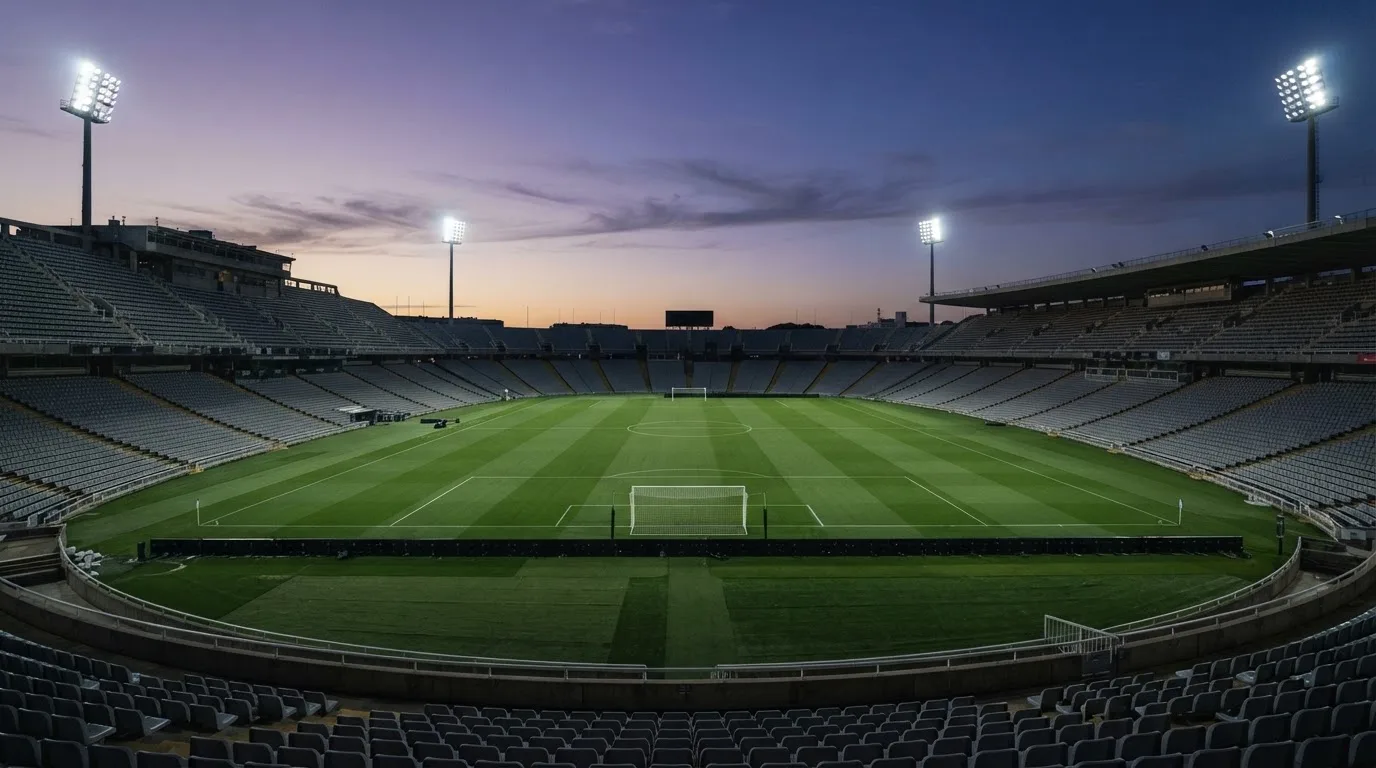
The punter who bets on football without knowing these rules is paying the bookmaker’s margin on markets whose settlement depends on rules the punter has not read. A punter who has bet on a cup tie “to win” and discovered that the “to win” market is settled on the 90-minute result, not the extra-time result, has paid the bookmaker’s margin on a market whose settlement rule was not in their head. The first line on every market is the rule the market settles on; the second line is the price the market pays.
The football fundamentals are also the substrate the punter uses to read form. A team that concedes late is a team the over-2.5 market ought to price higher than a team that does not; a team whose goalkeeper saves penalties is a team the “to qualify” market ought to price more cheaply on penalties. Reading form without reading the rules is reading form in the dark; the rules are the lighting.
The 2026 FIFA World Cup final was played on 19 July 2026, and Spain beat Argentina 1–0 after extra time. The 2026–27 Premier League runs from 21 August 2026 to 30 May 2027 with 20 teams, the promoted clubs being Coventry City, Ipswich Town and Hull City, and Arsenal as defending champions. The competition a punter bets on is the competition the punter knows; the competition the punter does not know is the one the bookmaker’s margin dominates. Read the schedule before the coupon.
Football betting in New Zealand: the legal frame that decides which sites exist
The legal frame for football betting in New Zealand is short, recent and unusual. The Racing Industry Act 2020 establishes TAB NZ as the sole betting provider for racing and sports in New Zealand. The Racing Industry Amendment Act 2025 inserted section 74AAA: no person other than TAB NZ may offer racing betting, sports betting or other racing or sports betting to a person in New Zealand, regardless of where that person is resident or incorporated. The change took effect on 28 June 2025. The Department of Internal Affairs told providers serving New Zealand to withdraw with immediate effect. There is no licensing route for another bookmaker and no licence register for betting, because there is only one lawful operator. The law does not geo-block offshore websites; it puts liability on the offshore operator.
TAB New Zealand is the holder of the monopoly. TAB and Betcha are the two lawful online brands of TAB NZ. Entain New Zealand runs the TAB business under a 25-year agreement signed in 2023. The two brands are not rivals; they are two windows onto the same balance sheet. A New Zealand punter who opens an account at TAB and at Betcha is opening two windows on the same house, and the exclusion set on one applies to the other.
The age for betting is 18 (an offence under section 89 of the Racing Industry Act 2020); land-based casinos are 20 — never merge the two. A punter under 18 cannot bet lawfully anywhere in New Zealand. TAB NZ accounts need a verified New Zealand address and ID; a punt is not anonymous at TAB NZ, and the verification is the operator’s compliance work for the regulator. The Online Casino Gambling Act 2026 licenses online casino gambling only and does not license sports betting; TAB New Zealand winning the right to apply for a casino licence does not extend the betting monopoly. Greyhound racing is closing in stages from 1 August 2026, and from that date offshore operators may not take bets on greyhound races either.
What may be bet on is racing and sports betting from TAB NZ only. TAB NZ takes fixed-odds and tote (pool) bets; its published betting rules define bets such as Win, Place, Each Way, Quinella, Exacta, Trifecta, First Four, Double, Treble, Daily Double, Running Double, Quaddie and Big6, and Multis and Same Game Multis (a multi whose legs come from one event). No lawful New Zealand betting exchange exists and spread betting is outside TAB NZ’s sports-betting definition: the New Zealand punter cannot spread bet through TAB NZ, and any spread-betting product is an offshore product. Bets on politics and novelty markets are not established. There is no statutory per-bet cap; limits are TAB NZ’s own terms.
Player protection: TAB NZ lists deposit limits, time-outs and self-exclusion in its apps, and an exclusion applies across its brands (TAB and Betcha). The free Gambling Helpline is 0800 654 655, with a text line on 8006. Safer Gambling Aotearoa runs alongside it. TAB NZ pays a Problem Gambling Levy of 0.74% on its gross win, in force from 1 July 2025 to 30 June 2028. There is no single national online-betting exclusion register; the register the casino law will require is for online casinos only. Help is the helpline, the text line and Safer Gambling Aotearoa; the framework is operator-side and the framework is the cost of the licence.
Tax: for the player, Inland Revenue guidance says recreational gambling winnings are generally not taxable and prize money from TAB horse, dog and trotting races is not taxable; a person who bets as a business is a different case — general information, not tax advice, “consult Inland Revenue or an accountant”. Operator side: TAB NZ pays the Problem Gambling Levy (0.74%); overseas operators supplying New Zealand residents pay online gambling duty (12% of profits since 1 July 2024, 16% from 1 January 2027); a duty being payable does not make an offer lawful — never write that tax payment shows a bookmaker is legal. The point-of-consumption charge on offshore racing and sports bets ceased on 30 June 2026.
Advertising and bonuses: because only TAB NZ may offer betting here, DIA reads the prohibition as covering promoting or taking such bets for another operator; how DIA treats betting affiliates is not established, so the page describes the monopoly and never invites readers to sign up with an offshore brand. The Advertising Standards Authority’s Gambling Advertising Code applies to betting advertisements: ads must not target children (under 14) or young people (14 to under 18), judged by context, appeal and expected audience (25% or more of the audience counts as significant where accurate data exists), must not encourage harm, and must be truthful with terms available. No New Zealand equivalent of a “whistle-to-whistle” ban for betting was found. TAB NZ runs “bonus bets” promotions; no New Zealand rule on bet-bonus size or wagering terms was found, so quote only TAB NZ’s own terms.
Offshore: since 28 June 2025 an overseas bookmaker taking sports or racing bets from a person in New Zealand is breaking New Zealand law (DIA’s statement); the penalty for breaching section 74AAA is not stated in the section and no prosecution of an offshore bookmaker was found. New Zealand does not block bookmaker sites. The player: section 19(4) of the Gambling Act 2003 (inserted in 2025) says an individual may not be convicted for placing a bet with an offshore betting operator in breach of section 74AAA; no source states a penalty for a player. The framing is honest: TAB NZ and Betcha are the only lawful option, with New Zealand harm-minimisation tools, regulator oversight and a complaints framework; offshore is unlawful for the operator to serve New Zealand, no New Zealand complaints route, DIA’s stated risks, limits possible elsewhere. Neither is “the safe choice” by default.
The legal frame is the line between the first row of the landscape and the rest. The cost of crossing it is the part the price list does not name.
Operator reviews: how each bookmaker prices a New Zealand punter
The reviews below read each operator as a bookmaker the punter meets, named for what sets it apart in this comparison. The first two are the two faces of TAB NZ. The remaining eight are bookmakers without a New Zealand licence, named because New Zealand players meet them, rated on the same criteria (football coverage, market depth, the offer, the safety frame, the price), and read as the cost-of-doing-business with an operator New Zealand law does not reach.
TAB — the lawful football bookmaker, with the full New Zealand framework
TAB is the older face of TAB NZ: the retail-counter heritage, the racing-first sportsbook, the dividend-style payouts on the tote, and the football markets that sit alongside horse, harness and greyhound racing. TAB NZ’s app carries racing form, Blackbook, Jockey Challenge tools, Trackside live race streaming with in-app betting, and a simplified wallet for deposits and withdrawals; the same app carries football pre-match and live, with the same market structure as the pre-match in compressed form on the in-play view. TAB is the only bookmaker a New Zealand punter can lawfully bet with, and the cost of betting with TAB is the margin embedded in every dividend and the Problem Gambling Levy built into every price.
The football book at TAB carries the standard 1X2, handicaps, totals, player props, and same-game multis, plus the racing-style multi-bet products that TAB NZ’s own published betting rules define. The markets are operator-defined and the limits are TAB NZ’s own terms; there is no statutory cap. The age threshold for a TAB account is 18; the App Store age rating is 17+, the betting age is 18, and the two are not the same. The safer-gambling controls (deposit limits, time-outs, self-exclusion) are set inside the TAB app and they cross to Betcha.
The verdict on TAB is that it is the only lawful option for a New Zealand football punter; the price is the price of the monopoly, and the price of the monopoly is the operator’s margin on every market, plus the absence of a competitor with a different margin to compare against. The framework is the part no offshore bookmaker offers; the margin is the part no TAB punter escapes.
Betcha — the second TAB NZ face, built for a younger app user
Betcha is the newer online face of TAB NZ: a mobile-first sportsbook, an app first released on 6 August 2024, and a market list that leans harder on football, rugby, NRL, NBA, NFL, tennis, cricket, motorsports and esports than on the racing heritage of TAB. Betcha covers horse, greyhound and harness racing alongside the sports, but the marketing pitch is the sportsbook, and the football markets sit at the centre of the app. Betcha is published on the New Zealand App Store by Entain New Zealand Limited, and it is the same operator group as TAB.
The football book at Betcha carries the same market structure as TAB, with the same settlement rules, the same fixed-odds and tote products, and the same safer-gambling framework. The exclusion set on TAB applies to Betcha, and the exclusion set on Betcha applies to TAB. The two accounts are two windows on the same operator; the punter who opens both has opened the same account twice.
The verdict on Betcha is that it is the alternative interface for the same monopoly; the price of using Betcha is the same as the price of using TAB, and the choice between them is the choice between the racing-form-led app and the sportsbook-led app. Neither is a cheaper margin; both are the only lawful option.
Thunderpick — the esports-first bookmaker with a sportsbook
Thunderpick is an esports-first operator: CS2, League of Legends, Dota 2 and Valorant are the centre of the brand, and the sportsbook is the second product. The sportsbook carries markets from the Champions League to the NFL, with a cash-out feature listed. The operator is licensed in Curaçao (OGL/2024/677/0722) under Paloma Media B.V., an authorisation that provides no right to accept wagers from New Zealand residents. The age threshold is 18. The New Zealand punter who opens a Thunderpick account does so on a site that New Zealand law has not permitted, and the regulator is in a jurisdiction with minimal consumer safeguards.
The football book at Thunderpick carries the major European leagues and the international tournaments, with cash-out and the standard market structure. The price is the operator’s own margin and the operator’s own terms; the audit is the punter reading the terms directly. The settlement rules are the operator’s, the limits are the operator’s, and the complaint route is the operator’s regulator in Curaçao, not the Department of Internal Affairs.
The verdict on Thunderpick is that it is an esports-first bookmaker with a competent sportsbook. The punter assumes the risk of using a site licensed in Curaçao, which does not provide the safety framework of a New Zealand operator. Anyone betting football here pays the same margin as elsewhere, without the benefit of local oversight.
Winz.io — the bonus-led sportsbook on a foreign licence
Winz.io is an offshore sportsbook and casino under one account, with a sports betting promotion carried under a separate Sportsbook T&C, Sports Rules and Bonus Terms and Conditions page. The operator names Anjouan and Tobique licences, holder Novatrix SRL, which provide no right to accept wagers from New Zealand residents. The safety frame is the foreign licence; the operator has no authorisation in New Zealand.
The football book at Winz.io carries the standard market structure, with the bonus as the marketing centre. The cost of the bonus is the turnover and the minimum qualifying odds, and the value is the formula the bonuses-and-free-bets section of this guide set out. The price of the football bet is the margin; the price of the bonus is the cost of clearing it.
The verdict on Winz.io is that it is a bonus-led offshore sportsbook on a foreign licence. The punter who claims the offer pays the operator’s margin on the turnover, and the site lacks the harm-minimisation tools that New Zealand operators are required to provide. The safety framework of a local operator is the cost-of-doing-business a foreign site cannot match.
Rooster.bet — the multi-section sportsbook with predictions on the side
Rooster.bet is an offshore sportsbook with Live, Sports Promotions, Results, Schedule, E-sports and Predictions sections, and odds shown in six formats. The operator names a Tobique Gaming Commission e-gaming licence (No. The safety frame is the foreign licence; the operator has no authorisation in New Zealand.
The football book at Rooster.bet carries the standard market structure with the six-format odds display as the front-end differentiator; the back-end margin and the bonus cost are the same as every other offshore sportsbook. The Predictions section is the marketing word for the operator’s own tips; the value is whatever the punter happens to read on a form guide.
The verdict on Rooster.bet is that it is a multi-section offshore sportsbook with predictions bolted on; the cost is the compounded margin every offshore book charges on accumulators. The site does not provide the safety measures a New Zealand punter receives from a local operator, and the lack of a local complaints route is the main caveat.
Roobet — the casino-led crypto operator with a sportsbook attached
Roobet is an offshore operator best known as a crypto casino, with a sportsbook that covers soccer, basketball, tennis, Counter-Strike, FIFA, baseball, ice hockey, MMA and table tennis, and a terms page that requires players to be 18 or older. The operator names a Curaçao licence (OGL/2024/687/0427), holder Raw Entertainment B.V., which provides no right to accept wagers from New Zealand residents. The safety frame is the Curaçao licence; the operator has no authorisation in New Zealand.
The football book at Roobet carries the standard market structure with the casino-and-sportsbook wallet as the differentiator; the punter who already holds Roobet crypto in the casino wallet can place football bets from the same balance. The cost is the operator’s margin on the sportsbook and the same absence of New Zealand safety framework as elsewhere on the list.
The verdict on Roobet is that it is a casino-led crypto operator with a competent sportsbook attached. The site does not offer the safety framework of a New Zealand operator, and the punter assumes the risk of funding an offshore account through a crypto on-ramp. No New Zealand harm-minimisation tools are available here.
RoyalistPlay — the multi-sport offshore bookmaker with esports and predictions
RoyalistPlay is an offshore sportsbook offering live betting, sports promotions, results and a schedule, with football, basketball, tennis, handball, ice hockey, volleyball and table tennis among the top sports, plus separate e-sports and Predictions sections. The operator names a Tobique Gaming Commission e-gaming licence (No. 0000002), holder Novatrix SRL, which provides no right to accept wagers from New Zealand residents.
The football book at RoyalistPlay carries the standard market structure with the multi-sport schedule as the front-end differentiator; the back-end margin is the same as every other offshore sportsbook. The Predictions section is the marketing word for the operator’s own tips, alongside the E-sports section that covers the standard esports slate. The cost of using RoyalistPlay from New Zealand is the absence of the New Zealand safety framework and the operator’s own margin.
The verdict on RoyalistPlay is that it is a multi-sport offshore bookmaker with esports and predictions. The site does not match the safety protections of a New Zealand operator, and the compounded margin is similar to that of other offshore competitors. It offers no access to local harm-minimisation tools.
Glorion — the broad-market offshore bookmaker with entertainment events
Glorion is an offshore sportsbook offering pre-match and live betting, virtual sports, horse racing and esports, with markets grouped into popular, niche, indoor and outdoor sports plus entertainment events such as award shows and elections. The operator names no licence that applies in New Zealand. The safety frame is whatever the operator’s offshore regulator provides; the New Zealand frame does not reach the operator.
The football book at Glorion carries the standard market structure with the entertainment-events market as the differentiator; the punter who wants to bet on football also gets a market on award shows and elections. The cost of using Glorion from New Zealand is the absence of the New Zealand safety framework and the operator’s margin; the novelty markets are the marketing.
The verdict on Glorion is that it is a broad-market offshore bookmaker with entertainment-events markets. The site lacks the harm-minimisation protections that are standard in New Zealand, and the entertainment markets are essentially marketing for the operator’s own margins. The safety net provided by local regulation is missing.
BillyBets — the casino-plus-sportsbook offshore bookmaker
BillyBets is an offshore operator running a casino and a sportsbook under one account, with the sportsbook covering football, tennis, table tennis, basketball, ice hockey, American football, baseball, combat sports, esports, virtual sports and live betting. The operator names no licence that applies in New Zealand. The safety frame is whatever the operator’s offshore regulator provides; the New Zealand frame does not reach the operator.
The football book at BillyBets carries the standard market structure with the casino-and-sportsbook wallet as the differentiator; the punter who already uses BillyBets for casino can move to football without opening a second account. The cost is the operator’s margin and the same absence of New Zealand safety framework as elsewhere on the list.
The verdict on BillyBets is that it is a casino-plus-sportsbook offshore bookmaker. The operator does not provide the safety measures required of New Zealand bookmakers, and the site’s margins are consistent with the rest of the offshore list. There is no New Zealand-based redress for a dispute.
BetNinja — the match-bonus-led offshore bookmaker
BetNinja is an offshore bookmaker with a sports offer of a 100% match up to EUR 100 on the first deposit, alongside a separate casino welcome of EUR 1,000 bonus and 100 free spins. The operator names a licence from the Union of the Comoros, which provides no right to accept wagers from New Zealand residents. The safety frame is the Comoros licence; the operator sits outside the New Zealand regulatory net.
The football book at BetNinja carries the standard market structure with the match-bonus-led offer as the marketing centre. The cost of the bonus is the turnover and the minimum qualifying odds; the value is the formula the bonuses-and-free-bets section of this guide set out. The price of the football bet is the margin; the price of the bonus is the cost of clearing it.
The verdict on BetNinja is that it is a match-bonus-led offshore bookmaker on a Comoros licence; the cost of using it from New Zealand is the absence of the New Zealand safety framework and the cost of the bonus turnover. The punter who claims the offer pays the operator’s margin on the turnover plus the absence of the New Zealand harm-minimisation tools.
What the margin on a football match actually looks like
The margin is the part of every price on the slip that belongs to the bookmaker. On a 1X2 market — home win, draw, away win — with the example decimal prices of 2.10, 3.40 and 3.60, the implied true probability of each outcome is the reciprocal of the price: 1 ÷ 2.10 = 47.6%, 1 ÷ 3.40 = 29.4%, 1 ÷ 3.60 = 27.8%. Adding the three gives 104.8% — which is the overround. The payout share is 100% ÷ 104.8% = about 95.4%; the margin is 100% − 95.4% = about 4.6%. Read as a band: roughly 4% to 5%, depending on how the price is rounded and how the operator sets the line. The figures are an illustration, not a quoted price; a specific fixture’s margin on a specific day is whatever the specific prices at that moment produce.
The same arithmetic on a handicap line, a totals line, a same-game multi or an accumulator produces a different margin per bet type. A handicap line with two prices near evens has a smaller overround per leg and a similar margin; a totals line with prices near 1.90/1.90 has a wider margin per leg than the 1X2 because the binary structure allows the operator to widen both sides. A four-leg accumulator multiplies the per-leg margins and arrives at a wider compounded margin than any single leg, and that compounded margin is the cost of the multi.
The calculation here is an average over many bets at the example prices, not a guarantee for any single bet. The punter who places one bet at these prices wins if the bet wins and loses if the bet loses; the margin is the operator’s expected take on the bet across many bets and many punters, not the punter’s expected loss on a single bet. The cost a punter pays in a season is the sum of the operator’s margin across every bet the punter places; the calculation here is the per-bet figure of that sum.
The price the punter sees is the price the operator has set; the price the operator has set is the price that contains the margin. A punter who reads the margin has read the price; a punter who reads the price without the margin has read the marketing.
Frequently asked questions about football betting in New Zealand
How does spread betting work in football?
Spread betting is a bet on whether a number — total goals, corners, player shots — finishes above or below a spread set by the operator; the punter wins or loses per unit the number misses the spread by. A spread of 2.5 goals on total goals means a finishing total of 3 wins one unit per unit staked, a finishing total of 2 loses one unit per unit staked, and a finishing total of 5 wins 2.5 units per unit staked. The exposure is open-ended at the tail, so a finishing total of 8 costs the punter 5.5 units per unit staked. New Zealand punters meet spread betting only on offshore sites, because TAB NZ’s sports-betting definition does not include spread betting.
How to bet against the spread in football?
Betting “against the spread” in American usage means betting the underdog on a point-spread line — taking the positive handicap so the underdog starts the match a goal up. In a New Zealand context the same product is called a handicap bet. The punter picks the team getting the positive handicap; if that team wins the match or loses by less than the handicap, the bet wins; if that team loses by more than the handicap, the bet loses. Read the line on the slip before the price, and read the settlement rule before the bet.
How to bet football matches correctly?
Read the rules of the markets the slip offers: 1X2 settles on the 90-minute result unless stated, handicap settles on the result after the handicap is applied, totals settles on the total goals scored. Read the team news in the hour before kick-off: a missing striker moves the 1X2 more than a missing full-back. Read the price after the line, and read the margin inside the price — every decimal odds line carries the bookmaker’s margin, and the margin is the operator’s expected take on the bet. A punter who reads the rules, the team news and the price has read the bet correctly; the result is what the result is.
Which bookmaker may lawfully take sports and racing bets in New Zealand?
TAB New Zealand is the only provider lawfully offering racing and sports betting to people in New Zealand under section 74AAA of the Racing Industry Act 2020, which took effect on 28 June 2025. TAB and Betcha are the two lawful online brands of TAB NZ, run by Entain New Zealand under a long-term partnership. There is no licensing route for another bookmaker and no licence register for betting, because there is only one lawful operator. Other operators a New Zealand punter meets on the open internet are not licensed to take bets from people in New Zealand.
How is the return on a bet worked out from the stake and the odds?
The return on a winning decimal-odds bet is the stake multiplied by the odds. A $10 stake at odds of 2.10 returns $21 — the $10 stake plus $11 in profit. A combination bet multiplies the prices of the legs into one final price, and the return on the combination is the stake multiplied by the combined price. The return is the gross amount returned to the punter’s wallet; the net profit is the return minus the stake. The return is paid only on a winning bet; a losing bet returns nothing.
Football – dogracingnz.com
Content created by the «dogracingnz.com» team
